
English: Timber Decking Europe 4 (Photo credit: Wikipedia)
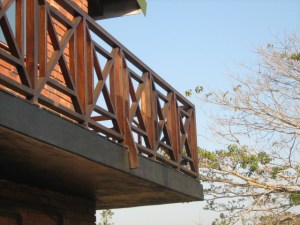
Although wooden decks have always been popular as a method of construction it is becoming more and more popular as trends move towards more natural methods and finishes in construction while considering environmental impact and the foot print building creates. Provided timber is sourced from sustainably managed forests, wooden decks are of course as natural as one can get.
Wooden decks add value to your property at an affordable cost, in comparison to other construction methods, and, if well looked after, can last a lifetime. They complement our outdoor lifestyle in South Africa and offer years of enjoyment.
STEEL, CONCRETE OR TIMBER
The choice between using concrete, steel or timber in your sun deck is a complex choice with many variables to consider. One should take into account the following when making a decision: –
- Cost effectiveness
- Ease of build
- Environmental impact
- Longevity
It is often best to research this independently based on your unique requirements and conditions.
THE TIMBER USED
There are a number of different types of timber available which have been carefully selected to fit your taste, your pocket and the environment we found ourselves in.
The most common timbers used are: –
SA Pine:
This must be CCA Treated to at least an H4 level if outdoors and exposed to the elements. CCA stands for Copper, Chrome and Arsenic. The copper prevents algae growing on the timber caused by dampness. Algae causes rot by breaking down the fibres in wood. Hence the wood can get wet without rotting. The arsenic prevents insect infestation and the chrome binds to two to prevent them from leaching out of the timber. The amounts of chemicals present in the timber do not affect humans, animals or plants in any significant way and it is therefore safe to humans, plants and animals. The level of treatment (H4) refers to the strength of the solution and the pressure at which it is forced into the timber.
Balau:
Sourced from South East Asia this timber is the most cost effective hardwood. There is no need to pre treat it as it is naturally resistant to rot and decay due to the high levels of oils and resins present in the timber. Balau decking boasts a fire rating of Class A which is the same as concrete or steel.
Garapa, Massaranduba, Keruing:
These are all equally matched to Balau in terms of durability and workability but are slightly more expensive. It is therefore common to use Balau as the sub structure with these timbers as the deck boards and visible components of the sun deck.
It is not advisable to use pine as your substructure with a balau or similar hardwood as deck boards as the timbers expand and contract at different rates and can cause screws to either break or pull out.
When taking into account what timber to use one must remember that the cost to install the deck is often the greater percentage of the total cost and the benefits of paying slightly more to get a balau deck are far greater than the cost saving of using pine.
Composites:
Composites are manufactured deck boards using largely re-cycled plastic. They are available in a range of colours. The argument is that they are more enviro-friendly than wood and that installation is easier, and therefore less expensive to install. They are normally more expensive per square metre of deck in terms of materials and it is argued that they are maintenance free. However they cannot be sanded once they are installed as they are a plastic composite and should scratches occur on the surface they may prove difficult to remove. They are installed using a CCA Treated Pine baton or joist and the substructure is normally pine. They are however being installed successfully and should not be ignored.
SEALING OR FINISHING A WOODEN DECK
The myth that a timber sun deck is expensive to maintain is unfounded, provided it is installed using good quality timber and construction methods are sound. If finished with the correct sealer, maintenance can be reduced to a minimum and maintenance intervals can be increased.
A common mistake that is often made is to coat the deck with a coating that does not penetrate the deck surface but rather dries on the surface. With the hot African sun beating down on the deck the horizontal surfaces often start to crack and flake. Using a penetrating timber preservative avoids this occurring and reduces labour costs at scheduled maintenance intervals.
Screw holes should always be filled with an epoxy to avoid them “popping” and to avoid water penetrating the timber through the screw hole. One must remember that water penetrates wood largely from the end grain and therefore any screw holes left unfilled will allow water to easily penetrate the timber. End grains should also be well sealed to avoid this.
After taking into account your unique requirements and environment it is difficult to argue that a well constructed timber sun deck, using quality timber from reputable suppliers will not add value to your property while providing many years of enjoyment.
The warmth of wood cannot be replicated by other building materials.
-29.751808
30.836707

 The Wood Joint