Wooden Sundeck, Toti, Durban

Wooden Sundeck Installer Durban

Click to enlarge

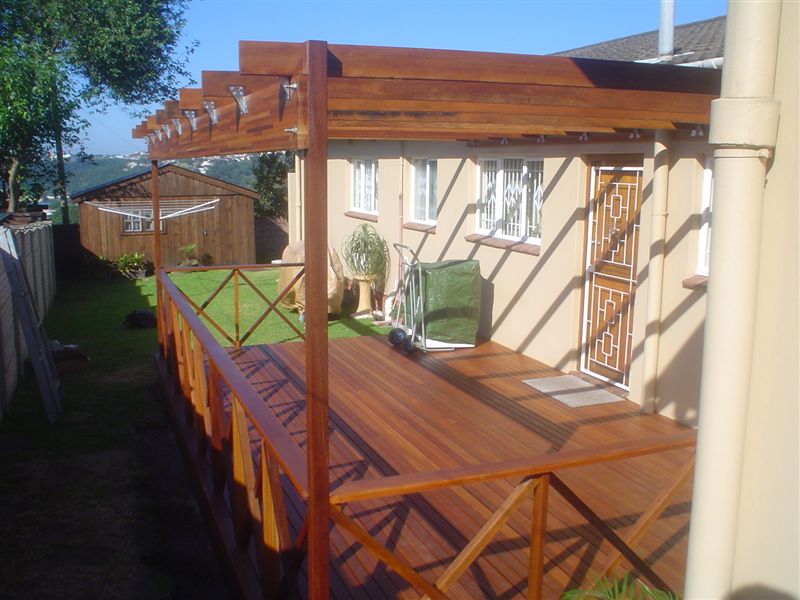
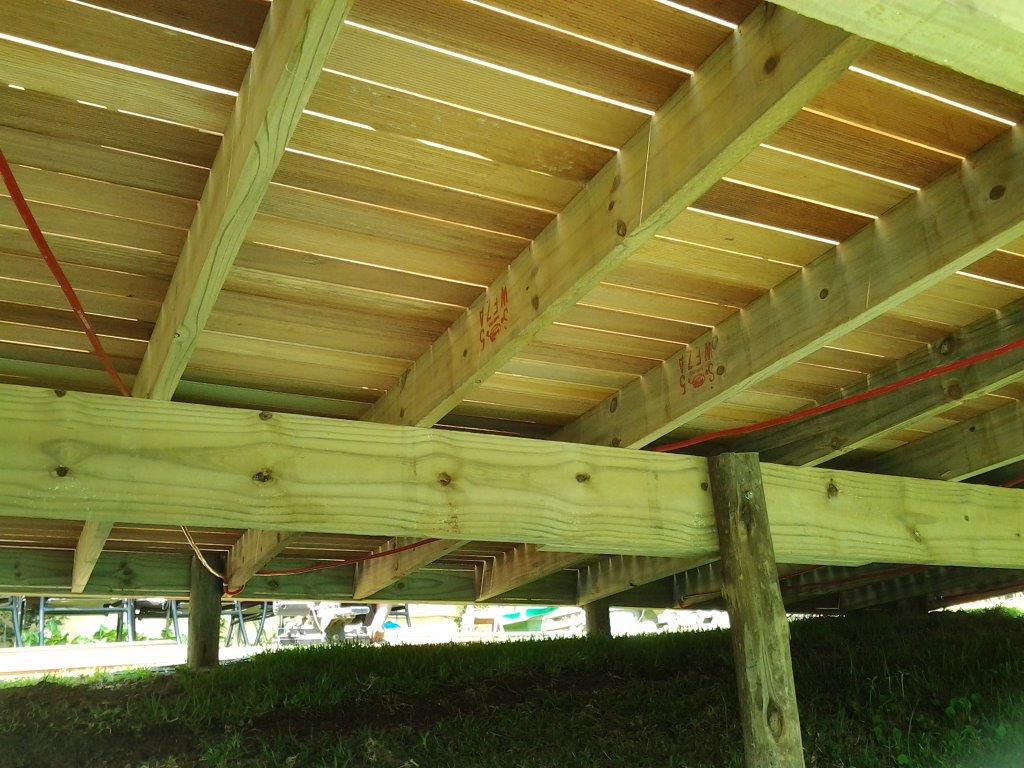
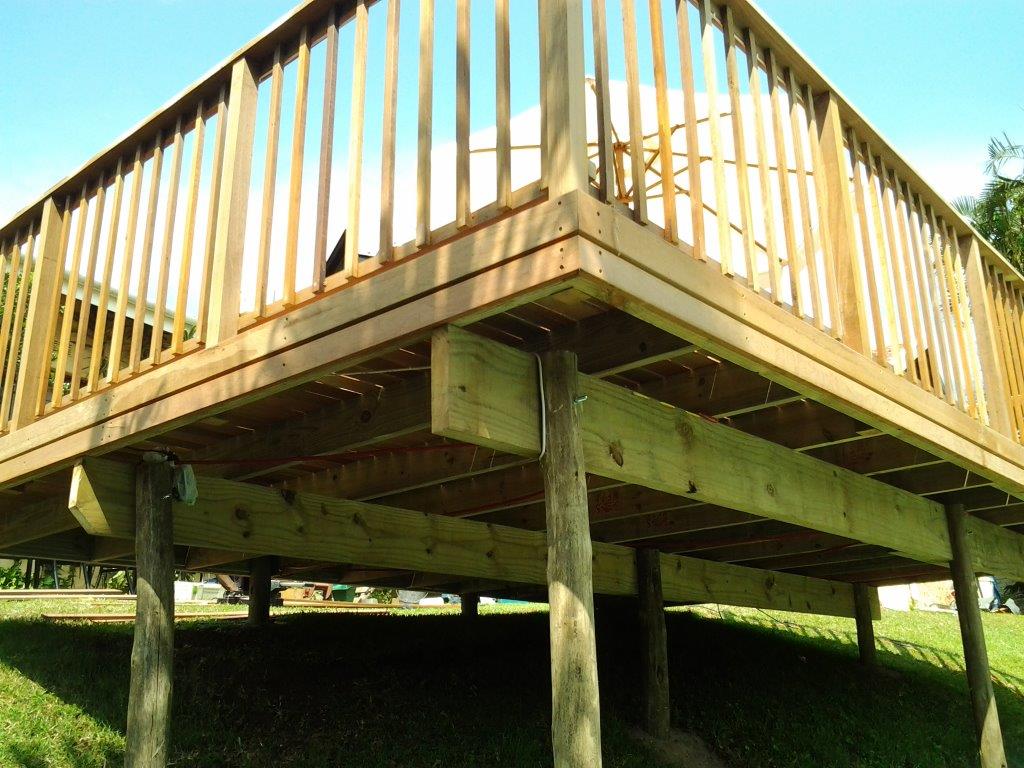
We built this wooden sundeck in Toti using CCA Pine, for the first time, as our substructure and decked it using balau deckboards. For a long time I have been using only balau as a substructure. But after some careful investigation I have accepted that a CCA treated pine substructure is as good if not better than a balau one.

The manufacturers of the solution that is used to pressure treat the timber guarantee their product for between 30 to 50 years depending on which manufacturer you use. Provided the company doing the pressure treatment treats it correctly and provided the correct Hazard Level (H level) is used in the correct application, the timber will be guaranteed against rot and insect infestation by the manufacturer of the solution. I will write another more detailed article on CCA pressure treatments, but for the purpose of this article you will need to know what it broadly means.
Wooden Sundeck Installer Durban

Click to enlarge

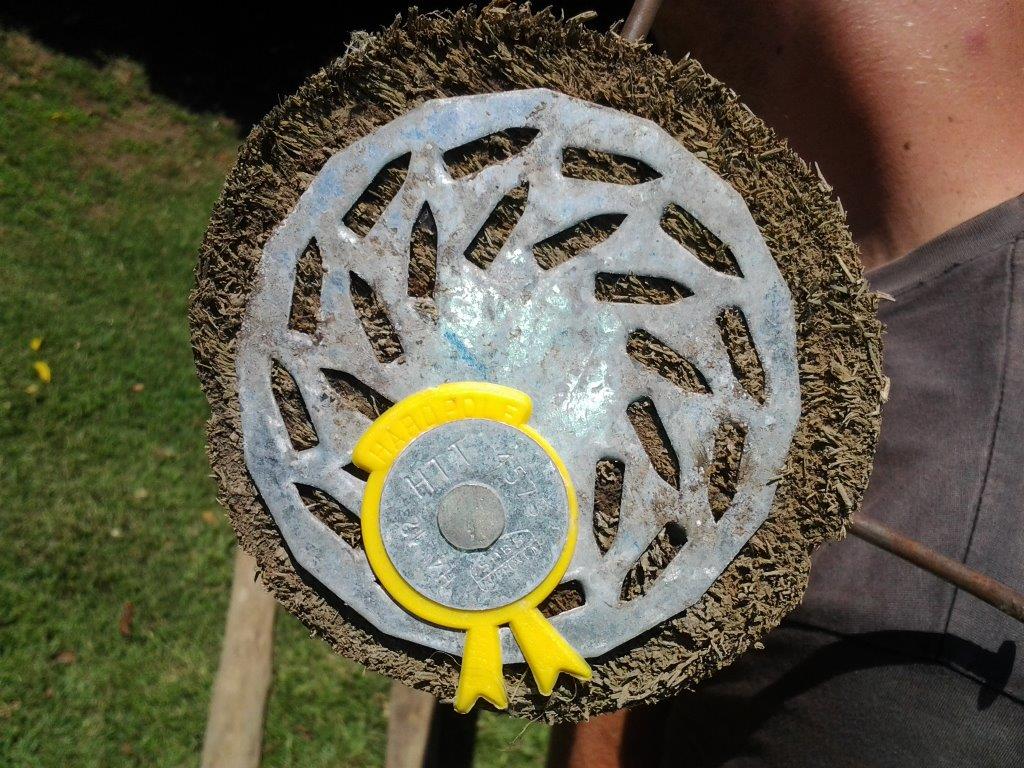
H2 CCA Treated pine is good for roof trusses where it is not exposed to the elements such as rain. H3 treated is good for outdoors such as decks and H4 is good for in the ground or in contact with wet soil. H5 is good for in salty water and is normally a combination of CCA and creosote treatment. H2 is commonly sold off the shelf at most timber yards. H3 and H4 is more specialised so one needs to find a supplier who is regularly treating to H3 or H4. Under no circumstances should H2 be used as a substitute. It will rot within a few years. Simple. Do not use it in decks, keep it for the roof.
Wooden Sundeck Installer Durban

Click to enlarge

In order to activate a guarantee against the manufacturer one would need to take photos of the deck going up ensuring that the correct H level is used, an audit process would need to be completed on the company treating the timber and the build would probably need to be registered with the manufacturer and possibly inspections conducted during the build. So although it is possible to activate a guarantee, it is not really practical as the substructure will go up in 2 days and the deck will be done in 5 days. However, if the manufacturer is willing to offer this sort of guarantee, then we can safely assume that the timber we are using will hold up to its promise. In a nutshell, H3 or H4 treated CCA Pine is suitable for a substructure for a deck and may very well outlast a balau substructure. I would not be too keen to use it as deckboards for two reasons. Although it won’t rot or get eaten by ants, it will expand and contract a lot more than balau which will result in checking, cracking, warping, bowing etc. over time. The second reason is that because it is half as dense, one needs to use a 32mm thick deckboard as opposed to a 19mm deckboard in balau. So twice as much timber is used and the cost is actually slightly more in pine per square metre than balau. So why not use balau in the surface? It is much better looking and much more stable (i.e. it remains flat for many more years).
Wooden Sundeck Installer Durban

Click to enlarge

The cost saving in using CCA pine vs. balau in the substructure is great and this allows me to keep my prices low whilst still providing a quality product. The CCA Pine will last as long if not longer than the balau substructure if the correct H grade of CCA pine is used.

All areas that have pine exposed are clad with deckboards so that the pine is not visible. Balustrades remain full balau.

For a no obligation quote on wooden decks, balustrades, pergolas and any other outdoor timber construction, please complete the form below and I will get back to you.  Or you can call us on 082 496 5444.

Go back

Your message has been sent

Warning
Warning
Warning
Warning
Warning

Warning.

Timber Deck Installed in Queensburgh, Durban

Sundeck installer Durban

Click to enlarge

This was our second deck we installed in Durban and this time around we got the spec right and didn’t spend all our money on timber. The deck was pretty much on ground level but still required normal 30 x 102 joists as it was not supported by a concrete base. Should there have been a concrete slab on which to support it then we could have used smaller batons instead of joists. We still sued a cleat and beam system although later in my Sundeck installer career I learned the other method of a joist as the cleat attached to the wall with the joists Téd off that and a fascia beam on the front.

There was a fair amount of digging to get the garden to the correct level as the one side was quite a bit more elevated than the other.
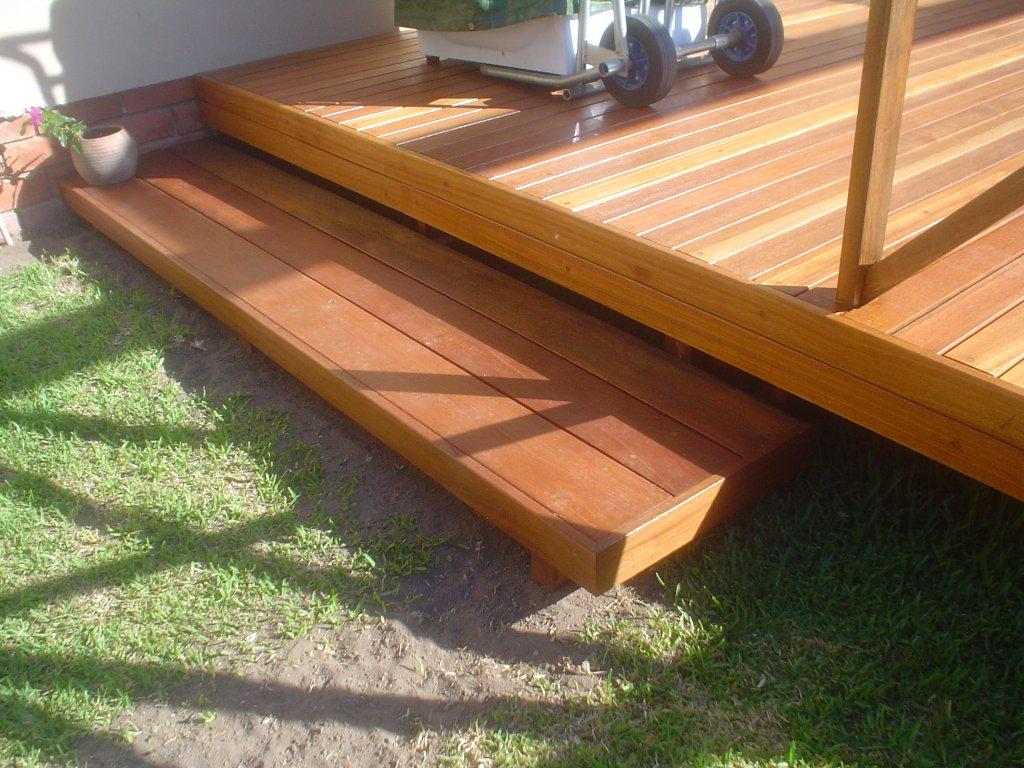
This deck had a floating step which was quite large, bigger than a normal tread. It worked very well in that it appears that the step is not attached to the deck at all and is large enough to step down comfortably on to it.

Sundecks builder Durban

Click to enlarge

Being our second deck we set everything out and started decking it. Half way through our deckboards we realised that the front beam was not straight. It bowed inwards and as the deck boards went down it became more and more noticeable. So all the deckboards came off, the beam was straightened and back they went. A costly mistake in time but a lesson learnt that will ensure that that mistake never happens again. A simple piece of fish line or builder’s line must be placed along the front edge of the beam when fastening the joists to ensure that it is straight. A false joist can be used here in the middle of the beam attached in the same direction as the joists will lie to hold it in place while the joists go down. The same rule applies for joists. When I joist is placed down it must also be square off the wall and the rest of the joists must be parallel to that one. Timber will always be bowed in one direction or another, some more than others. But they must be pulled straight before being attached. In the case of joists this will ensure that they screw line on the deckboards is straight and more appealing to the eye. Also it keeps the distance between joists exactly 550 between centres for the entire length of the joist. This is particularly important on joists that are placed on the end of the deck as the deckboards will be cut there and if not straight then the deckboards will either not be straight or they will form a lip where the joist bows inwards or outwards.

Sundecks Durban

Click to enlarge

The balustrade on this deck was pretty straight forward to. We notched the cross pieces so that they fitted snuggly together in the same plane rather than overlapping them. We built a pergola in balau above which eventually took a roof. The client however attended to the roof sheeting.

Timber or Wooden Balustrades

Wooden Balustrades

A classic criss cross style balustrade

Timber balustrades are built in various designs and various different timbers can be used. The most affordable hardwood of course being balau with more expensive options being Massaranduba, keuring etc. The pieces required for balustrades are most commonly found in balau as they form part of the structural pieces stocked by most timber merchants. Massaranduba, keuring etc. are largely supplied in deckboards only and are used for the actual decking with balau being used as the substructure. All three of them are equally as durable and strong and only really differ in colour and grain.

In this article we will discuss the picket style balustrade.

PICKET STYLE

This type of balustrade is often the only one that completely adheres to standard building regulations as the gap between any two pieces is, or can be made, less than 100mm. It should be designed with a cross horizontal support at the top and bottom to give the pickets a support to be attached to. The bottom horizontal support is normally set about 100mm from the ground and secured to each vertical post in as long a length as possible. The top horizontal support can either be set at the top of the post and directly beneath the capping or set 100mm down from the capping to provide a gap between it and the capping. The former being my personally preferred method as it then gives the capping a more rigid support and will reduce bowing and cupping of the cap.

Each picket is then attached to these horizontal supports so that the gap between vertical pickets is equal. Care should be taken in setting the first and last one as the width of each picket needs to be taken into account when calculating the centre of each picket due to the first and last one being the vertical post itself. Pickets can be pre routed on the corners to give it a profile or left square. They can also be routed in situ resulting in the router not running all the way to the end of the picket.

A capping is then placed and secured on top of the horizontal support and posts, or just to the posts if the latter method was used. This capping can then be routed over the edges to break the sharp corner. This capping should also be secured in as long a length as possible to avoid joins wherever possible. If a join is necessary it should be joined with a 45° join directly above a vertical post. This will reduce lifting on the joint.