Wooden Pool Deck Built in Westville, Durban

This slideshow requires JavaScript.

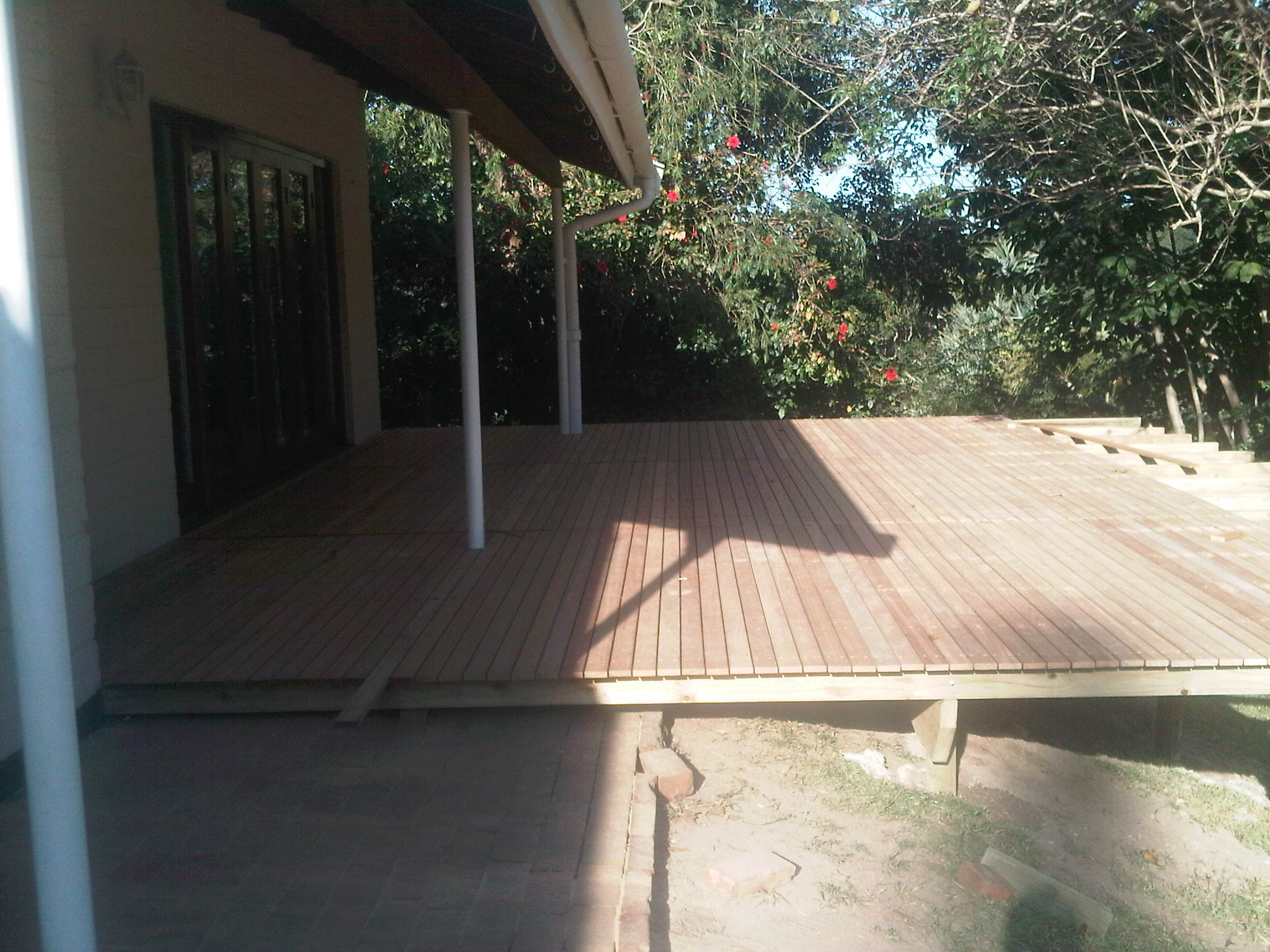
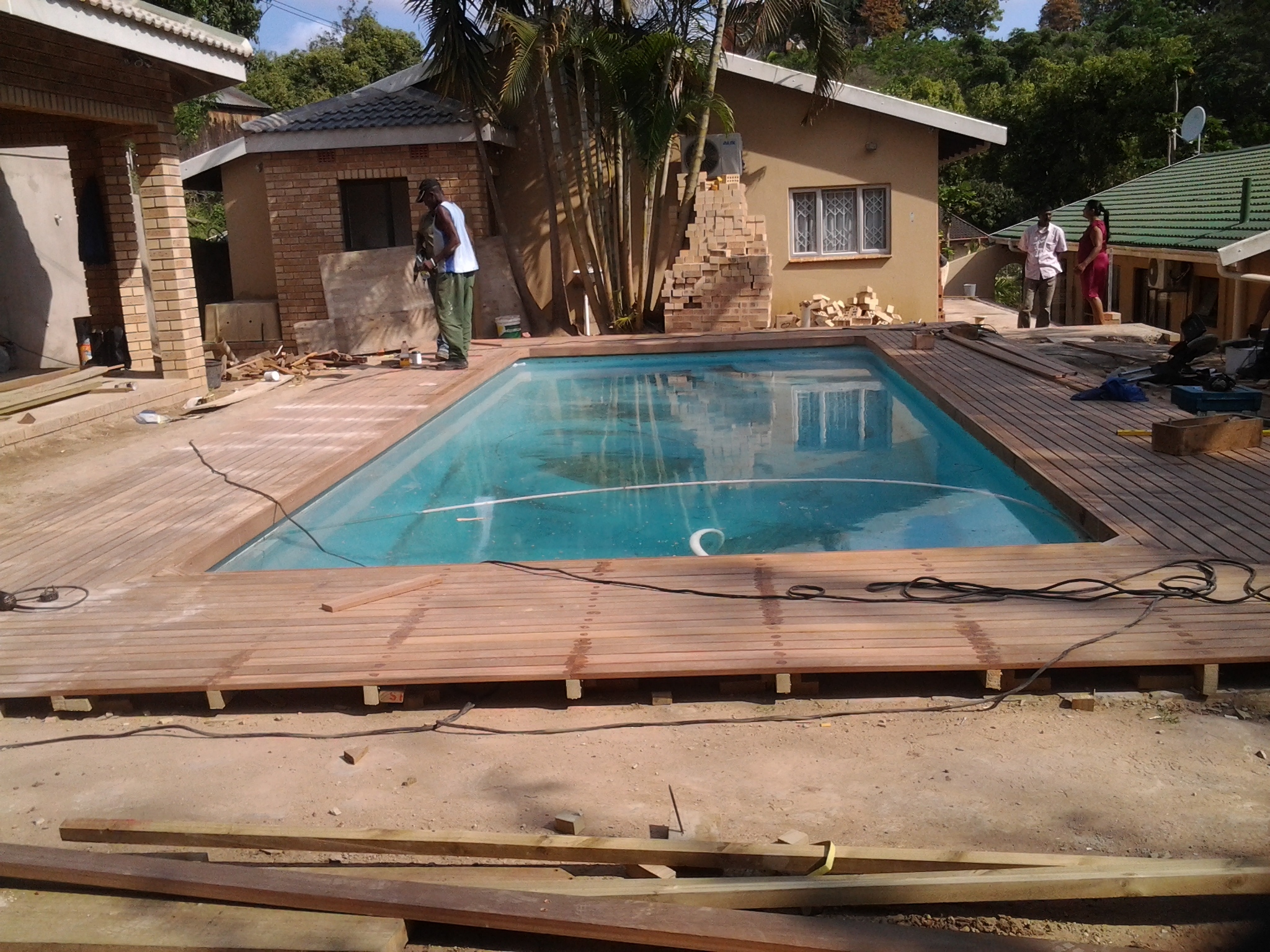
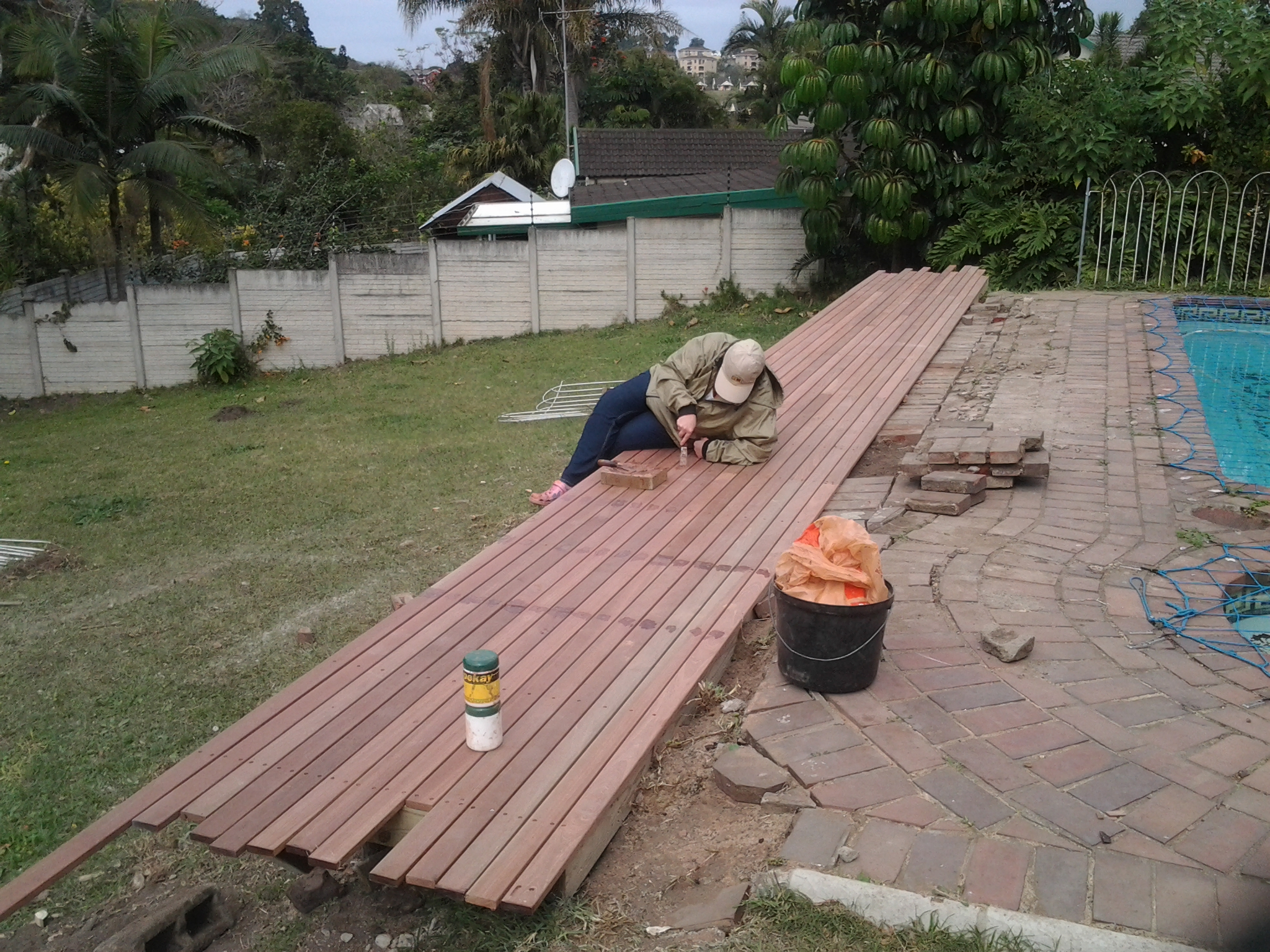
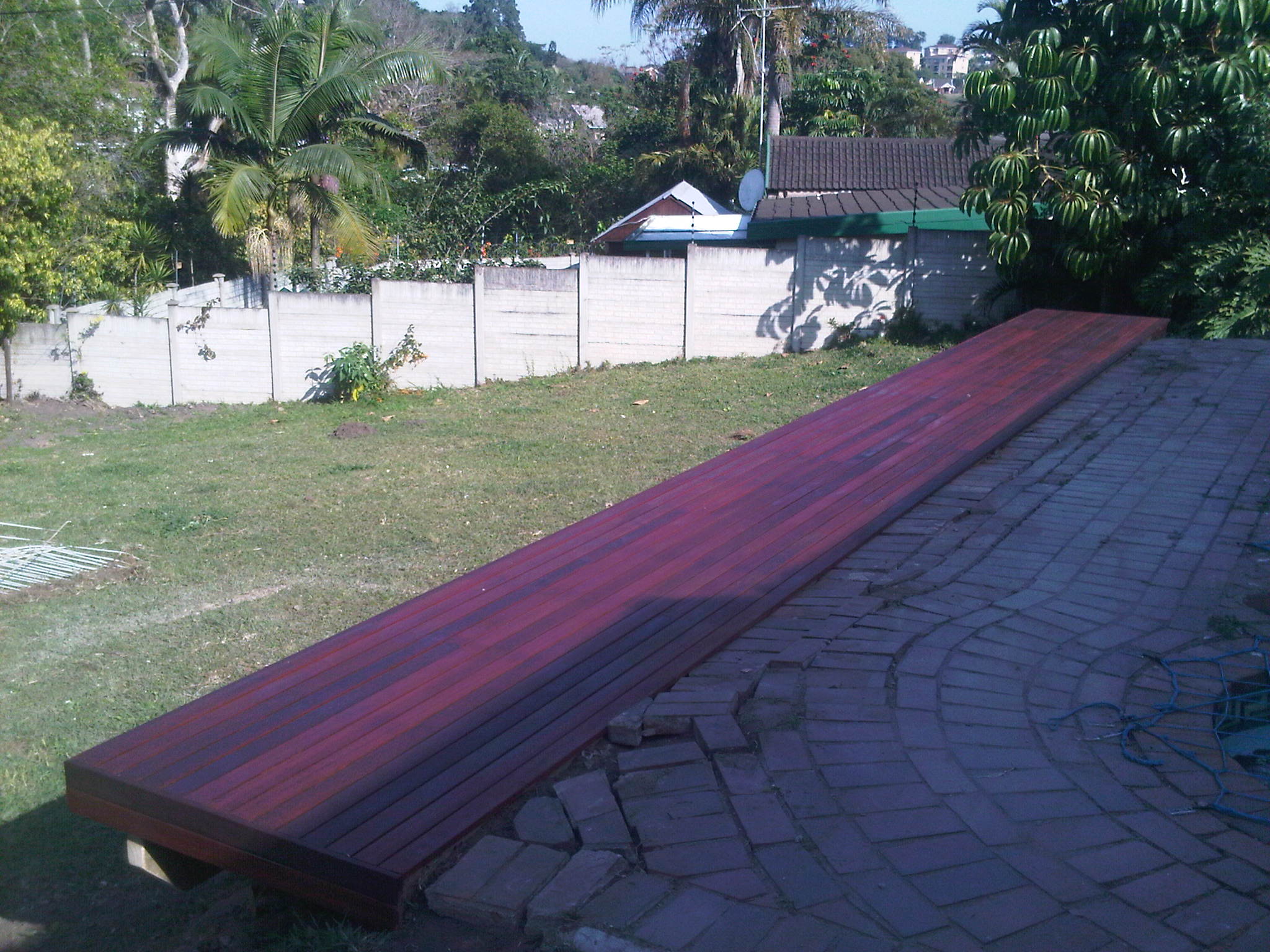
This wooden deck was built in Westville, Durban in September 2013. There are two sections to the wooden deck, one being the deck around the pool and the other being the deck above the pool where the water flows back into the pool and the pot plants are housed.

One way of decking around a pool is to lay all the deck boards the same way. What this results in is two sides of the deck having end grain facing the water and the other two having face grain facing the water. Seeing as water likes to be absorbed through the end grain of wood, it makes sense to try to keep as much end grain away from the water as possible. This will slow down the rotting process to a large degree and you will get many more years use out of your deck. Besides, in my opinion, it looks better this way.

It is more time-consuming however because when you are laying the deck boards you need to run them to the corner at 45º. You also need to make sure that your joists or batons you have laid prior to laying your deck boards are exactly 45º because if this is out then the point in the deck surface where the boards meet will also not be 45º and will result in one side of the deck being wider than the other. So lay your joists very carefully to ensure this problem does not occur because having to re-do work a second time takes a lot longer than planning it correctly the first time. If the substructure is perfect, or near perfect,

then cutting the deck boards for the join will be easy as you can set the saw to 45º and cut. But check as you are going that it is not running out because a slight deviation in the joist will result in the cut needing to be a few degrees bigger or smaller than 45º. If need be shim the side of the joist to keep your join 45º.

The pot plants that you see on the raised deck are actually part of a water feature below the deck and we have decked around them. They do not sit on top and the water flows down the pots back under the deck and into the pool. There is also a rim feature below the front face of the raised deck so that water flows into the pool from under the deck. Trap doors are a necessity in pool decks, as one often needs to gain access to pipes and filters below the deck surface.

There is a rim or fascia board attached to the inside of the joists or deck boards to complete it by covering the gaps below the deck itself. This should always be set as high as possible to avoid as much contact with water as possible, but yet still cover and substructure below the deck boards.

This deck was finished using our normal Timberlife Satin Wood Base 28 with a Mahogany tint, but because the deck boards were a bit lighter in colour to other decks we have done it resulted in a more reddish / orange colouration.

This deck totalled about 50m². It is always deceiving to try to estimate a pool deck size as it always looks a bit smaller than it actually is. It is always a good idea to measure it accurately before starting to avoid a budget over run.

For a free no obligation quote please contact us on 082 496 5444 or use the contact form below.

Go back

Your message has been sent

Warning
Warning
Warning
Warning
Warning

Warning.


Wooden Deck Built with Guarantee in Durban

Wooden deck guarantee

Click to enlarge

As mentioned in some of my other articles we started offering supplier guarantees on our H3 CCA Treated pine substructures. These guarantees can run for up to 50 years from the date of installation. They are guaranteed by the manufacturer of the chemicals used in the treatment process and are underwritten by one of the large insurance companies. Provided certain building techniques are adhered to and the company treating the timber has treated it correctly, the manufacturer of the chemicals is willing to guarantee the timber against various forms of rot and various types of insect infestation for up to 50 years.

One of the conditions is that the end-user, being you the client, needs to register the build with the manufacturer within 60 days of completion of the build. The registering of the build needs to be done in a certain format and details such as when the timber was purchased, where it was purchased from, ERF number etc. needs to be submitted to them together with proof, in the form of photographs, of the building methods we used whilst building the wooden deck.

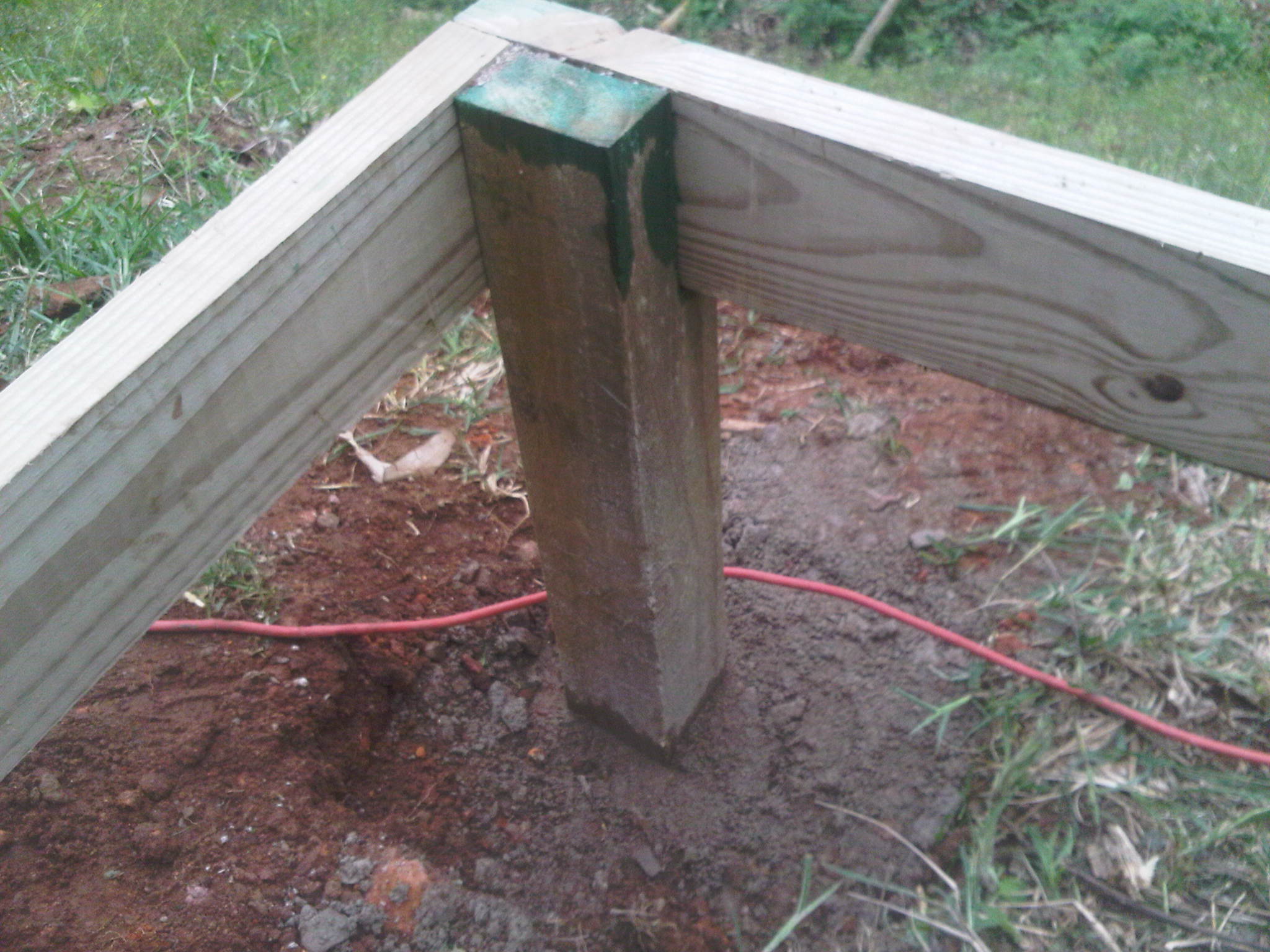
We need to treat the cut ends of the timber with an approved end sealer, we need to ensure that we are using H3 for timber above ground and H4 for timber in ground or in constant contact with wet soil and we have to show that we have planted our posts according to the recommended method.
Wooden deck guarantee

Click to enlarge

We at The Wood Joint offer to facilitate this process for you, for a small admin fee, so that you may activate the guarantee with them. We take pictures of what we are doing to prove that we have used end sealer and adhered to their criteria. Once the build is finished we compile the report that will be sent to them, by you, to register the build and activate you guarantee. We can also assist in submitting it on your behalf.

In the pictures alongside you can see the end sealer we are using which is a diluted version of the same chemical that is used in the treatment process. This applies to all cut ends and drilled holes. The greenish colour is due to the copper in the solution which prevents algae growing on the timber which can cause rot.

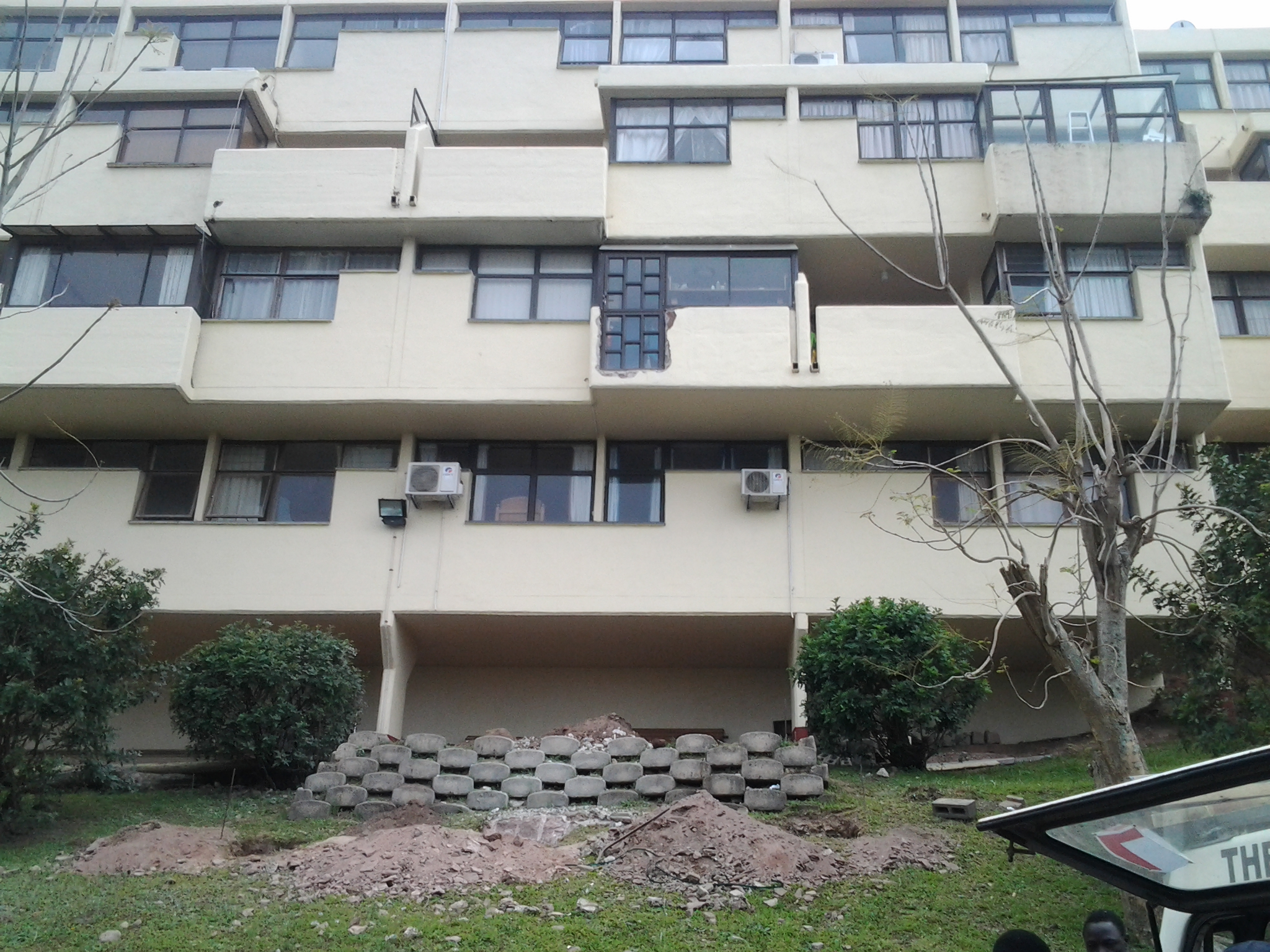
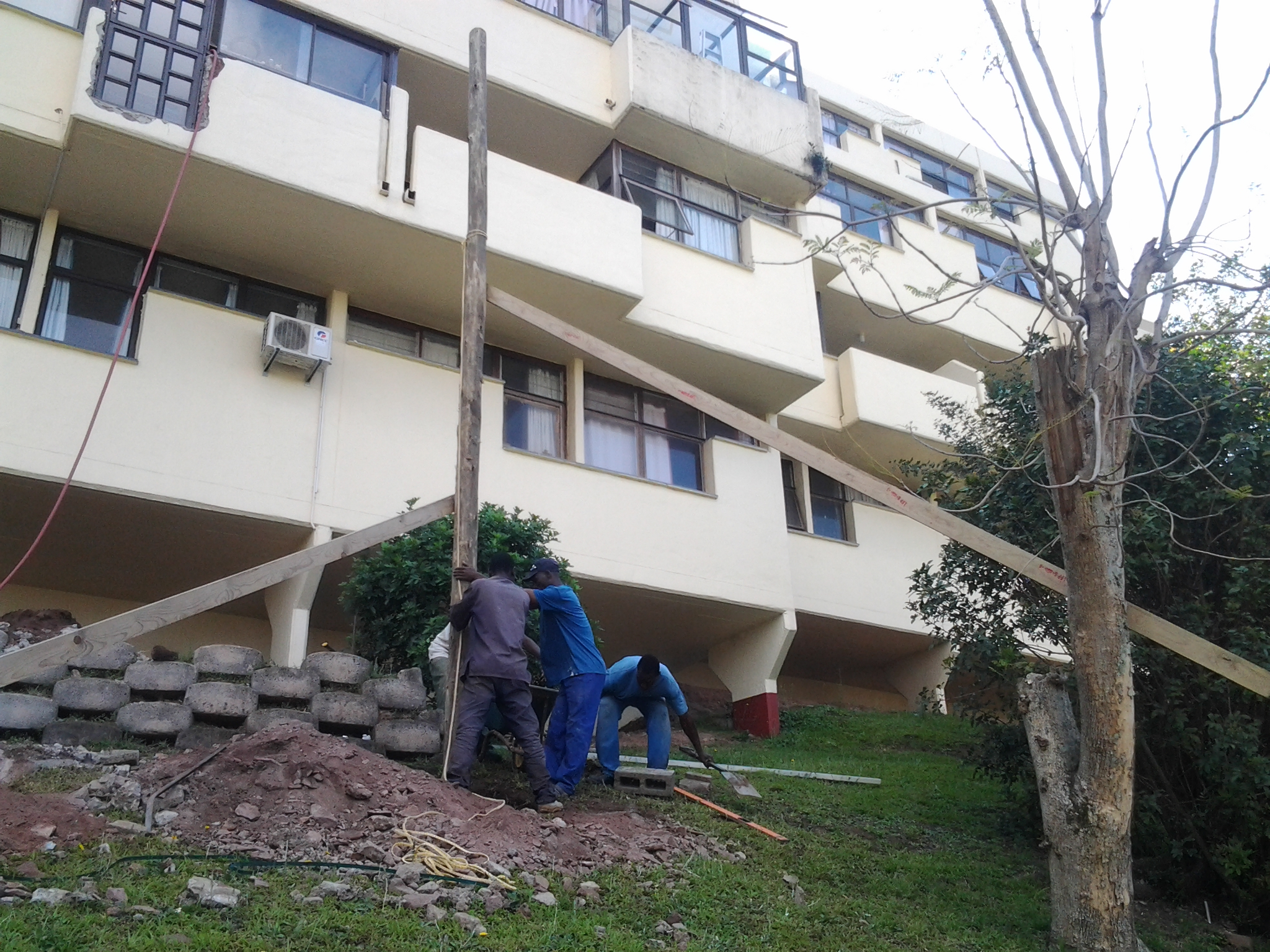
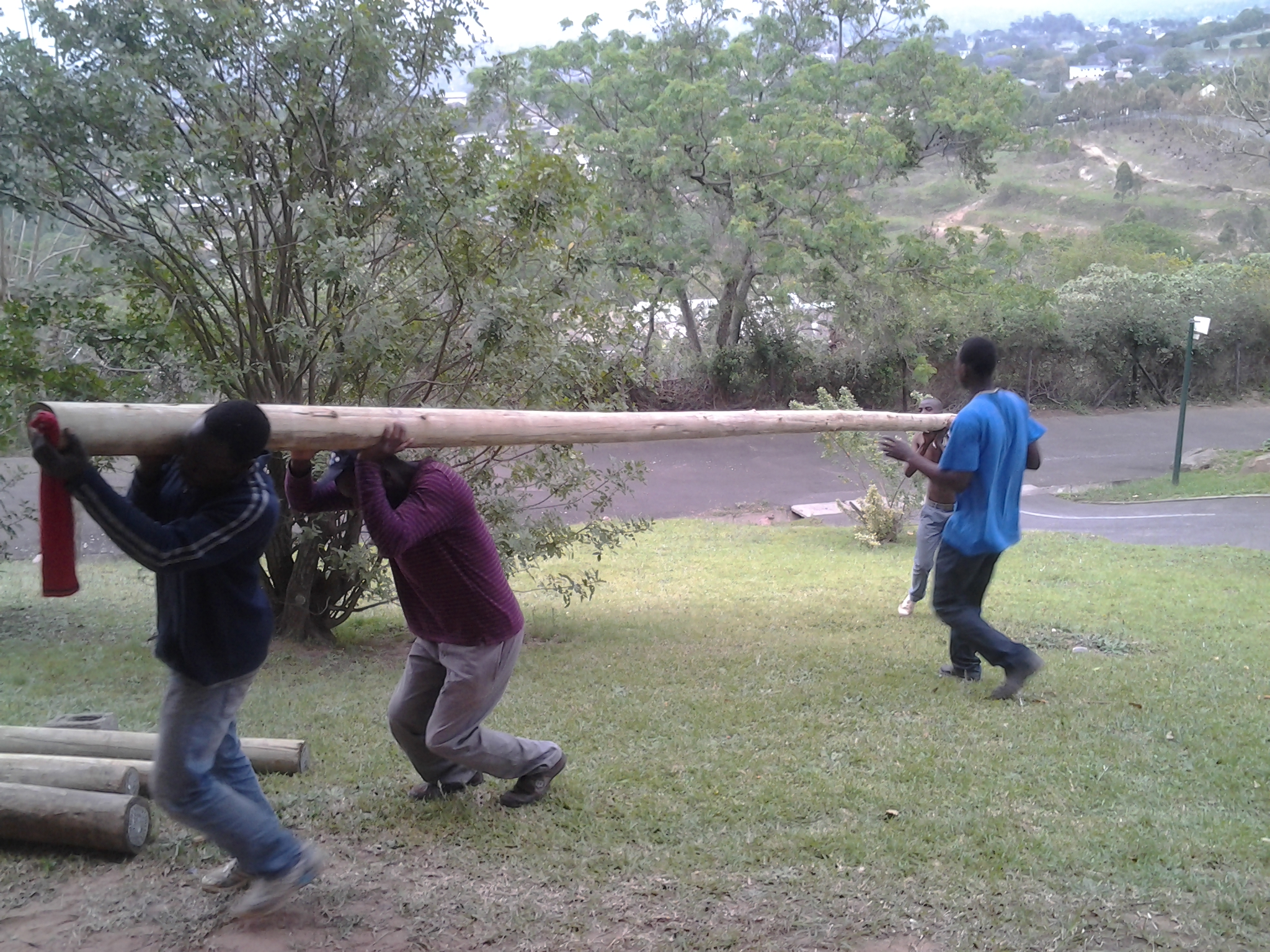
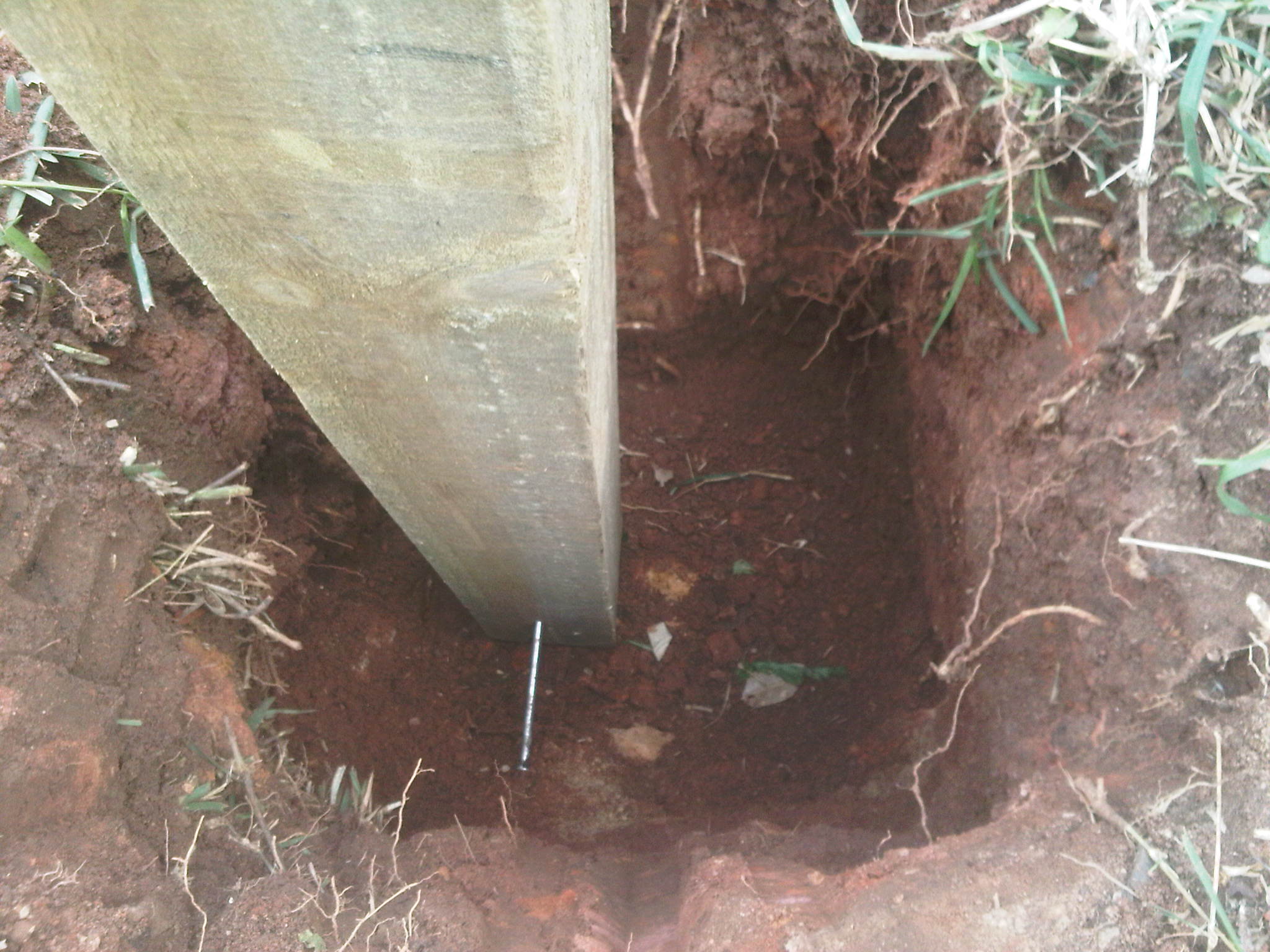
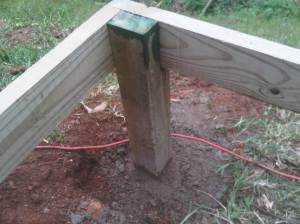
We also take pictures of us planting the posts or poles so that it is clear we have planted them correctly. When one plants a post, it should always be placed on top of soil and then concrete placed around the post. If you wish to place it on top of concrete than that concrete should be allowed to set completely before placing the post and setting it in concrete. This is to allow any water that does get into the post to escape through the bottom of the post. If a post is set on top of wet concrete it will slow the escape of water through the pole and this will speed up the rotting process from within the posts. I’m sure you’ve seen some gum poles that have rotted from the inside out. This is because they have probably been set on top of wet concrete.

Wooden deck guarantee

Click to enlarge

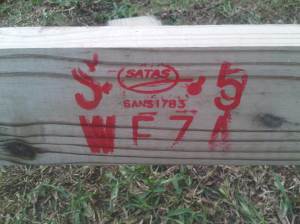
We also take pictures of the red SABS / SANS stamps on the timber so that it can be proved that the correct Hazard Level was used for the correct application, H3 for above ground and H4 for in the ground.

Both SABS and the company manufacturing the chemicals regularly, and unannounced, check on them and run test to ensure that their timber is being treated correctly. Pine cannot be treated in the same chamber as saligna (poles) for instance as the absorption rates of each timber are different. The timber needs to be treated at a certain pressure and the solution needs to be of a certain strength to arrive at the different H levels. This is tested by coring a section of the timber out, after treatment, and measuring the amount of timber the chemical has penetrated. They also use a dye to determine if the solution was of the correct strength. So it is important that this CCA treated timber is purchased from a reputable supplier.

Over and above this info we need to report on where the timber was purchased, when it was purchased, who treated it and so on. With all this information on hand, you the client, can register your build with the manufacturer and be rest assured that you substructure is safe for 50 years.

For a free no obligation quote on your wooden decking needs, please contact us on 082 496 5444 or use Wooden deck guarantee

Click to enlargethe contact form below.

Go back

Your message has been sent

Warning
Warning
Warning
Warning
Warning

Warning.


Removing Carpet Glue from Solid Wooden Floors

Removing floor adhesive

Clik to enlarge

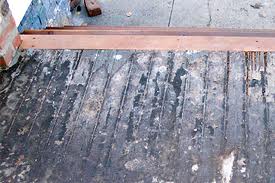
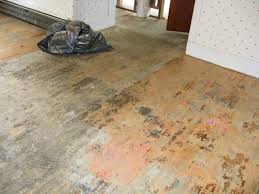
A major problem that one encounters when refurbishing old wooden floors is that of carpet glue. When these floors were first covered by carpets, back in the day when thick pile carpets were popular, they used carpet glue to stick the carpets down. The good news is that it can be removed successfully. The majority of it needs to come off before sanding the floor otherwise the sand paper will get clogged which will result in a higher cost of consumables as well as time in changing the paper more often. With a bit of time and the right tools and substances the job can be done quite quickly.

The glue that will have been used will either be a tar based substance or a general carpet adhesive. Most older houses will have used a tar based substance and newer houses a general purpose carpet glue. Tar based glues will have a tan to dark brown appearance whilst general purpose glues will be yellowish in colour. The process is very similar but the materials used will differ and it is important to choose the correct one so as not to waste time and money.

Tar based glue is best removed or loosened using mineral spirits which is readily available at any hardware store and is inexpensive. General purpose glue is best removed using a modern-day adhesive remover also available at your local hardware store. If you are a contractor, I would suggest sourcing the supplier, as this will reduce your cost significantly. Follow the instructions carefully as they will be pretty thorough and will explain how each product works best. Both products will be applied using either a sponge or roller and enough time needs to be given to allow it to do its magic. It is a very similar process to removing paint using paint stripper.

Removing floor adhesive

Click to enlarge

Once it has done its magic, use a plastic putty knife or similar to scrape and loosen the glue. Don’t use a steel knife as this can leave deep marks and gouges in the wood, making your sanding job a lot harder.

Once the bulk of the glue has been removed soak a rag in the mineral spirits or adhesive remover and rub the floor to remove the last bit. If you find that you have stubborn areas you can use a steel knife but be careful not to damage the floor or yourself.

The floor should now be left to dry completely. Leave the widows open too to get good ventilation and speed up the drying process. Check on the instructions if you can use water to clean it or not, although this will probably not be necessary as you are still going to sand it.

Your floor is now ready to be sanded smooth before re-sealing. Always take precautions and work in well-ventilated areas when using an adhesive remover as these substances can be very harmful. Always read the manufacturer’s instructions and take heed of their precautions. They know their product better than anyone.

Removing floor adhesive

Click to enlarge

You can search this blog for tips on sanding and sealing your floor by using the search bar on the top right.

For a free no obligation quote on your entire flooring or decking needs please feel free to call us on 082 496 5444 or use the contact form below. You’ll be surprised on how much you can save by getting a professional in to do the job.

Go back

Your message has been sent

Warning
Warning
Warning
Warning
Warning

Warning.

Floor Sanding Durban

Floor sanding Durban

Click to enlarge

Many home owners, with old houses, are finding that once they remove the carpets, which became so popular in the 70’s, that there are lovely solid wood floors beneath. After so many years of being trapped beneath a carpet, they do of course need some sanding and sealing in order to bring them back to their previous splendour. Most often there is nothing wrong with these floors and all that is required is a sand and seal to bring them back to new. At times one might find that some of the boards are lifting as the adhesive has given way in which case you will need to clean up the surface and re-adhere them to the substrate. Some of the older floors were stuck down using linoleum glue and I have found floors where this has all come off and left the boards loose. It then needs to be cleaned using mineral spirits. It is best to remove all of this and then use a modern-day adhesive to re-apply them.

Most contractors who installed solid wood floors of yesteryear used top quality timber and therefore you will find that the timber itself is quite all right to last another 100 years, if not longer. Because floors are generally not exposed to much water and weathering, their condition will remain almost as original and all that is required is a good sand and seal.

Floor sanding Durban

Click to enlarge

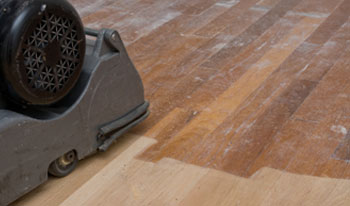
We use an industrial floor sander with a rough grit paper to remove all old sealer and any dirt and blemishes that may have taken hold over the years. The floor sander cannot reach all corners and once we have the majority of it off we use belt sanders and a rotex sander to reach the corners and up against the skirting or wall. Once it’s all off we come back and sand to a smoother finish using a smoother grit paper on all machines until we have reached the desired smoothness.

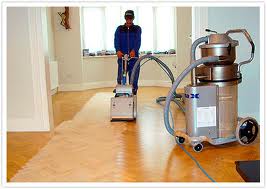
Once the floor is sanded to the desired smoothness by slowly taking the grit of the paper up, the floor should be completely swept to get rid of all dust. Be careful not to wet the floor with water. Water will cause the fibres in the wood to rise which will result in it going out of smooth and the sanding process will need to be started all over again. A good industrial vacuum cleaner will do the job and will lift all dust to get your floor ready to seal. There are dustless floor sanders available which either work by containing the dust in a bag or they connect to a vacuum cleaner that sucks the dust up as it is being sanded. The latter of course is the better option as then there is much less cleaning after sanding.

Once your dust is up you are ready to start sealing. There are various sealers on the market but the best to use is a polyurethane sealer. You can get a good quality water based one which will allow you to apply subsequent coats more quickly as it dries much quicker. You can get all three coats down in one day using water based polyurethane. The other polyurethane is a two pack one which contains a catalyst so that it dries extremely hard. The choice is yours. Two pack polyurethane will take longer to get your coats down so will cost more due to the time factor but will probably last longer, but will also be more harmful to the environment. Water based coating technology has come a long way these days and I wouldn’t completely shy away from it. But chose a well know brand to make sure that you are getting quality all the way.

Floor sanding Durban

Click to enlarge

You will need to lightly sand after the first coat to get rid of the fibres that stand up after sealing. As mentioned above water will make these fibres rise, so you will find with water based polyurethane these fibres will be more prominent resulting in a rough finish. So lightly sand them off, suck the dust up, and apply the second coat. Feel the wood between coats 2 and 3 to see if that step needs to be repeated as the last thing you want is a rough finish after all that sanding. Take your shoes off too as you don’t want to damage the finish.

For a free no obligation quote, call us on 082 496 5444 or use the contact form below.

Go back

Your message has been sent

Warning
Warning
Warning
Warning
Warning

Warning.

Solid Wood Flooring Installer Durban


Solid wood floors Durban

Click to enlarge

Solid wood flooring in Durban, and for that matter throughout the world, has risen again in popularity over the last few years. Many years ago solid wood floors were quite popular and in the 1970’s these were replaced with carpets. Many old houses are no finding top quality solid wood floors beneath their carpets and renovating them by pulling up the carpets and sanding and sealing them. Solid wood floors add an air of class to any house and of course add tremendous value.

There are various different types of wood that one can use, all of which vary in price, durability, hardness etc. I’ll list a few of the most popular in order of cost with the most expensive at the top. This list is by no means exhaustive but will give you an idea of what you can choose from. I won’t list current prices as these can change from time to time. For a costing please contact me below or through the contact us page.

  • Teak
  • Kiaat
  • American White Oak
  • Ash
  • Beech
  • Maple
  • Cypruss
  • Oregon
Solid wood floors Durban

Click to enlarge

Being solid wood floors they can be sanded many times, unlike laminates which can only be sanded a few times if at all. They are of course more expensive so one needs to carefully budget to ensure that the right choice will be made.

They can be installed in two methods. One is to glue them down to the substrate, normally the concrete floor using a suitable good quality adhesive. The other is to suspend then on batons about 30mm off the floor. Each method has its own pro and cons and at times one can only use the one method. For instance if the finished surface needs to be raised 50mm or so then a suspended or sprung floor will be required. If the reverse is true then they will need to be glued down. Also if the substrate is not completely flat, then it is better to suspend the boards. Gluing boards to a substrate that is not 100% flat it asking for trouble as the boards will eventually lift and the floor will need to be re-done.

Boards are normally purchased from a manufacturer and can either come straight-edged or with a tongue and groove on them. Normally those that are glued down come with a straight edge and those that will be suspended will come with a tongue and groove so that a nail can be inserted at a 45 degree angle to secure the board through the tongue so as not to be visible from the top.

Solid wood floors Durban

Click to enlarge

Once the floor is down the gaps need to be filled and then sanded to get all boards flat to each other. Sanding will proceed until a smooth finish is obtained and then it will be sealed using a good quality polyurethane. Nowadays there are many water based polyurethane sealers which behave in a similar fashion to the old tried and tested two pack sealers which contain an activator to harden them. Normally three coats are put down with a light sand between coats to ensure a smooth finish. After the first coat, especially with water based sealers, the fibres in the wood will be raised and need to be sanded off before the second coat is applied. This is sometimes not necessary between coats 2 and 3 unless there is dust in the air that settles on the surface before it dries. The best test is to feel the surface between coats to establish if a light sand is required.

For a free no obligation quote, please call us on 082 496 5444 or use the contact form below.

Go back

Your message has been sent

Warning
Warning
Warning
Warning
Warning

Warning.

Sealing a Wooden Sundeck by The Wood Joint – Durban

Sealing a wooden sundeck can be a time-consuming task. One needs to ensure that the sealer gets in between the gap on the deckboards so as to seal both edges of each deckboard. Balustrades can also be very time-consuming as there are many corners and tight gaps to get in to.

We use Timberlife Satin Wood Base 28 which is oil based and very viscous. It has zero wax content so that nothing dries on the surface of the timber making future maintenance easy and very cost-effective. You simply clean and re-apply. No more sanding.

One way is to paint it on using a brush. Another is to use a sponge to rub it on. And yet another is to spray it on. Each method of application has its pros and cons. I’ll list each one here: –

Brushing it on

  • Very time-consuming
  • The brush tends to flick the sealer because it so viscous so when brushing up towards the wall one needs to ensure it doesn’t flick on the wall
  • Fairly accurate as you can get the sealer where you want it

Sponging it on

  • Quite messy so wear gloves
  • No flicking but lots of dripping as the sponge gets squeezed. Use plastic beneath if you don’t want it to spoil the paving, but it is ok if it lands on the deck as you will sponge that too pretty soon
  • Fairly accurate and much quicker than brushing
  • You may need to touch up with a brush in the corners
  • Can’t get successfully into the gaps between deckboards
  • You can use a sponge roller for the surface

Spraying

  • Very messy so mask the walls or use a piece of cardboard to protect the wall. Have thinners or turps on hand to clean it off the wall quickly if it gets on the wall. If the wall is PVA, be very careful, but it cleans off quite easily from acrylic paints and windows
  • Watch the wind, it can cause havoc
  • Penetrates everywhere
  • Use a garden sprayer on the finest setting it has

So there are many ways to seal your wooden deck if using a viscous sealer such as Timber Life Satin Wood Base 28 or Woodoc Deck Dressing. Use a combination of them and you will have your deck sealed in no time. Be careful of spraying though. Use lots of plastic, watch the pool, watch the wind. But even with these few pitfalls, it is much, much faster than brushing. Watch the video above of us spraying a deck. For a free no obligation quote, call us on 082 496 5444 or use the form below.

Go back

Your message has been sent

Warning
Warning
Warning
Warning
Warning

Warning.

Choosing a Wooden Deck Builder in Durban

Wooden deck builder Durban

Click to enlarge

There are many wooden deck builders in Durban. With a simple search on Google you will find a few companies on page 1. If you trawl the various magazines that advertise home improvement services, you will find many there too. There are also various portals on the net that list these companies. Most of these wooden deck builders can be trusted and will deliver a relatively good quality product at a reasonable price. If however you dig a bit deeper you will find that there are literally hundreds of people in Durban who claim to be wooden deck builders. Again some of these you can trust as they are competent deck builders but have just perhaps not had the opportunity to learn how e-marketing works or the funds to pay for adverts on these portals or in these magazines. There are however many that can’t be trusted for various reasons ranging from running away with your deposit, to not building correctly, taking short cuts and using the wrong timber.

I have come up against a few of them in my career as a wooden deck builder in Durban. I have lost many jobs due to price only to find later that the installer has either not finished the job, has used the wrong materials such as non-treated or incorrectly classified CCA pine in their build, or has built it incorrectly and it is structurally flawed. Needless to say this leads to wasted money and a very unhappy client. The best price is not always the best option to go with because pure economics says that if the price is unrealistically low, then the builder must be taking short cuts in order to earn a living. If you consider that most contractors ask for a 50% or 60% deposit in order to purchase materials, then it makes sense that the profit margins are between 40% and 50% of the job. If one contractor is quoting a very low price he is either shaving his margins or buying sub-standard materials.

Wooden deck builder Durban

Click to enlarge

Be very careful when selecting a contractor. Do your research first and find out about other jobs he has done. Phone his references and get this info first hand from a satisfied client. A contractor will of course not list a reference who will not give him a good reference, so make sure he has provided enough references to ensure that he has at least done a few jobs that his clients have been happy with. Do a little research on the net yourself to find out what materials are available for decking and then ask him questions to test his knowledge of the product he claims to be an expert at.

Here are some questions you should ask a prospective contractor before awarding him your wooden deck build: –

What materials is he going to use? Balau is by far the best for the surface of your deck. There are others and they tend to increase in price, but balau is by far your most cost-effective hard wood. It is quite acceptable to use CCA treated pine as a substructure provided he is sourcing it from a reputable supplier who is regularly tested by SABS to ensure he is conforming to their standards.

Make sure he is using the correct hazard classification (H1 – H5) in his substructure. H2 CCA Pine is good for roofing where it is not subjected to the elements. H3 is good for outdoors in the rain and H4 is good for in the ground or in constant contact with wet soil. H5 is good for in water and H6 is good for in salt water. If he claims to be using balau as a substructure make sure he installs balau when he starts and stop the works if he does not. Many people won’t know the difference between pine and balau especially if he has coated it to make it darker. Meranti too can look very similar to balau. Check the delivery note when the supplier delivers it to your property to make sure it is in fact balau and not meranti or some other unsuitable timber.
Ask him what screws he is using. Kalgard coated screws are good. Stainless steel screws are even better. Ask him if he intends to close the screw hole with epoxy to prevent water getting in thereby increasing the chance of rot at the screw hole.
Check what his maximum spans are on his beams and joists. A piece of wood can only be spanned a certain distance before it breaks. Beams of 50 x 228 should only be spanned a max of 3m and 38 x 114 joists should only be spanned a maximum of 1.8 to 2.0m. Posts should be set in concrete to at least 600mm unless the deck is low-level in which case they can be set at about 300.
By asking a few questions about how he intends to build it and what he intends to use you will quickly learn if he knows what he is talking about or not.

In the picture alongside we built a narrow deck of 9m x 1m to extend the paved area next to the pool.

For a free no obligation quote or just for some advice please feel free to contact us on 082 496 5444 or use the form below.

Go back

Your message has been sent

Warning
Warning
Warning
Warning
Warning

Warning.


Wooden Decking Durban

Wooden decking Durban

Click to enlarge

I haven’t written or posted an article on wooden decking in Durban here for a while. The main reason is that we have been extremely busy building wooden sundecks in Durban. It is quite odd to be this busy in the middle of winter. Normally people want their sundecks built-in summer and winter is traditionally quiet in this industry for both builders and suppliers. I can only think it is because we have had quite a mild winter in Durban and as a result people have been installing sundecks rather than fire places. This coupled with the fact that we lowered our prices in about April 2013 after implementing a few cost saving techniques and securing our timber at very reasonable rates without affecting the quality. I hope this continues into the summer and carries us right up to the end of the year with flat-out building jobs.

We were awarded a 90m² wooden sundeck in Toti recently. It was to be installed on top of an existing concrete slab that doubled up as the roof of the parking area beneath. The concrete had just been waterproofed using Torch On so we could not secure our batons, or joists to the surface by drilling. We brought the level of the deck up so that the existing balustrade would be 1m above the surface of the deck. The existing concrete slab was about 1.4m below the top of the balustrade so we had about 400mm to raise it which allowed us enough space to build a super structure with 38 x 152 beams and 38 x 114 joists with a 19mm deckboard on top. This allowed us to keep the beams and joists off the surface and we installed 76 x 76 square posts to the beams to support it. Because we were using 38 x 152 beams we had to install posts more often as opposed to the 38 x 228 beams where the posts can be installed less frequently. The posts sat on top of some 3mm closed cell insertion rubber cut to 100mm x 100mm squares to stop the posts from cutting into the waterproofing over time. This system allowed us to suspend the superstructure as a sort of floating structure without having to secure anything to the concrete surface so that we didn’t need to damage the waterproofing. Again we used an H3 CCA Treated Pine substructure and balau deckboards.

Wooden decking Durban

Click to enlarge

This time around we spaced our joists perfectly so that we only had to waste a small amount of deckboards as off cuts. We did this by slotting an extra deckboard in where we had to, to prevent having an off cut of 400mm or so. We calculated that we would have about R5, 000-00 worth of 400mm off cuts if we had cut these. So it made sense to rather spend the money on a few extra joists than the off cuts.

We sprayed this deck with sealer rather than using a brush. We brushed the edges as it can often make a mess against the wall spraying it on and then sprayed the entire surface. Because we are using oil based sealer there is no chance of runs or streaks so it is quite safe to spray it on and we saved at least a day or two. Our biggest time consumer on this job was getting our timber up to the first floor. The service lift was big enough to take our deckboards from corner to corner, but was out-of-order on the day, so we carried them up two flights of stairs. The longer pieces had to be hauled 6m up the side of the building using ropes attached to each side of the timber. In hindsight we should have hauled the deckboards up that way too.

Wooden decking Durban

Click to enlarge

For a free no obligation quote or just to ask some advice on building your wooden deck, please contact me using the form below or you can call us on 082 496 5444.

Go back

Your message has been sent

Warning
Warning
Warning
Warning
Warning

Warning.

Wooden Balau Deck Built in The Bluff – February 2012

Wooden sundecks Durban

Click to enlarge

The Bluff is a wonderful place for a wooden deck builder in Durban. A lot of the properties there have relatively steep gardens and lend themselves well to installing wooden decks. It allows the property owner to make use of land which would have otherwise not been usable.
This property was very steep with a steep flight of concrete stairs to get from road level to the house. There was a second steep flight of stairs from the house to some outbuildings which contained a pub, pool and a small granny flat. The idea was to deck from the pub area over a small retaining wall towards the pool and around the corner of the pub to the braai area. All in all we were looking at about 35m² of decking. The client didn’t want a full height balustrade of 1m, but instead opted for a 500mm high simple balustrade as can be seen from the pics alongside. He didn’t want to obstruct the view when in a seated position.  There was also to be a flight of stairs to gain access from the pool area which was built over some existing concrete stairs.

The actual construction of the deck was relatively simple in that we were attaching joists or batons to the existing concrete floor directly outside the pub area and deck boards on top of that. We needed to place an under beam on the edge by the pool side as that was about 1.5m above ground level. This wooden deck was built completely out of balau so cost a little more than one with a CCA Pine substructure.

Wooden decks Durban

Click to enlarge

As I’ve mentioned in other articles we now build our substructures primarily out of H3 CCA pine with balau deck boards on top. The guarantee that comes with the H3 CCA Pine provides a good basis for an argument that it will outlast the balau as a substructure.

This wooden deck was left unsealed and allowed to go grey in colour from the sun’s UV. Balau won’t necessarily rot any quicker if left unsealed. It is so hard and dense that water does not easily get absorbed by it. The cause of rot is water that allows fungi and algae to grow. The algae causes the fibres in the wood to break down which is rot. Because the water cannot penetrate the balau that easily rot is reduced to a minimum.  Also balau contains many natural oils and resins which prevent water getting in. It also contains toxins which prevent insects from eating it. So overall it is a very suitable timber to use in wooden decks. Pine on the other hand, if left untreated, will rot very quickly, hence the need to CCA treat it to prevent rot and to prevent insect infestation.

When left unsealed balau will turn a grey colour. The grey is actually black algae but it is contained to the surface of the wood so doesn’t necessarily affect the integrity of the timber. It can however become slippery when wet. It is advisable to therefore pressure clean the deck from time to time to remove this black algae. After many years, leaving it unsealed can also produce small fissures in the wood which can collect water. One important thing to remember is that if you do plan to seal your balau deck after it has greyed, then it is imperative to remove this black algae before sealing it otherwise the final product will be very dark. This can be done by bleaching it using Timbrite or other suitable bleach designed for the purpose of reviving old greyed wood. One can also use a pressure cleaner or sand it off. But sanding is not always that practical on decks once they are constructed as there are many areas where the sander can’t reach.

For a free no obligation quote or just some advice please call us on 082 496 5444 or use the form below to send me an e-mail.

Go back

Your message has been sent

Warning
Warning
Warning
Warning

Warning.


Deck Refurbishments

Deck refurbishment

Click to enlarge

I have done quite a few deck refurbishment jobs and as mentioned in a previous article it is work I would rather stay away from. However, especially in the early days, it was necessary to do these jobs to keep paying the bills. Also it has provided me with a solid understanding of what not to do when finishing or sealing a deck. Also it has allowed me to see other construction methods of other deck builders first hand. Because these decks are relatively old one can see how a certain technique has behaved over time. But sometimes it is better to leave them alone, as I have done recently, because it can be like opening a can of worms.

The first thing to consider when sealing a new deck is to assume that you will be the one who has to refurbish it when it comes to refurbishing. This way you will probably apply the best finish to it so that future maintenance jobs are easy. The article on deck finishes covers in more detail what types of finishes are available and their pros and cons. When refurbishing one needs to first establish if there is structural timber that needs to be replaced. Sometimes it can be difficult to see if this is needed until deckboards are lifted. We did a job in La Lucia where we simply replaced deckboards and once we took the deckboards off we noticed that some of the joists had been eaten by insects and rotted. Although it is unusual for balau to be attacked by insects it can happen in the sap wood or if the tree was felled while it was still young. As a client and a contractor it is best to know exactly what state all the timber is in before the quote is accepted because no-one wants to find that once they lift the first deckboard the joists are so bad that new deckboards cannot be re-attached to them. So get underneath the deck, take a screw driver and poke around and see is there is rot or degradation.

Deck refurbishment

Click to enlarge

Rotten deckboards themselves are quite easy to pick up as they will normally be visible from the top and they will normally start on one end where the water has been absorbed by the end grain. As mentioned in other articles, water is absorbed by wood through the end grain largely and very little is absorbed through face or side grain. As such the wood will rot from the ends first. If a rotten deckboard is found rather replace the entire length of that deckboard as chances are it will have started rotting all the way along. Be careful to know what deckboards have been used. A 19 x 68 deckboards is so close to a 21 x 72 that with the naked eye one might miss it. But looking at it carefully you will see it is both thicker and wider (and more expensive). Measure it to make sure.

Balustrades can sometimes rot too but normally only where water tends to collect. Screw holes left open and not filled with epoxy are also areas where the boards can rot more quickly. Some decks are not worth trying to repair. I’ve seen decks with posts that have rotted off and beams and joists that have rotted. It is not worth trying to patch that as eventually the whole deck will need to be replaced. The cost of this will exceed building a new deck. Pine decks tend to rot more easily especially if they have been built using H2 CCA Treated pine. A separate article will run through the different type of CCA pine and which ones are suitable for which application.

Use the search bar on the top right to search for other related articles or see below.  For a free no obligation quote on refurbishing your deck please call us on 082 496 5444 or use the form below.

Go back

Your message has been sent

Warning
Warning
Warning
Warning

Warning.