Deck Refurbishments

Deck refurbishment

Click to enlarge

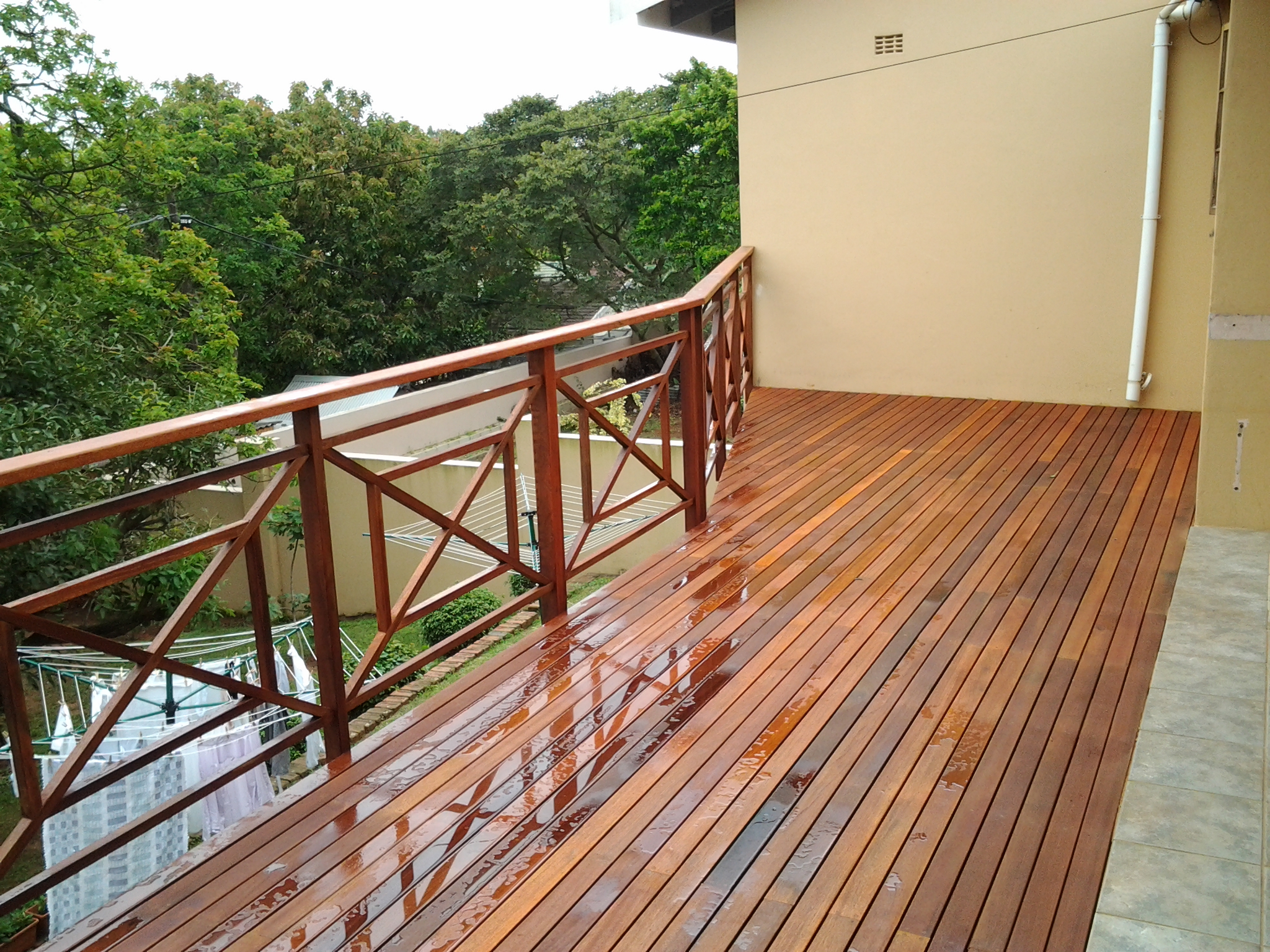
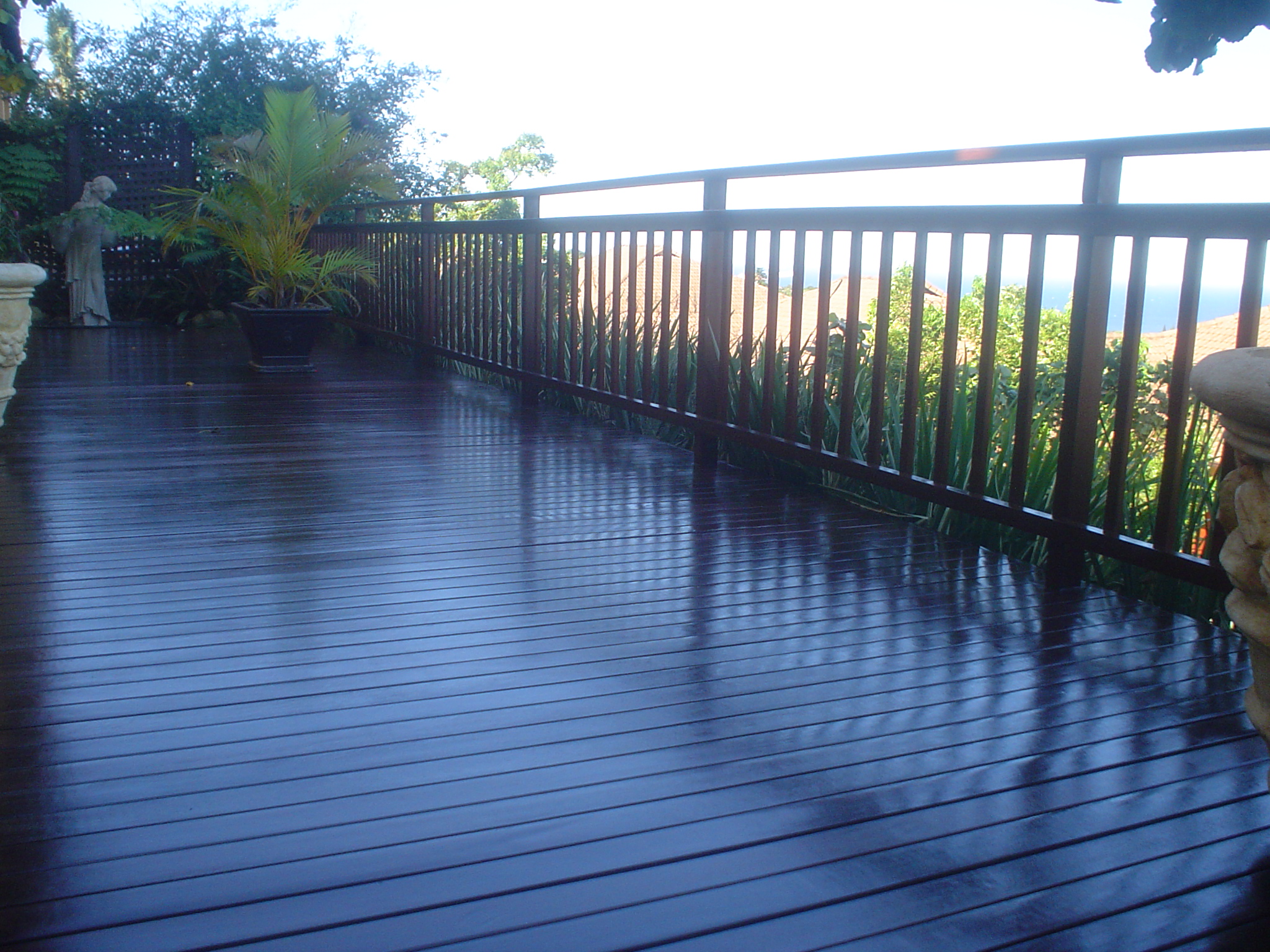
I have done quite a few deck refurbishment jobs and as mentioned in a previous article it is work I would rather stay away from. However, especially in the early days, it was necessary to do these jobs to keep paying the bills. Also it has provided me with a solid understanding of what not to do when finishing or sealing a deck. Also it has allowed me to see other construction methods of other deck builders first hand. Because these decks are relatively old one can see how a certain technique has behaved over time. But sometimes it is better to leave them alone, as I have done recently, because it can be like opening a can of worms.

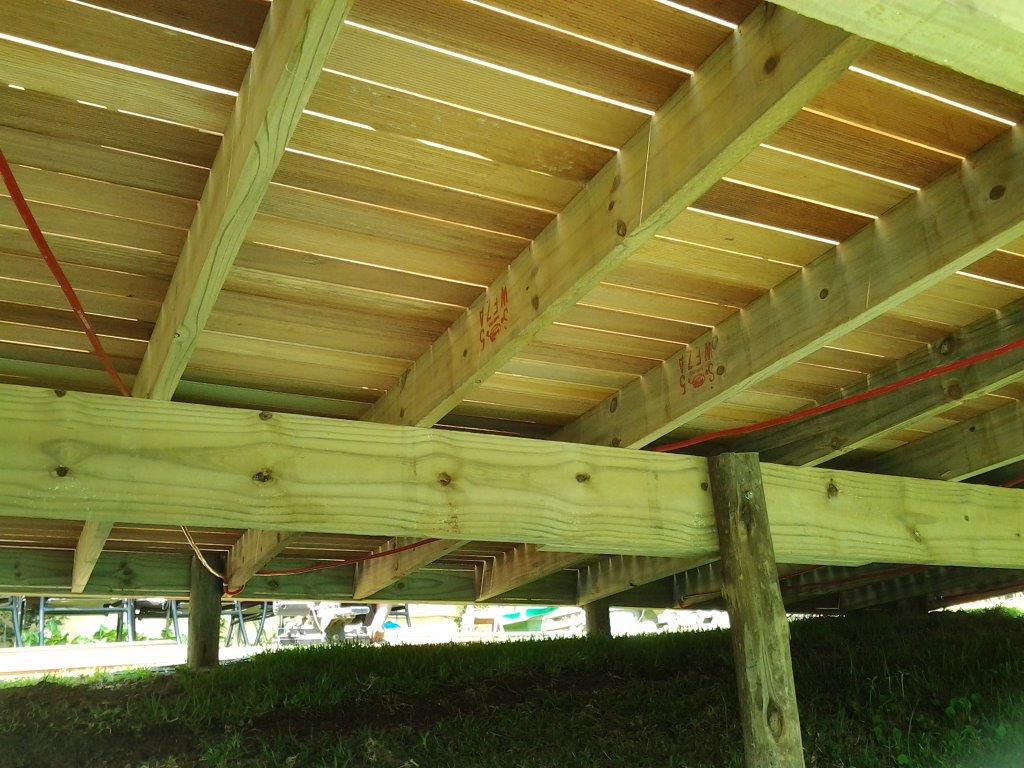
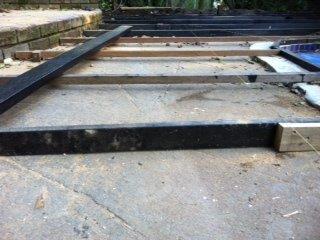
The first thing to consider when sealing a new deck is to assume that you will be the one who has to refurbish it when it comes to refurbishing. This way you will probably apply the best finish to it so that future maintenance jobs are easy. The article on deck finishes covers in more detail what types of finishes are available and their pros and cons. When refurbishing one needs to first establish if there is structural timber that needs to be replaced. Sometimes it can be difficult to see if this is needed until deckboards are lifted. We did a job in La Lucia where we simply replaced deckboards and once we took the deckboards off we noticed that some of the joists had been eaten by insects and rotted. Although it is unusual for balau to be attacked by insects it can happen in the sap wood or if the tree was felled while it was still young. As a client and a contractor it is best to know exactly what state all the timber is in before the quote is accepted because no-one wants to find that once they lift the first deckboard the joists are so bad that new deckboards cannot be re-attached to them. So get underneath the deck, take a screw driver and poke around and see is there is rot or degradation.
Deck refurbishment

Click to enlarge

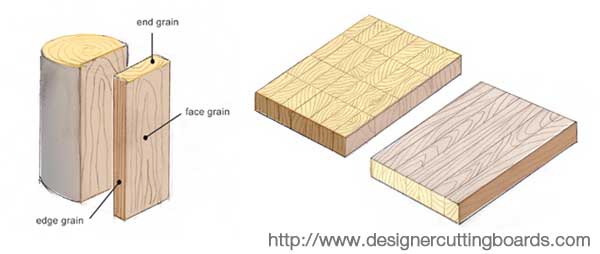
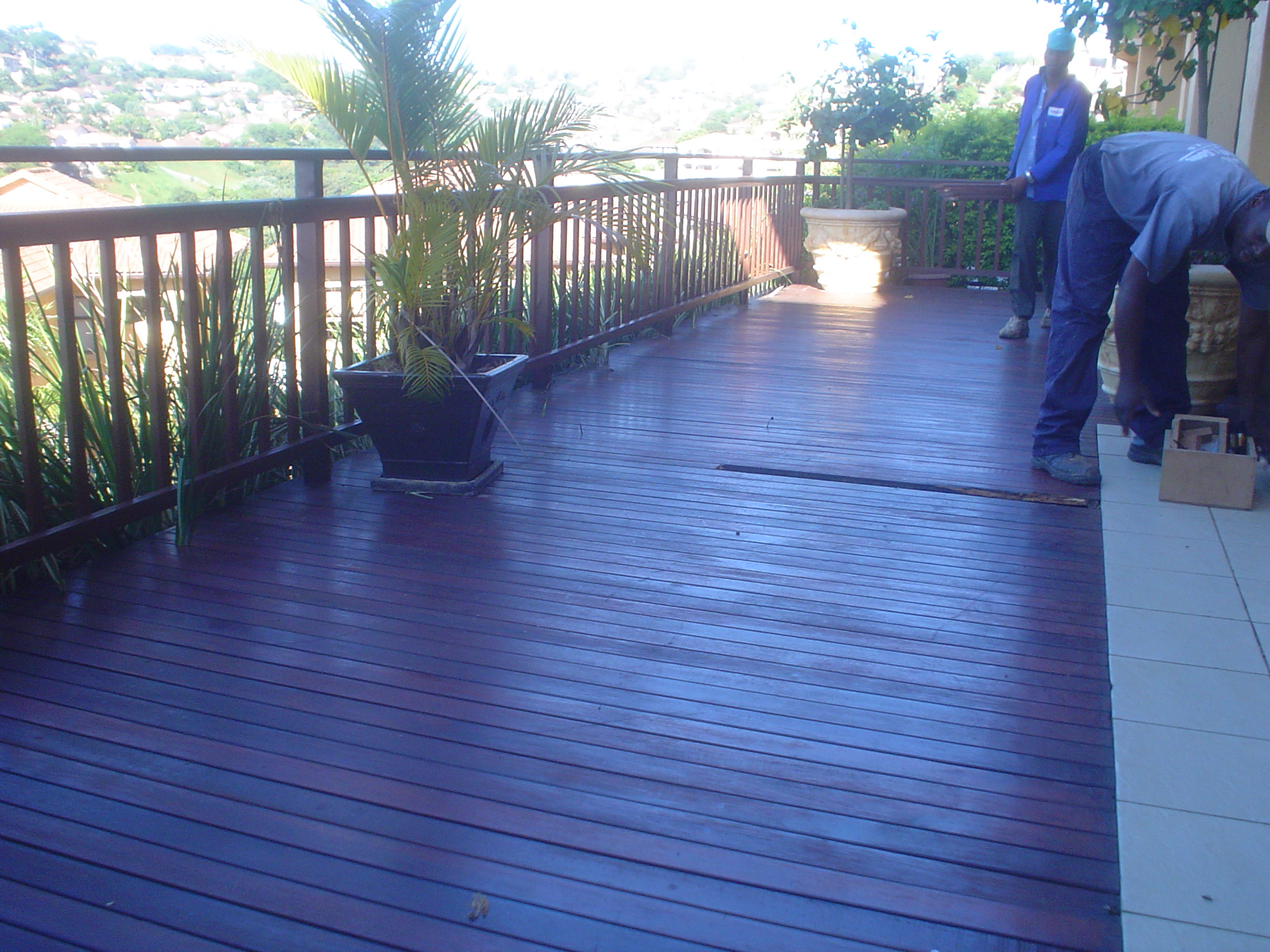
Rotten deckboards themselves are quite easy to pick up as they will normally be visible from the top and they will normally start on one end where the water has been absorbed by the end grain. As mentioned in other articles, water is absorbed by wood through the end grain largely and very little is absorbed through face or side grain. As such the wood will rot from the ends first. If a rotten deckboard is found rather replace the entire length of that deckboard as chances are it will have started rotting all the way along. Be careful to know what deckboards have been used. A 19 x 68 deckboards is so close to a 21 x 72 that with the naked eye one might miss it. But looking at it carefully you will see it is both thicker and wider (and more expensive). Measure it to make sure.

Balustrades can sometimes rot too but normally only where water tends to collect. Screw holes left open and not filled with epoxy are also areas where the boards can rot more quickly. Some decks are not worth trying to repair. I’ve seen decks with posts that have rotted off and beams and joists that have rotted. It is not worth trying to patch that as eventually the whole deck will need to be replaced. The cost of this will exceed building a new deck. Pine decks tend to rot more easily especially if they have been built using H2 CCA Treated pine. A separate article will run through the different type of CCA pine and which ones are suitable for which application.

Use the search bar on the top right to search for other related articles or see below.  For a free no obligation quote on refurbishing your deck please call us on 082 496 5444 or use the form below.

Go back

Your message has been sent

Warning
Warning
Warning
Warning

Warning.

Reducing rot in wooden sun decks

preventing rot in wooden decks

Click to enlarge

This article will focus solely on reducing rot in wooden sun decks rather than a specific article on a job we have completed.
One of the first questions that are asked when planning to build a wooden deck is that of maintenance. Being wood, the deck will always be susceptible to rot and insect infestation, but with the proper care this can be reduced to the absolute minimum and can compare favourably, if not better, to using other materials such as composites, concrete and tiles. Let’s face it when it comes to aesthetics and warmth wood is best, but often people opt for other materials simply because there is a belief that they are easier to maintain and will cost less in the long run.

Rot is caused by a break down in the fibres of the wood. A breakdown in the fibres of the wood is caused by algae being allowed to grow on the timber which in turn is caused by water. Water therefore does not directly cause rot. A piece of wood can live in water all its life and not rot, but if it is not cared for properly then it will cause algae to grow and ultimately rot. CCA Treated timber of course eliminates this because it contains copper which prevents algae from growing. However it is only possible to CCA treat certain timbers such as pine and to a degree Saligna because of the differing densities of the woods. Pine is soft and balau is hard. CCA treatment is done through pressure treating (vacuum) and it is therefore impossible to CCA treat balau as it is too hard for the solution to penetrate the timber.

preventing rot in wooden decks

Click to enlarge

So how does one reduce the chances of balau rotting? Well first of all balau is naturally resistant to rot because it is twice as dense and twice as hard as pine for instance so the water doesn’t penetrate it as easily. Also it contains natural oils and resins which repel water. So it will rot, but it will take longer than other timbers.

A piece of wood, any wood, takes in water largely through the end grain. Very little water is absorbed through the face or side grain. Think of it as a bunch of straws. When the straws get wet on the ends they can take up water, but they can’t take up water through the sides.

So the important areas of your deckboard is of course the ends, or end grain. Where a deck board is cut, there is not much that can be done to stop water ingression except to seal it with a suitable water-repellent sealer after or during installation. When a deckboard comes from the timber yard it is often closed off on the ends with wax. However that board needs to be cut in order to fit into the deck so one end will always be wax free. Also it is not advisable to leave that wax on. In the hot sun the wax starts to melt and leaves unsightly marks on the joins. So it is best to cut the wax off before installation. That leaves two ends exposed which now need to be sealed off as best as possible using sealer. Apply it liberally to the ends and make sure they are re-sealed during maintenance intervals.

The other area that is vulnerable is where the screw hole is drilled through the deckboard to attach to the joist. This leaves a hole where water can penetrate the end grain on two sides. What compounds this problem is that the screw is normally counter sunk which allows water to collect in the hole and be absorbed up and down the end grain. Some deck builders use a stop bit to insert the screw whereby the screw head stops at the surface of the deck. I don’t however use this method for two reasons. Firstly the screw is now not tight up against the bottom of the counter sunk hole so the board may work itself loose over the years. Secondly, there is still a small gap around the screw head for water to get into and move along the end grain. And trust me water will find that hole. You will often see deckboards that have started rotting at the screw holes. Now you know why.

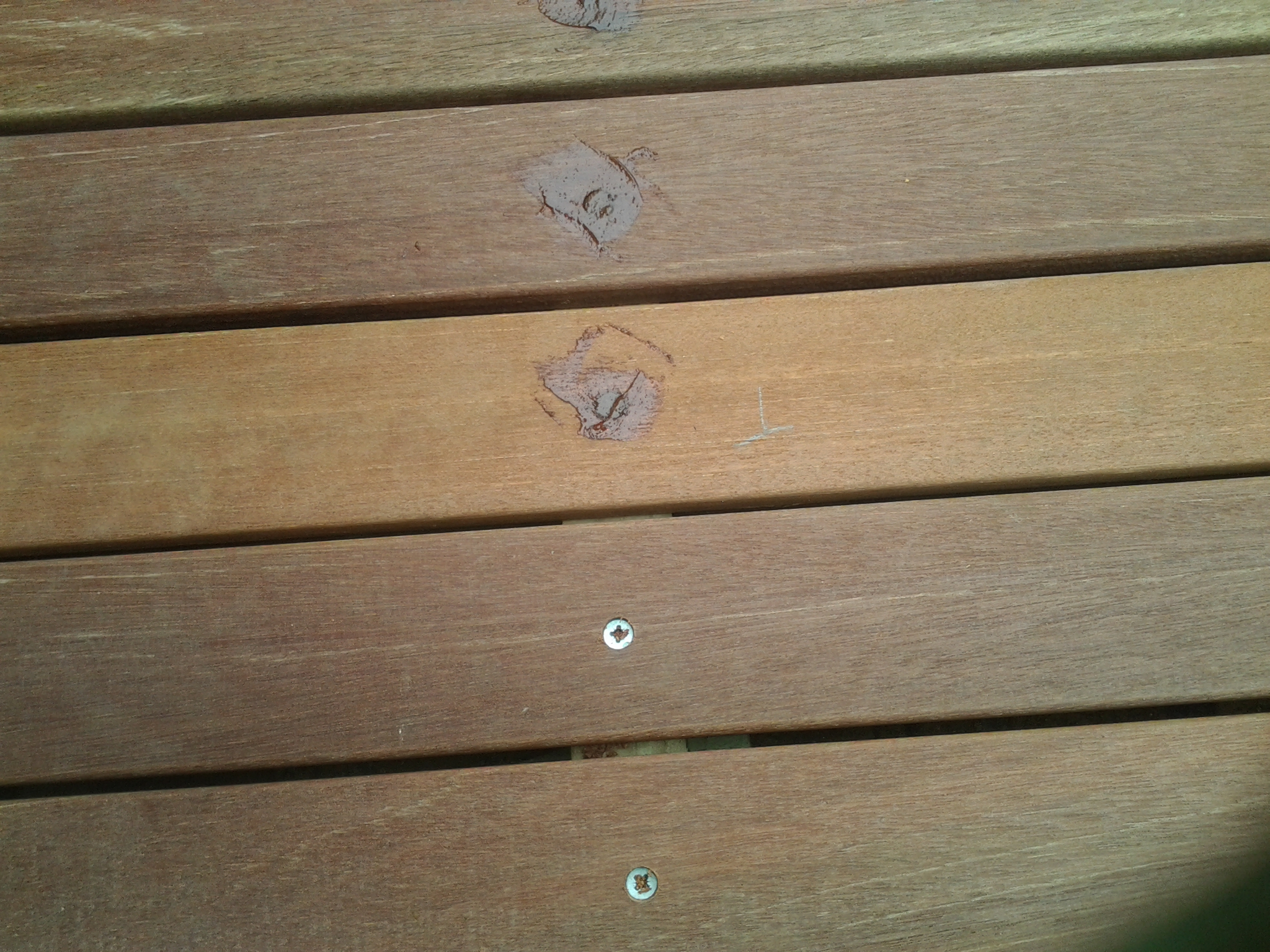
Instead I counter sink the screw hole about 5mm, insert the screw and tighten it until it is tight right up against the bottom of the hole leaving the screw head counter sunk a few millimetres. I then take a clear epoxy, mixed with the sawdust of the same timber to match the colour, and force it into the hole leaving it slightly proud. Try and use a very fine saw dust. It makes mixing the epoxy much easier and it goes in the hole better. Once it is dry, I use a grinder with sanding pad to flat it and then I use a rotex sander to remove the scratch marks left by the grinder. Now it is ready to be sealed and good luck to any water that thinks it can get in there. The epoxy is the only filler that will last. Wood filler will pop out in a few months’ time. Use a clear epoxy as the saw dust will match the colour of the deck. White or grey epoxy will leave a white or grey mark on the surface.

It takes more effort and takes longer to do it this way, but my crew has it done to a T now. And the net effect is a better built deck that will last longer and will cost less to maintain. So there you have it, the warmth of wood without the hassle and without having to settle for alternative materials.

For a free, no obligation quote or for some advice please feel free to contact us on 082 496 5444 or complete the form below and I will contact you. Please also feel free to leave comments below.

Go back

Your message has been sent

Warning
Warning
Warning
Warning
Warning

Warning.

Wooden Sundeck Constructed in Toti Durban

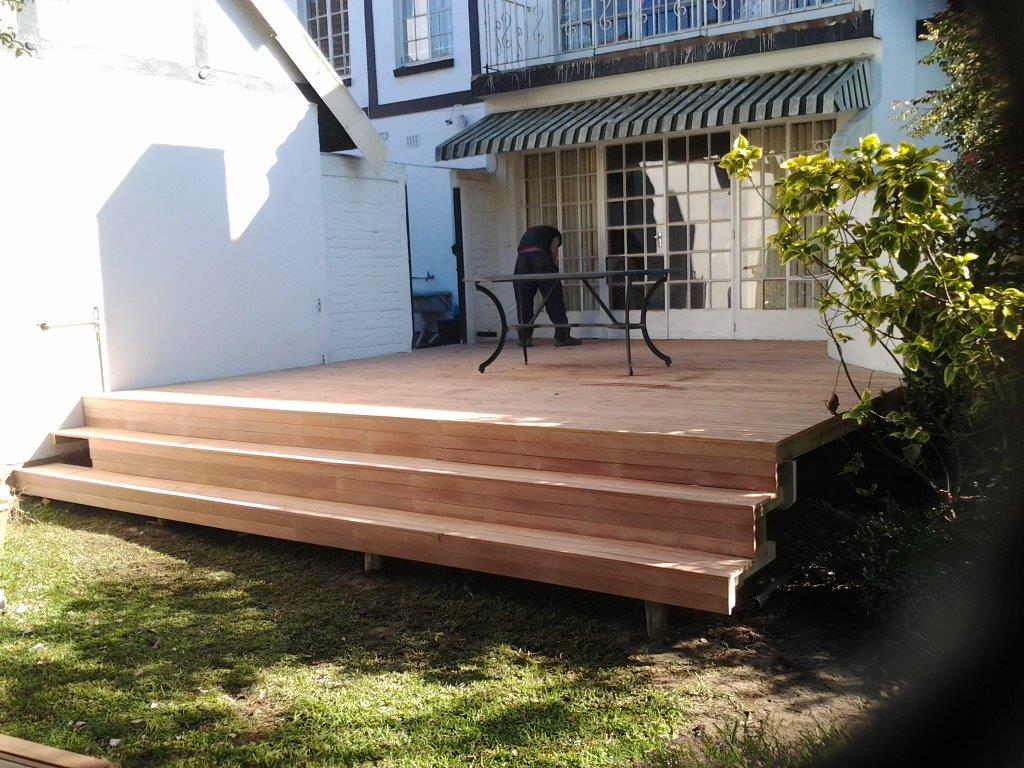
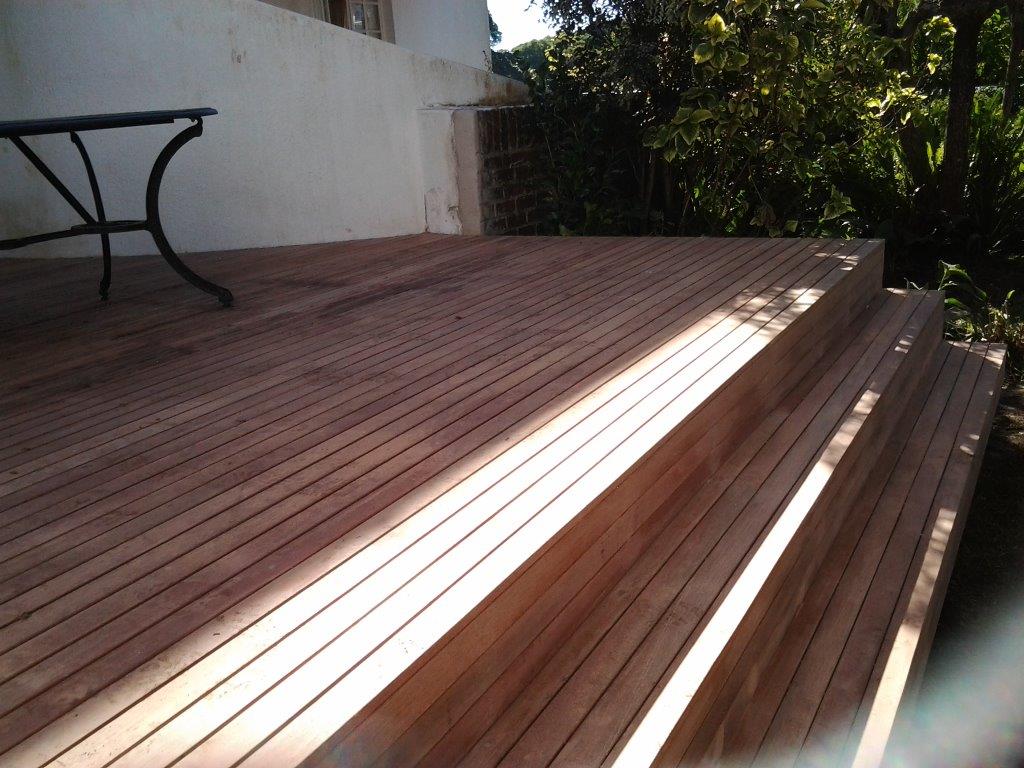
This wooden sundeck we constructed in Durban was a low-level deck which was barely off ground level. We were taking it flush off the level of the floor in the lounge and extending it outwards into the garden. The grass was not growing properly in this area due to large trees that were creating a large shadow so the client wanted to deck it to eliminate this problem.

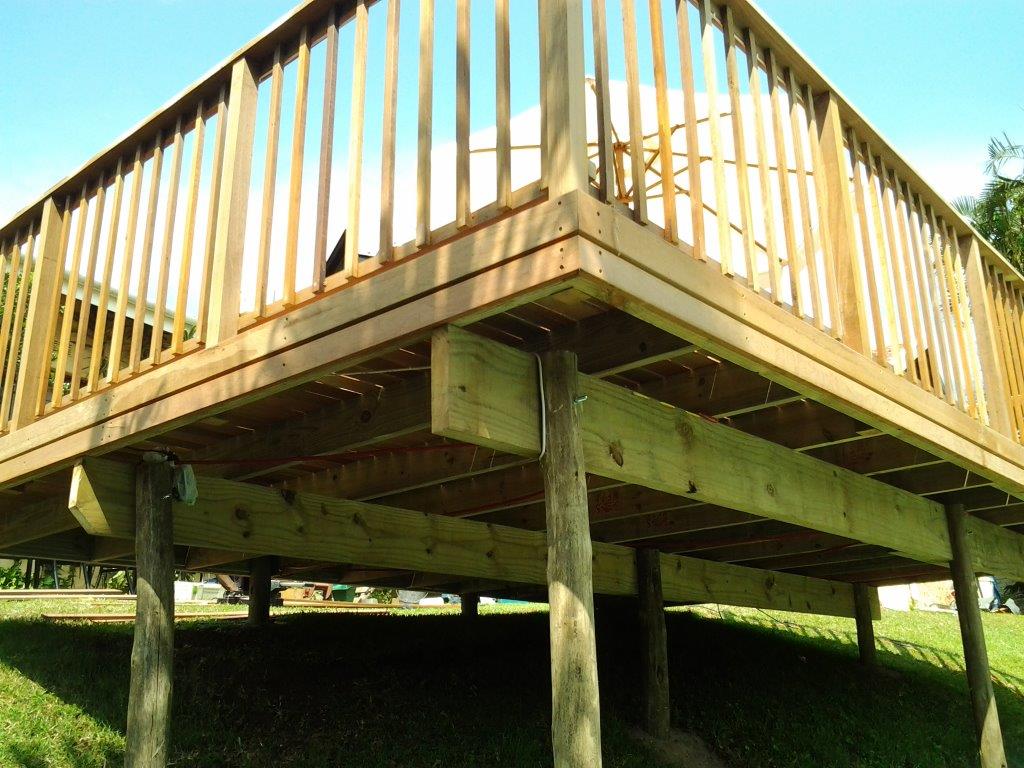
The biggest challenge when building a wooden deck near or on ground level is to get a support beam underneath the joists where needed. There are two methods one can use. The first is what I call the cleat and beam system whereby a beam is placed underneath the joists to give them their support. We normally use a 38 x 114 joist and a 50 x 228 beam. One needs to span the 38 x 114 to a maximum of 2m but 1.8 is preferable. So every 1.8m to 2m one needs to slot an under beam below so as to support those joists. Posts should be used every 3m on the 50 x 228 beam. With this spec one can save on timber while still providing adequate support so that the deck is structurally sound.

The problem with this system arises because if you have a 228 beam, plus a 114 joist and then a 19mm deckboard on top of that your total height needed above ground level is 361mm. If the deck is too close to ground it will mean excavating soil to be able to drop that beam down enough to still arrive at the original height of your deck. Although this is quite possible and not that too time consuming, it sometimes results in the main beam sitting in soil or it may come into contact with wet soil over time. One must therefore use at least H4 CCA Treated SA Pine as the beam and in fact that whole substructure should be H4, even though the joists aren’t in contact with soil, to ensure that no rot will occur.

The other method is to create a frame, all in the same plane using 38 x 114 and use no under beam. This will result in the deck only being 133mm in height so that no excavation will be needed in order to bring the deck up to the required height. However now that you don’t have a beam to attach posts to, you will need to attach the posts to the joists and fascia beams. Again this is not a problem, but it will require a few more posts than in the first method as you can only span your 38 x 114 to a max of 2m. Hence more posts, more concrete and more labour in digging holes.

We used the joist and beam system here as we had enough space below to set the beam without having to dig too far into wet soil. So our work was made lighter by not having to dig too many holes.

Once the substructure is up, the deckboards can go down. On this wooden deck we used 19 x 68 balau deckboards. We used two deckboards as a fascia to cover our joists and beams, filled our holes with epoxy, sanded and sealed.

For a free no obligation quote or advice on your deck or other outdoor timber construction please call us on 082 496 5444 or use the form below to contact me.

Go back

Your message has been sent

Warning
Warning
Warning
Warning

Warning.

Wooden Deck Built in Toti at a Guest House

Wooden deck builder Durban

Click to enlarge

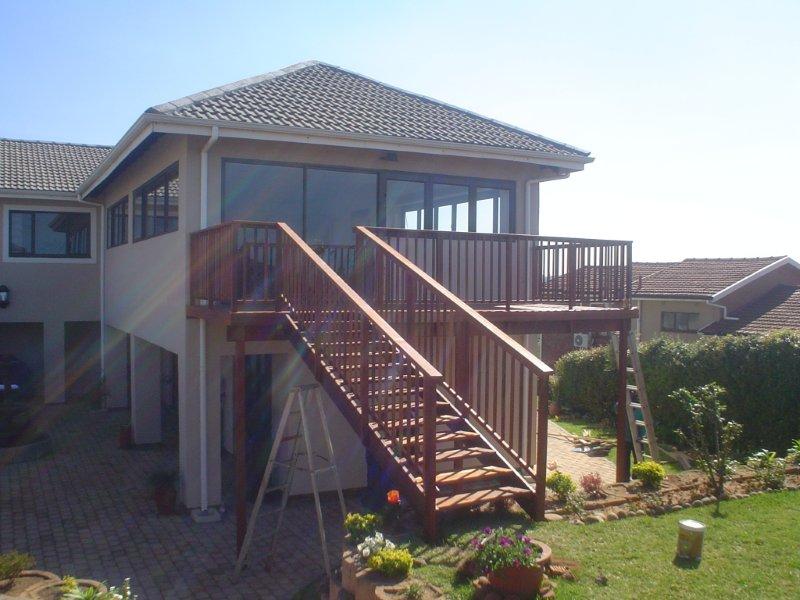
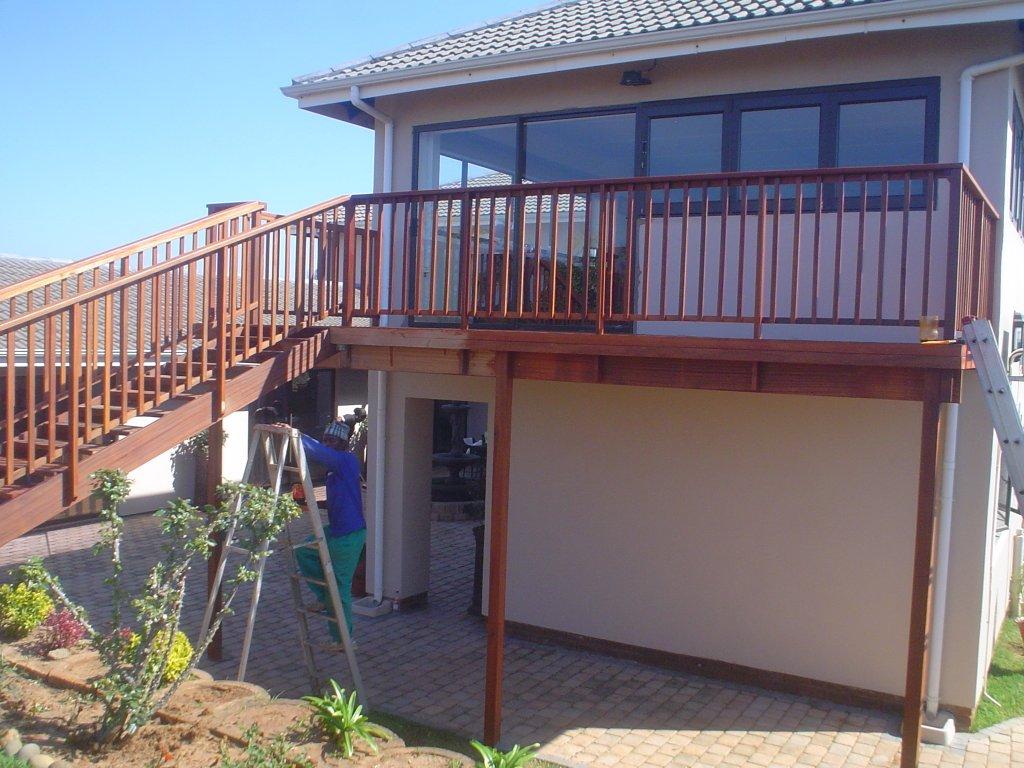
This was one of my first wooden decks in Durban that I undertook. The Guest House we built it for had just opened up the side of the dining room on the first floor with sliding doors and now wanted to extend the area by adding a deck of about 14m². It is always important to first break through the wall and install the sliding doors and then build the wooden deck. This way the deck builder can get the surface of the deck flush with the entrance to the room. I have built one deck before where the client insisted that I build the deck first and then they were going to break through. Although we did our best to measure where the inside floor was, there may still have been a small step up or down once they had broken through. On this build though it was done the right way around and the deck was flush with the floor inside the dining room.

The deck was a normal cleat, beam and joist system where we secured a cleat to the wall with sleeve anchors, installed vertical posts and attached a beam to that and then ran joists between the cleat and beam with a small canter lever. We had to try to set our posts as far out as possible so as to create enough space under the deck that could be used.

Wooden deck builder Durban

Click to enlarge

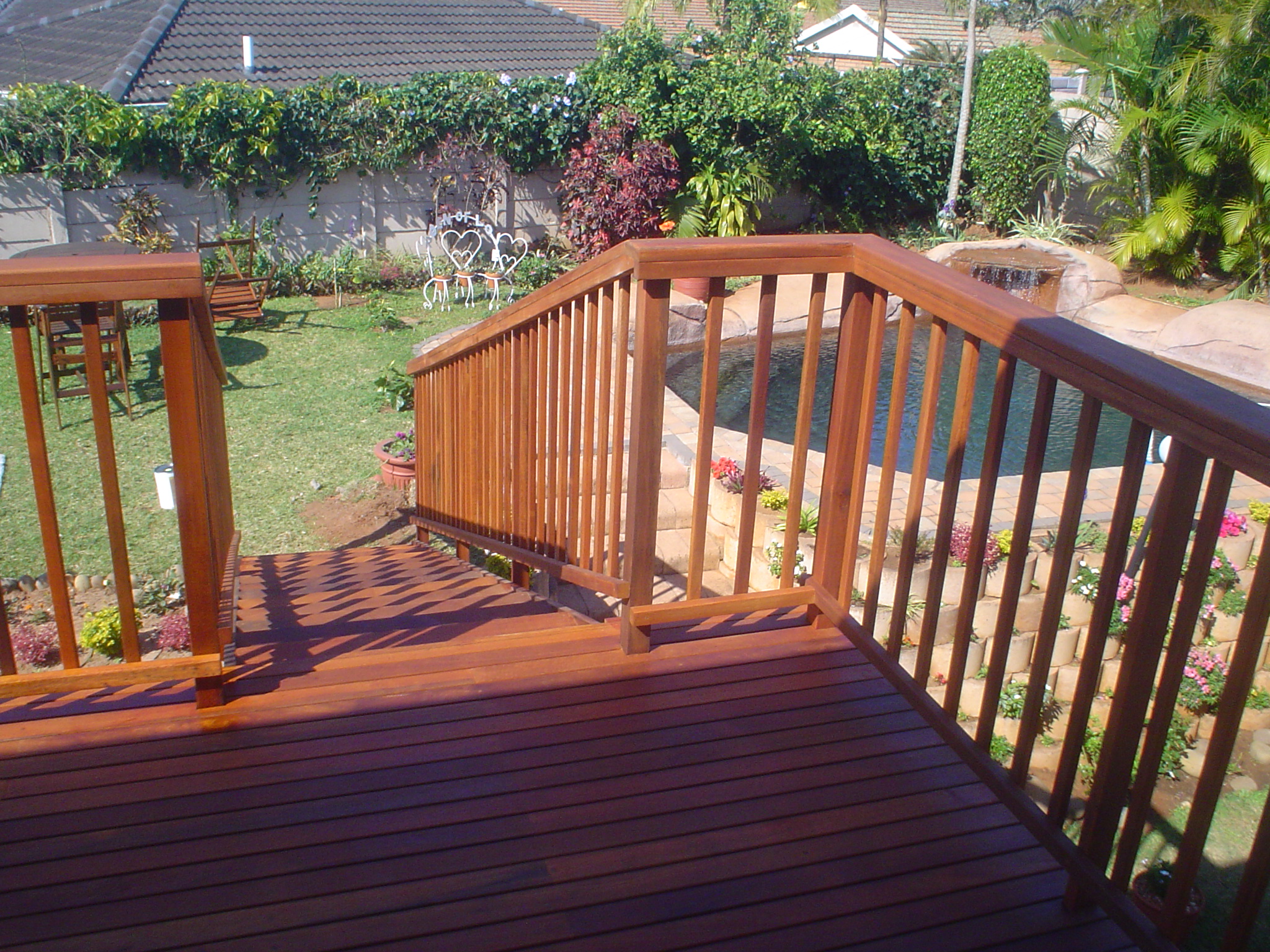
The balustrade was a normal picket style one. These are the safest and really the only one that is completely compliant with building regulations. Building regulations state that there should be no opening that is larger than 100mm. With all other balustrades there are some spaces that become greater than 100mm. Besides being non-compliant they are not that safe especially for small children. With the pickets running in a vertical direction it is more difficult for children, or adults, to climb up on the balustrade and fall over. The other designs offer more horizontal pieces that people can use to climb up on.

The stairs we built here joined the deck to the pool area which was about half a floor up from ground level. There were separate concrete stairs running from ground level to the pool area but the new wooden stairs we built could now be used to access the pool area, and the rest of the outside area, from the dining room. Because there was no way of supporting the stringer mid-way we had to ensure that we had the correct width of stringer so that it would not break over time. Most of the strength in a piece of wood is in the width and not the thickness as the downward force is exerted on the width.

Wooden deck builder Durban

Click to enlarge

We finished up by filling our holes with epoxy and sawdust and sealing with a Timberlife Satin Wood Base 28 Mahogany tint. In our decks we counter sink the screws which leave a small screw hole that water can get into. It is important to fill these so that no water can get in. If water does get in it can travel down the end grain and will cause the wood to rot much quicker at the point of the screw hole. Water travels through wood along the end grain rather than being absorbed from the face or side grain. Wood filler is also not suitable as it will pop over time due to the weather. Clear epoxy works well mixed with a little saw dust to match the colour. Once it’s dry, use a grinder with a sanding pad to flat it and then sand the grind marks off before finishing.

For a free no obligation quote on your deck or for some advice, please contact us on 082 496 5444 or complete the form below.

Go back

Your message has been sent

Warning
Warning
Warning
Warning
Warning

Warning.

Wooden Stairs Built in Cowies Hill, Durban

Wooden stairs Durban

Click to enlarge

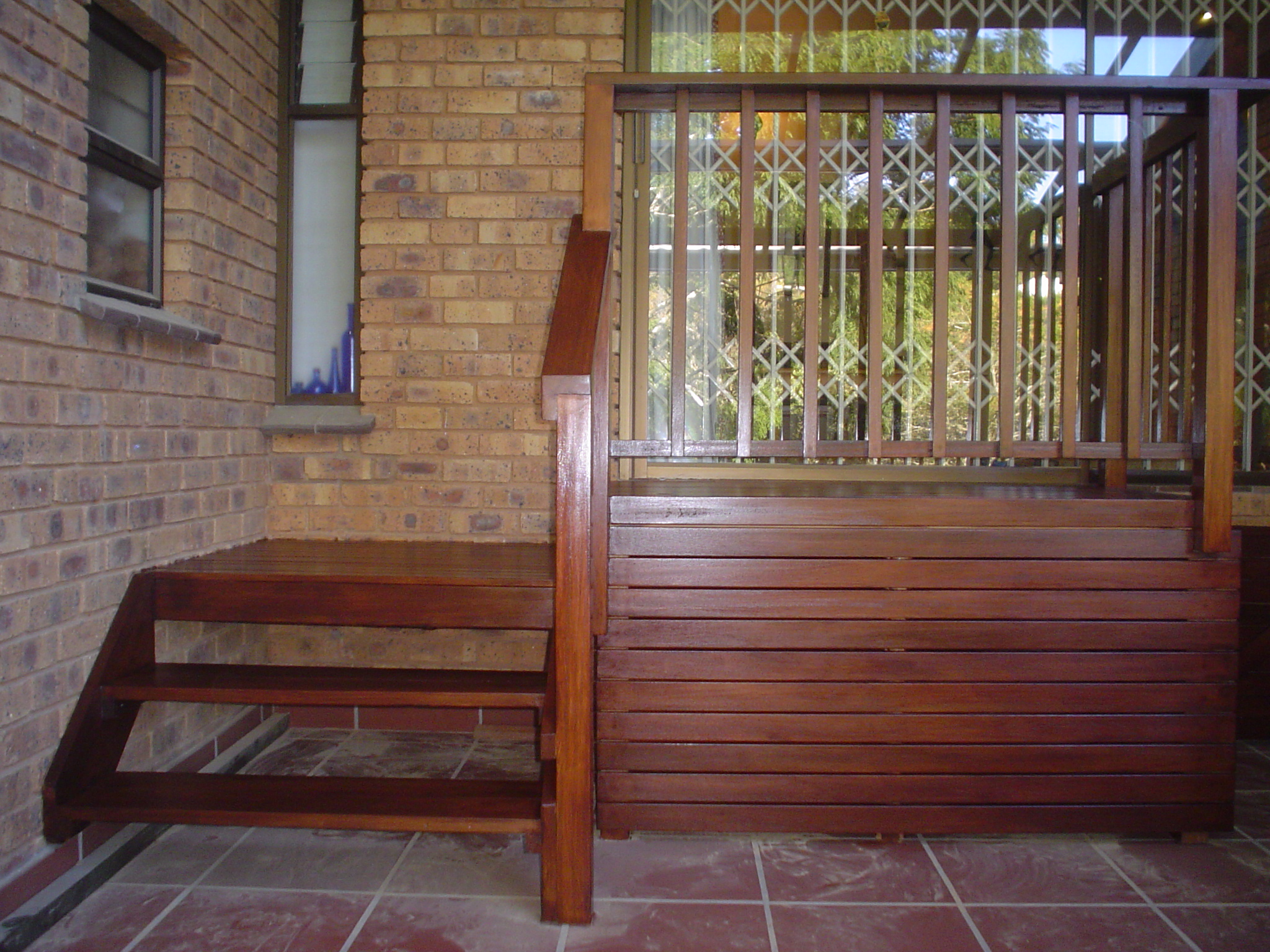
These wooden stairs we built in were quite interesting because the client had a dining room which was raised about 600 from the patio outside. He wanted to be able to access the dining room through the new sliding doors. So we designed a small landing and some stairs to fit snugly in on one side so as to not take up too much space on the patio yet still allow a safe passage down the stairs. There were only a total of two treads plus the landing. It not only added value by creating an access point but also added charm with wood.

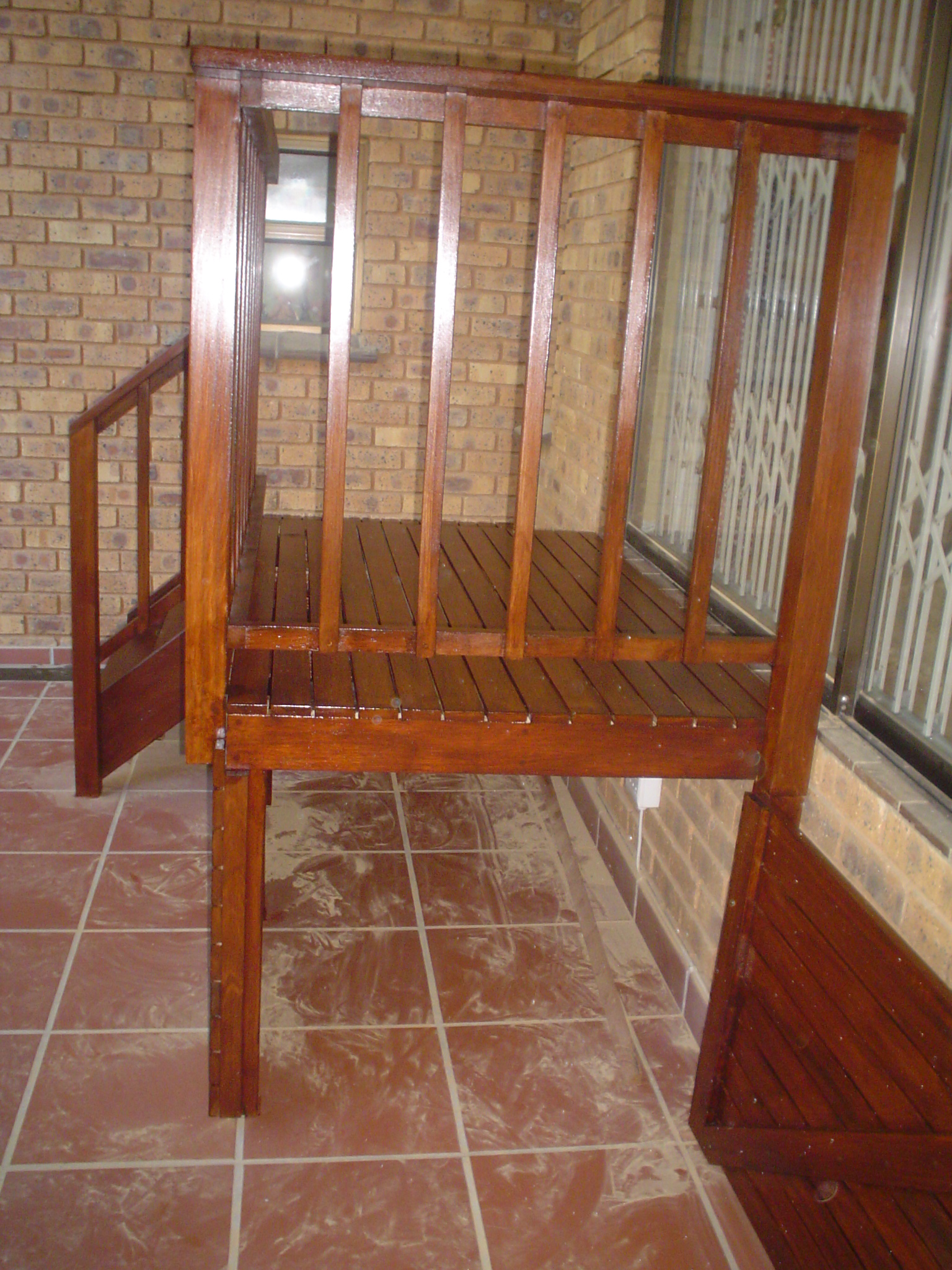
We built the entire landing on the ground from balau, screwed it all together and then lifted it into place and attached it to two walls of the house using sleeve anchors. This method also kept the whole landing in the same plane i.e. no cleat and joist system but rather a joist and fascia beam system. Each method has their own applications. If it is a fairly large deck where it would be impossible to attach each joist to the beam and then lift it into place, then one would need to use a cleat, beam and joist system. However where it is possible to attach each joist to the beam or fascia beam then it can be semi pre assembled and lifted into place. This can also successfully be done with a deck that is quite close to ground as the ends of the joists can be supported quite easily while the other ends are attached to the fascia beam which is then attached to the wall. However a deck that is raised off the ground would pose problems in trying to support each joist individually while attaching them and then lifting the entire structure up. The fascia beam system also allows one to keep the structure in the same plane and if space beneath the deck is limited then this is a better option.

Wooden stairs Durban

Click to enlarge

We clad or screened the underside of this landing to create a storage area with a hinged door on one side so that it could be closed and locked.

This one we finished with Timberlife Ultra Care Gold as it was not exposed to direct sunlight. The Timberlife Satin Wood Base 28/28 has a much lower wax content so tends not to blemish that easily in direct sunlight. The Ultra Care Gold however has a much higher wax content and the UV in the sunlight tends to make it go a bit blotchy which can result in you having to sand it all off when it comes to maintenance. The key to low maintenance in wooden decks is to apply the correct finish correctly. To sand an entire deck back to wood and remove all traces of finish is almost impossible and at times I have thought it would be cheaper to simply replace the entire deck.

This was a small day which took us a day to complete. We also added a small gate for him on the existing deck, so in total it was a two-day job with sanding and sealing.

For a free no obligation quote on stairs or other wooden structure please complete the form below and we will contact you or you can call us on 082 496 5444.

Go back

Your message has been sent

Warning
Warning
Warning
Warning
Warning

Warning.

Wooden Deck Built in Durban North – November 2011

Wooden deck Durban

Click to enlarge

This was a normal wooden deck in the normal cleat, beam and joist system with a cleat attached to the wall on the house side, joists running off that perpendicular to the house and a main beam supporting the joists. This deck was built in the days when I was still sing balau as a substructure which made it relatively expensive. I have since started using at least H3 CCA Pine as a substructure. As mentioned in a previous article there is really no need to use balau as a substructure. Provided one uses the correct Hazard Grade (H grade) of CCA Treated Pine then the manufacturer of the chemicals used in the treatment process will guarantee that timber for up to 50 years. So there is a very strong argument that H3 CCA Pine will actually outlast balau because balau is not treated and will eventually rot although it will take a very long time.

H3 should be used where the timber is exposed to the elements (rain and sun) and H4 where it is buried in the ground or in constant contact with wet soil. H2, which is commonly purchased from your timber yards, should NEVER be used in decking and should only be used as roof trusses or other applications where it will not get wet that often.

Wooden deck Durban

Click to enlarge

The wooden deck was a normal rectangle with a slight deviation towards one side to create a triangle so as to meet flush with the corner of the house. We used 90 x 90 balau posts to support the main beam and resting on top of the concrete surface below. These posts had a 12mm hole drilled from below up into the posts and then a re-bar was inserted with epoxy and the same done into the concrete floor. This prevents the posts from moving sideways. There is no need to dig these posts in as they can rest successfully on the surface of the concrete. A shoe was cut from timber in order to secure the main beam to the wall of the house. It is really just a piece of timber that is notched to accommodate the beam and the shoe is then secured to the wall using sleeve anchors. The beam then rests in this shoe and cannot move sideways or down. The weight of the deck of course prevents it from lifting up plus it is screwed into the shoe.

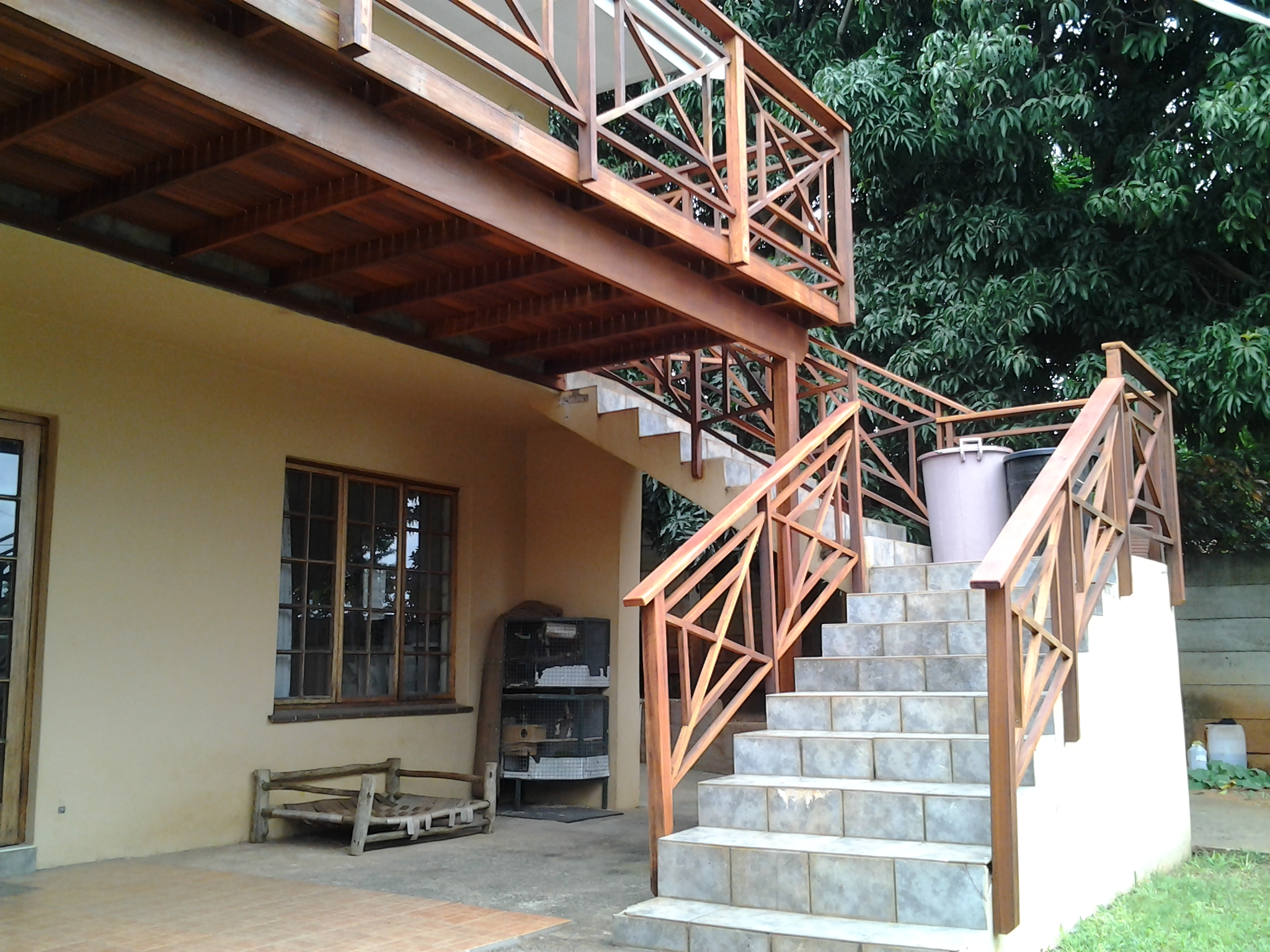
The balustrade was interesting as it was not the normal picket style you see in most other articles. It was the criss cross design with a box in the middle or Tahitian style as it is often called. We also carried this style of balustrade down the stairs. One can sometimes switch to picket style as one goes down the stairs and return to Tahitian style on the flat surfaces. We needed to adjust the angles slightly as we turned the corner down the stairs in order to get the balustrade in the correct plane.  We also built a gate at the top of the stairs which could be latched closed or even locked.

Wooden deck Durban

Click to enlarge

It was sealed using a Timberlife Satin Wood Base 28/28 product which is a timber preservative that soaks into the timber rather than drying on the surface. Maintenance is therefore easy in that it can never peel or flake as it has soaked in and not dried on the surface. Simply clean it and apply two or three more coats. No more sanding, EVER.

For a free no obligation quote or advice on design of your wooden deck, please complete the form below or call us on 082 496 5444.

Go back

Your message has been sent

Warning
Warning
Warning
Warning
Warning

Warning.

Wooden Sundeck Built in Gillitts – April 2013

Timber deck builder Durban

Click to enlarge

This was our second deck we built in Durban using CCA pine as a substructure. I can confirm that there is a substantial cost saving using pine as a substructure and provided it is CCA treated to the correct Hazard Level (H level), then it is guaranteed by the supplier and manufacturer against rot and insect infestation for up to 50 years. So at least H3 must be used which is good for outdoors, exposed to the elements and if there are parts of it that are making contact with ground then H4 is better. In fact the cost difference between H3 and H4 is so slight that I am tending to just use H4 throughout as a matter of course to err on the side of caution.

This deck extended from the house outwards about 5m. Half of that 5m length was on existing tiles and concrete so we placed batons of 38 x 76 and the rest of it dropped down about a metre onto soil. We chose 76mm as our width of baton because it brought us up to exactly where we wanted to be in terms of height of the deck in order to clear the bottom of the door. We therefore had very little space between joist and the tiles so there was very little packing to do. When we place batons on the ground as joists, we fix them using a hilti. The hilti is really just to stop the joist moving sideways and not really up or down as once the deck is built the weight of it keeps it from lifting up. However the hilti provides enough fixing power in both directions so sleeve anchors are not necessary. Often the ground on which you are fixing these batons / joists to, is not completely flat and in order to get the surface of the deck level, one needs to shim one end of the baton or joist. This results in one end being higher than the concrete ground level and as such a gap exists between the baton and the ground. Because these batons are relatively thin (between 38mm and 76mm) they are not strong enough in their width to support the deck. They therefore need to be packed with structural grout or a building sand / cement mixture to take up the gap between the baton and the ground.

Timber deck builder Durban

Click to enlarge

The rest of the deck was elevated about 1m off the ground so from that point we installed 38 x 114 joists with a main beam running the width of the deck (parallel to the stairs in the picture). We set that back 300mm so that our span between beam and wall was only 1.9m which is the maximum I am happy to go with a 38 x 114 joist.  The rest of the deck was therefore cantilevered by about 300mm.

Deckboards went on without a problem, and we then built the stairs that you can see in the picture. We took a different approach to the stairs that we normally do, or have done in the past. In the past we have secured a beam all the way along the front of each riser. In this case we built treads and risers in line with each joist and then only on the front riser we fixed a fascia beam which was then secured to posts that had been set in concrete in the ground. It was much quicker than, and just as stable as our previous method. The structure that we built can be seen on one of the pics alongside.  The client wanted to leave the sides open as he is planting some indigenous plants alongside to cover the gap thus allowing his access beneath the deck if need be, but once the plants grow they will cover the sides.

Timber deck builder Durban

Click to enlarge

This deck was left unsealed as the client wanted the greying effect. I will re-visit it in a few months’ time and if the client is agreeable we can bleach it and high pressure clean it in order to bring it back to its natural colour.

For a free, no obligation quote please complete the form below and I will contact you.  Or you can call us on 082 496 5444.

Go back

Your message has been sent

Warning
Warning
Warning
Warning
Warning

Warning.

Wooden Sundeck, Toti, Durban

Wooden Sundeck Installer Durban

Click to enlarge

We built this wooden sundeck in Toti using CCA Pine, for the first time, as our substructure and decked it using balau deckboards. For a long time I have been using only balau as a substructure. But after some careful investigation I have accepted that a CCA treated pine substructure is as good if not better than a balau one.

The manufacturers of the solution that is used to pressure treat the timber guarantee their product for between 30 to 50 years depending on which manufacturer you use. Provided the company doing the pressure treatment treats it correctly and provided the correct Hazard Level (H level) is used in the correct application, the timber will be guaranteed against rot and insect infestation by the manufacturer of the solution. I will write another more detailed article on CCA pressure treatments, but for the purpose of this article you will need to know what it broadly means.

Wooden Sundeck Installer Durban

Click to enlarge

H2 CCA Treated pine is good for roof trusses where it is not exposed to the elements such as rain. H3 treated is good for outdoors such as decks and H4 is good for in the ground or in contact with wet soil. H5 is good for in salty water and is normally a combination of CCA and creosote treatment. H2 is commonly sold off the shelf at most timber yards. H3 and H4 is more specialised so one needs to find a supplier who is regularly treating to H3 or H4. Under no circumstances should H2 be used as a substitute. It will rot within a few years. Simple. Do not use it in decks, keep it for the roof.

Wooden Sundeck Installer Durban

Click to enlarge

In order to activate a guarantee against the manufacturer one would need to take photos of the deck going up ensuring that the correct H level is used, an audit process would need to be completed on the company treating the timber and the build would probably need to be registered with the manufacturer and possibly inspections conducted during the build. So although it is possible to activate a guarantee, it is not really practical as the substructure will go up in 2 days and the deck will be done in 5 days. However, if the manufacturer is willing to offer this sort of guarantee, then we can safely assume that the timber we are using will hold up to its promise. In a nutshell, H3 or H4 treated CCA Pine is suitable for a substructure for a deck and may very well outlast a balau substructure. I would not be too keen to use it as deckboards for two reasons. Although it won’t rot or get eaten by ants, it will expand and contract a lot more than balau which will result in checking, cracking, warping, bowing etc. over time. The second reason is that because it is half as dense, one needs to use a 32mm thick deckboard as opposed to a 19mm deckboard in balau. So twice as much timber is used and the cost is actually slightly more in pine per square metre than balau. So why not use balau in the surface? It is much better looking and much more stable (i.e. it remains flat for many more years).

Wooden Sundeck Installer Durban

Click to enlarge

The cost saving in using CCA pine vs. balau in the substructure is great and this allows me to keep my prices low whilst still providing a quality product. The CCA Pine will last as long if not longer than the balau substructure if the correct H grade of CCA pine is used.

All areas that have pine exposed are clad with deckboards so that the pine is not visible. Balustrades remain full balau.

For a no obligation quote on wooden decks, balustrades, pergolas and any other outdoor timber construction, please complete the form below and I will get back to you.  Or you can call us on 082 496 5444.

Go back

Your message has been sent

Warning
Warning
Warning
Warning
Warning

Warning.

Wooden Sundeck Installed – Oriel Place, Bluff, Durban

Wooden sundeck Durban

Click to enlarge

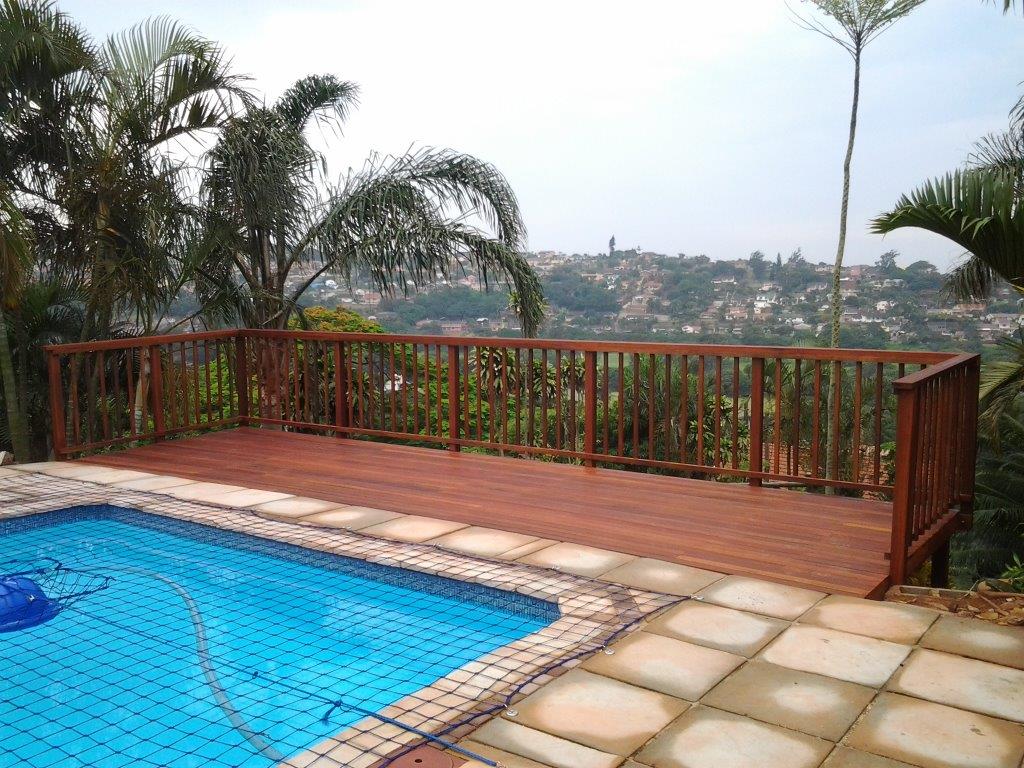
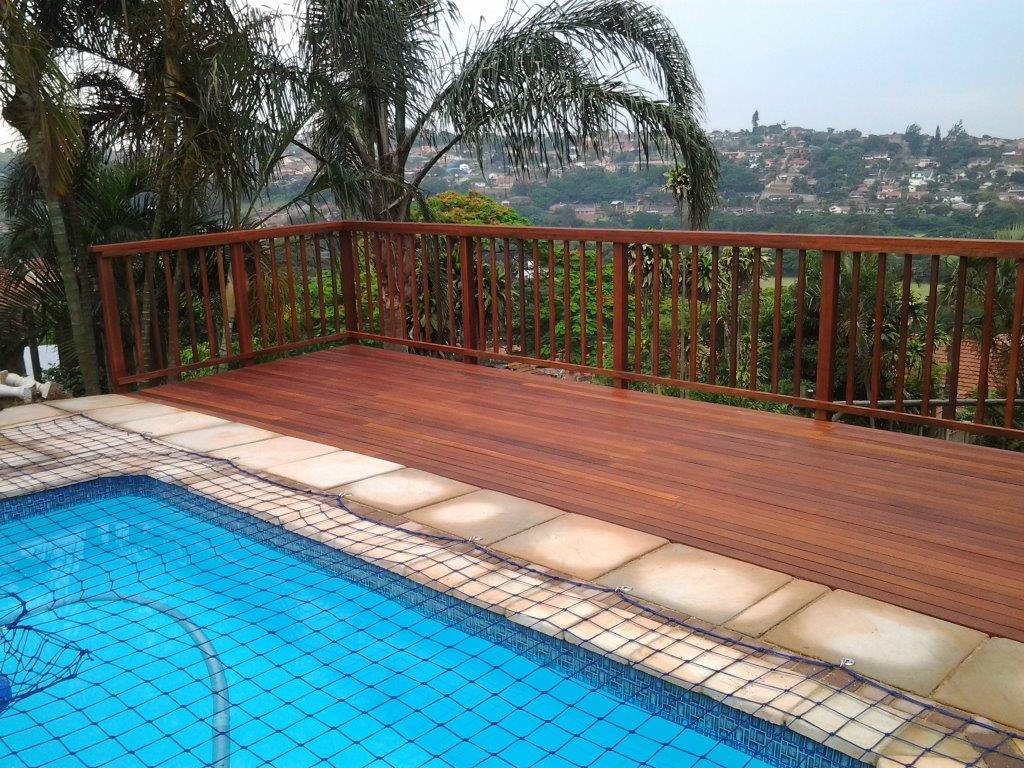
This sundeck we installed in Durban was a relatively simple one to build. The client wanted to extend the area around the pool to create more space. It was a simple cleat, beam and joist system with a fascia beam on the front to attach the balustrade uprights to. There was one challenge in that the retaining wall that runs below the paving next to the pool was not parallel to the paving and as such not parallel to the edge of the deck. A bit of fancy timber work was required with supports, small posts and sleeve anchors which created a substructure that became parallel to the pool, paving and resulted in the sundeck being parallel too.

Many of the properties in the Bluff are on situated on steep slopes and decking allows the home owner to reclaim a lot land that would not have been utilised. Terracing the garden is one option and decking over those can add extra space to one’s garden and therefore value to one’s property. I’m not sure if you have noticed, but a garden that has even a few stairs tends not be used as much as a garden that flows on the same level. It is important therefore to design the deck in such a way that you try to keep it all to one plane or the same level. This will result in more of the garden being used. If stairs are necessary one should consider staggering it over a longer length rather than 1m wide stairs.

Wooden sundeck Durban

Click to enlarge

On this build posts had to be set again in the cavities of the loffelstein retaining wall. It was a relatively small deck and only took a few days to complete. I am sure the owners are now enjoying it through the last two summers and it has created a lot more space that they can now use in their garden.

It was sealed using a Timberlife Satin Wood Base 28 sealer with a mahogany tint. This sealer soaks into the timber rather than leaving a varnish type finish on the surface. There are two types of this sealer, one for woods of high porosity (pine) and one of timbers of low porosity (balau). Be careful to select the correct one. It is relatively low in wax content compared to their other products which is better for the horizontal surfaces that tend to get hammered by the hot African sun. The higher wax content sealers are good for vertical surfaces such as balustrades, screens, cladding etc. It is very easy to apply as it is very viscous and because it doesn’t dry on the surface, brush marks and runs are impossible to achieve. It simply soaks in. 2 to 3 coats are recommended and in the first year of the decks life it will be necessary to reseal it every 3 to 4 months. As time goes by the maintenance intervals will become longer as the timber is continually being nourished with this sealer.

It is inexpensive and is easy to use so re-sealing every 3 or 4 months in the first year is also inexpensive. There is no need to sand the deck before each application. Simply clean it, high pressures clean it if you wish, and re-seal. I will go into more detail in another article on sealing decks and maintaining them as it is a subject that warrants its own platform. Since writing this I have written and article on deck sealing which can be found here.

For a free no obligation quote or to discuss the design of your deck, please complete the form below and we will contact you.  Or you can call us on 082 496 5444.

Go back

Your message has been sent

Warning
Warning
Warning
Warning
Warning
Warning

Warning.

Pool Deck Built in Northdene, Durban

Pool Deck Builder Durban

Click to enlarge

This pool deck we built in Northdene was in excess of 100 square metres. Pool decks can be quite difficult to measure as the pool is sometimes not square and the area to be covered is often an irregular shape. Care should be taken to measure it properly to avoid an underestimate of area for both the client and the contractor. No one, the client nor the contractor, wants to realise half way through the job that it has been grossly under, or over, quoted.

There were two levels on this deck. An area of about 1m running around the pool was in concrete while the rest of the deck was to be laid on soil. Also there was an area towards the steps where the existing concrete sloped upwards in an effort to get rain water to run towards the pool instead of collecting near the wall. This area ran almost up to pool level, so in order to get the deck level at the height we wanted we had to cut our baton at a wedge shape.

We placed posts in concrete throughout the soil area and where we got to the concrete plinth around the pool we switch to a 30mm baton. In total we decked about 100m². It took time to lay these joists and make sure that the tops were all flat and level. Deckboards also took time as we laid them down without a single joint line.

Pool deck builder Durban

Click to enlarge

Where a deckboard ends and new one starts, creates of course a join in the surface. What one needs to do is sort of finger the deckboards so that the join is alternated on each adjoining deckboard. This is not only more pleasing to the eye but also prevents lifting in one single line. If a deckboard is going to lift it will almost always lift on the join. If all those joins are in a straight line then it will lift along the entire line. If they have been staggered then it won’t be as noticeable or as serious. So they took longer to deck but are done the correct way.

We built a small hut around the pool pump and heater that came off an adjoining wall. The hut had its own doors and roof and finished it off neatly to cover the pump and filter.

Around the edge that was exposed to the pool water we planned some deckboards to 10mm thick which allowed us to bend them around the curve of the pool. This fascia will protect the deckboards from excessive water from the pool and will ensure they last longer. Wood has a tendency to take in water from the end grain. Picture it as a bunch of straws held together. The water will travel up the end grain and this is where rot will start. Wood takes in very little water from side or face grain and it is therefore imperative to seal the ends off properly. When timber is purchased one will always find that the ends have been sealed using a wax substance. This is done in order to prevent the wood taking in water during transport, often by ship. Once it gets to site, it is cross-cut and this seal is lost. It is important therefore to apply plenty of sealer to this end grain.

Pool deck builder Durban

Click to enlarge

For a free no obligation quote please complete the form below and we will contact you.  or you can call us on 082 496 5444.

Go back

Your message has been sent

Warning
Warning
Warning
Warning
Warning

Warning.