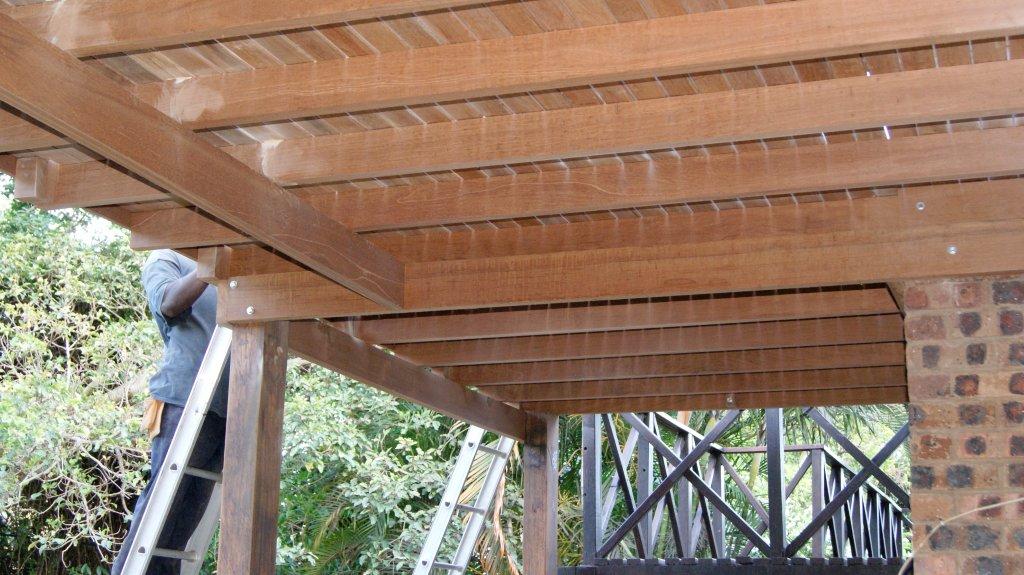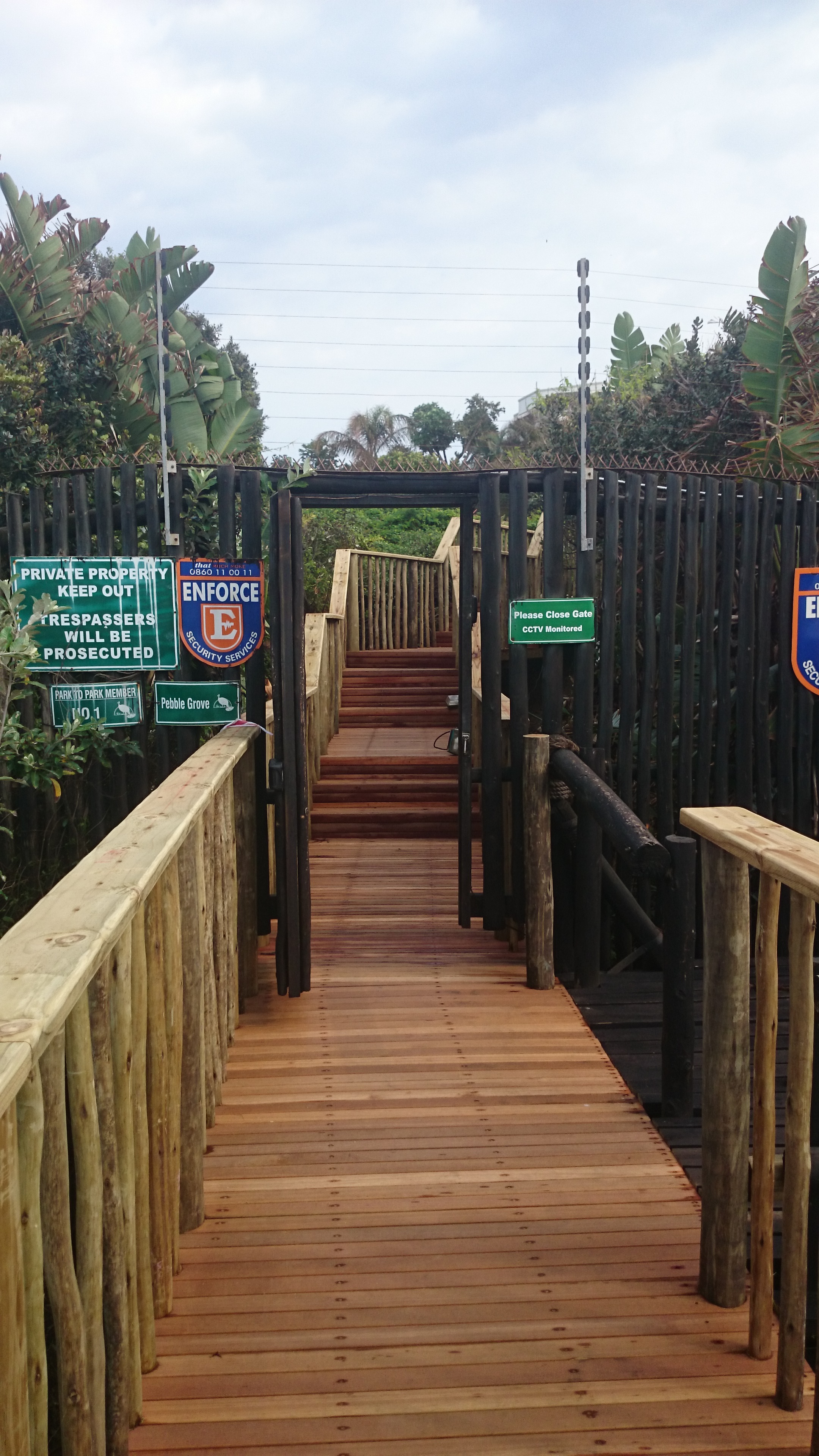
Wooden Balau Walkway Umhlanga, Durban

Wooden Balau WalkwayThis wooden balau walkway, or bridge, leading to the beach, needed to be replaced as the old one, although it was nearly 20 years old, had started sinking on one side. It had been built on beach sand so the concrete that had been used to set the upright posts had sunk over time into the soft sand. This problem also occurs on decks that are built on the bluff as the Bluff is essentially one big sand dune, so many parts of it are soft enough to allow a post to sink over time.Wooden Balau Walkway
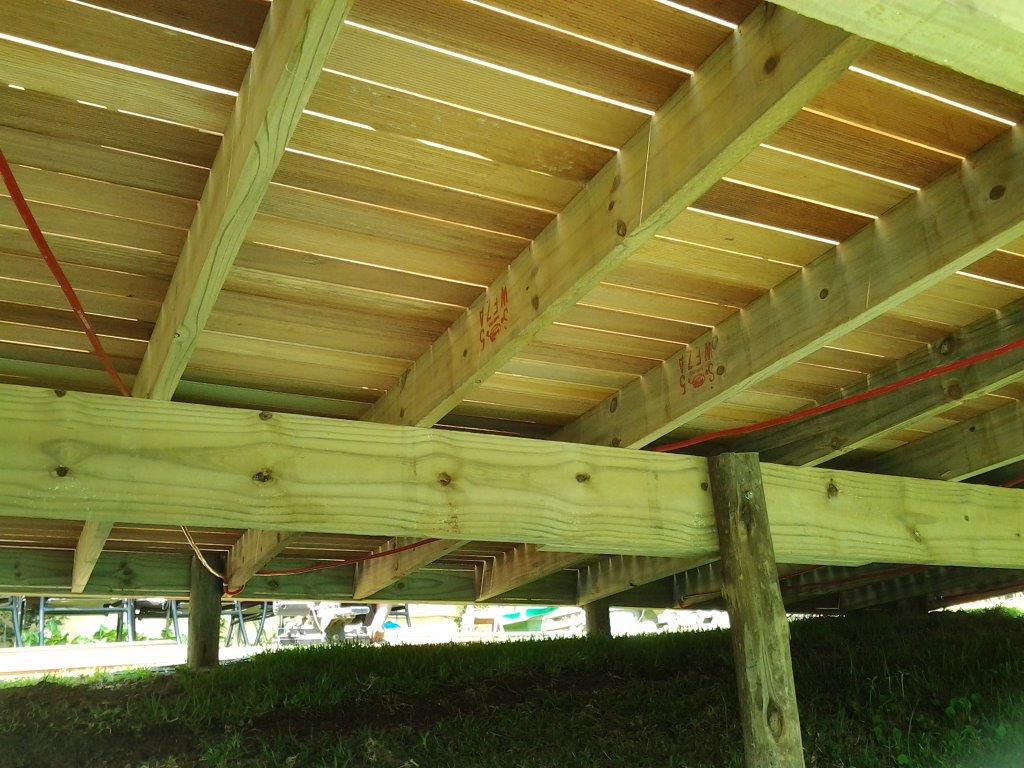
We overcame this problem by making use of a floating foundation. It is often used in building houses where the soil is very soft. Instead of throwing a concrete foundation beneath the walls and bringing the bricks up and then throwing a slab, the entire foundation is a concrete slab on top of which the bricks are laid. The result being that it creates a much larger foot print in the sand and is of course more difficult to sink than if it was a column of concrete.

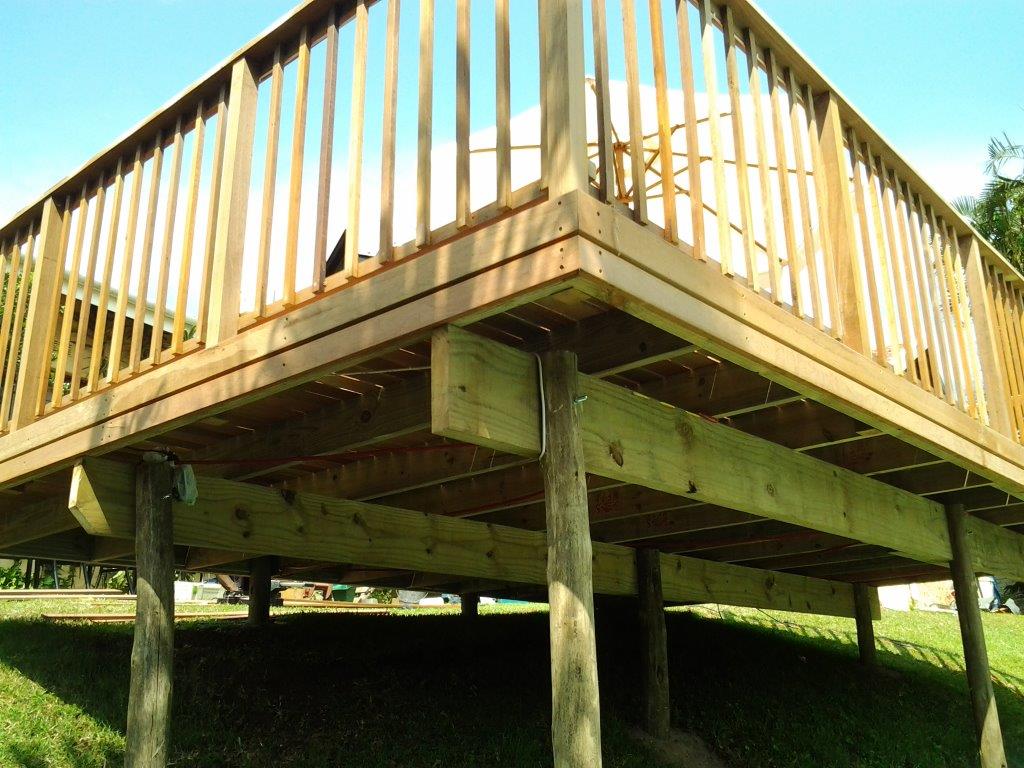
This method solved the problem of the posts sinking, but created another problem in that there was no lateral support for our posts which would have resulted in them falling over. This was overcome by throwing a “pad” on every second post and every other post was set 600mm in the ground in concrete. So one post stopped it from sinking and the other gave it lateral support and stopped it from falling over.

The floating “pads” were 600mm x 600mm and 150mm thick with mesh in between to stop the concrete from cracking with the weight of the deck.Wooden Balau Walkway
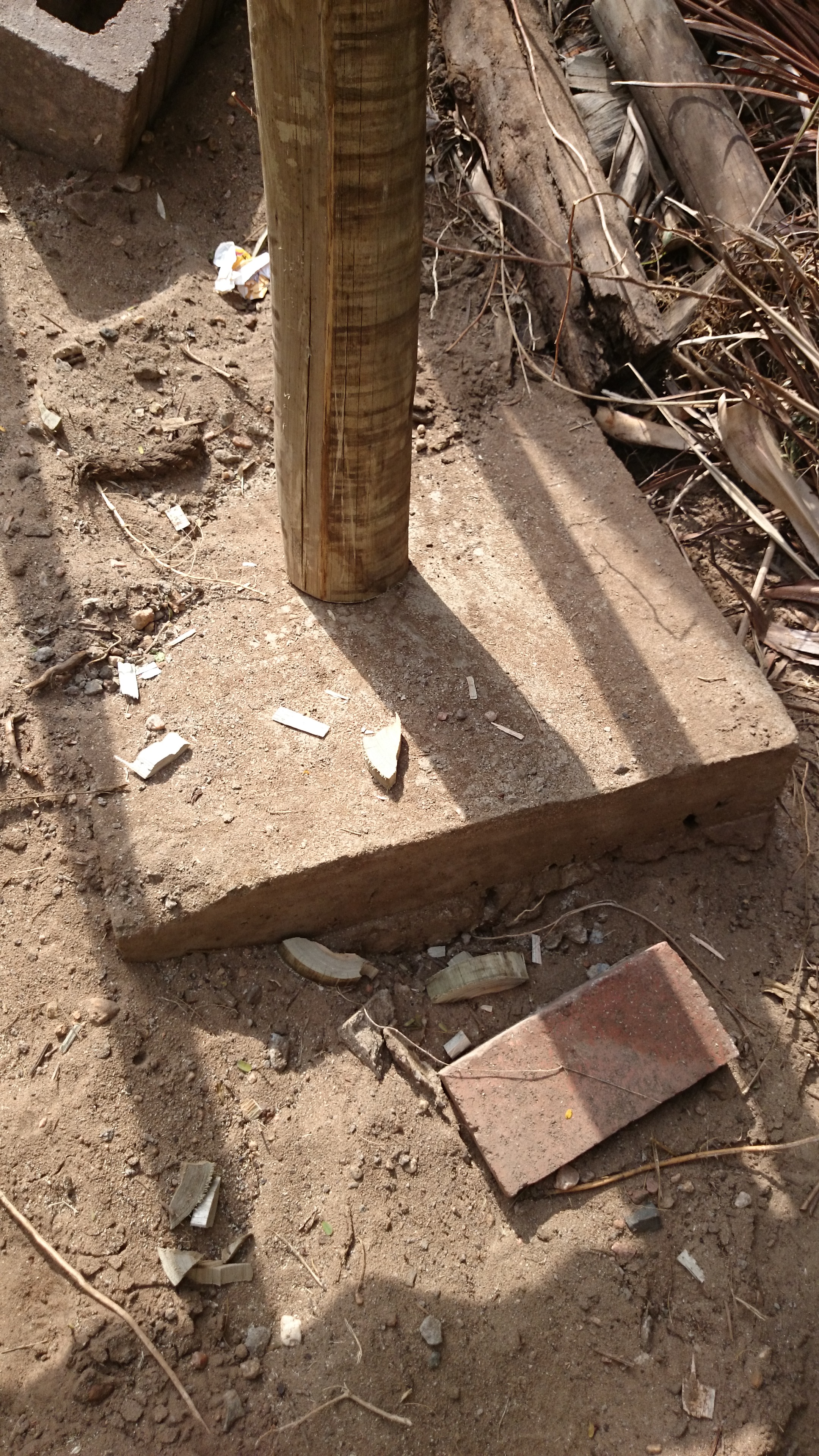
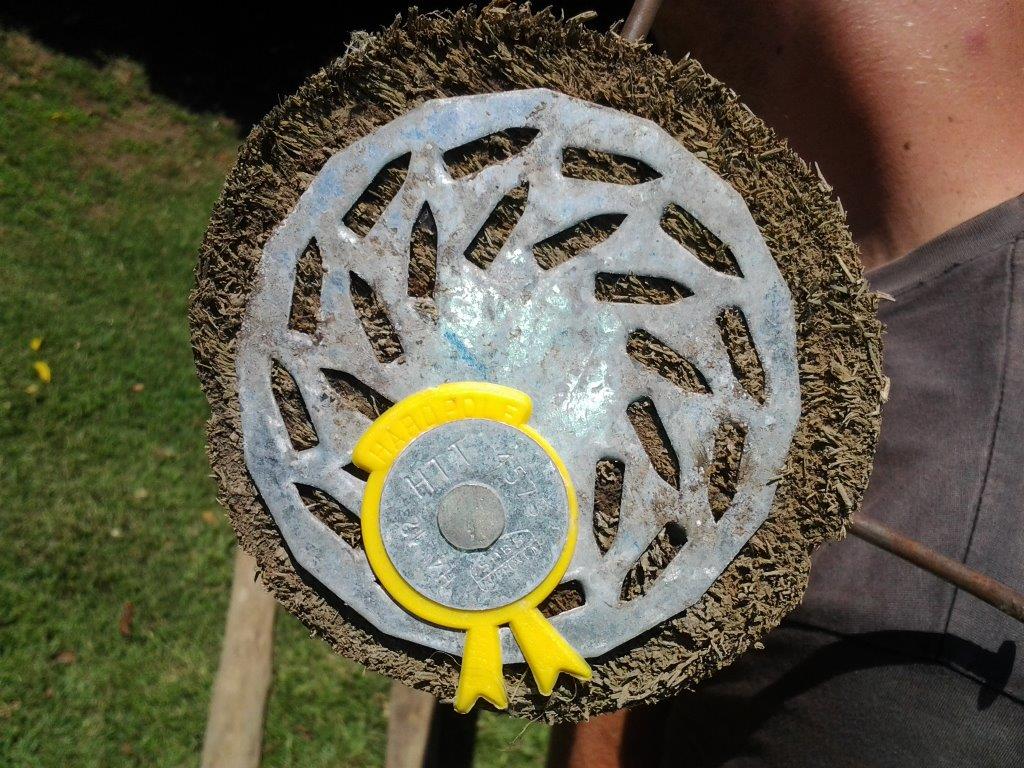
The pics alongside show the “pad” that the upright posts sits on top of and a post that has been buried in the ground 600mm.

Once our structure was up we installed our joists and decked it using balau deck boards. The width was 1.5m so we installed 4 joists to give us joist centres of 500mm. This is about the maximum one can span a 19mm deck board without it bowing from the weight of a person. Anything bigger than 500mm will result in the deck surface being springy. One should aim for between 450mm and 500mm. This of course applies to a 19mm balau deck board. If another timber is being used, or the board is anything but 19mm thick, then this will vary.Wooden Balau Walkway
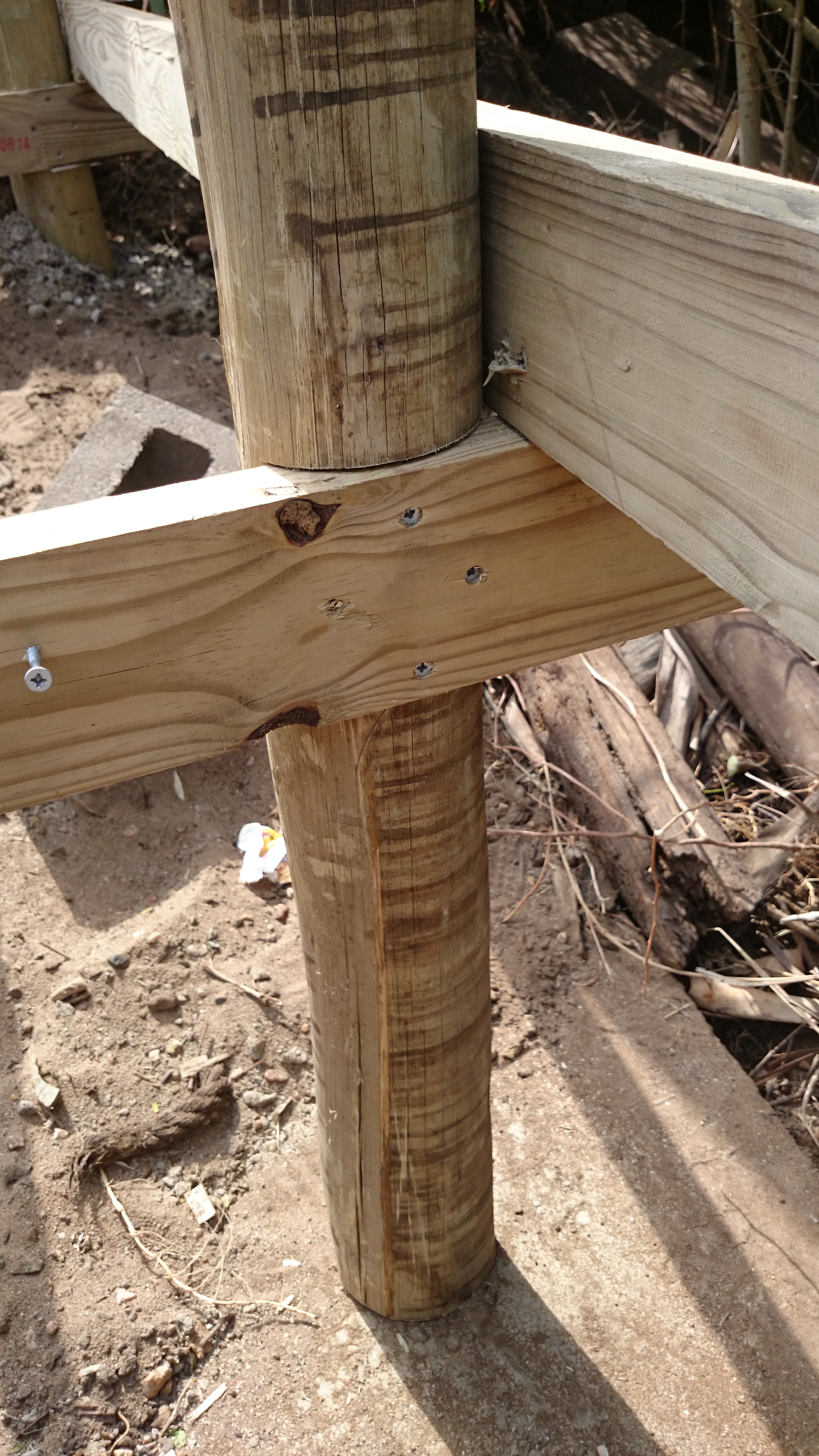
We used the uprights, which were 100 / 125, H4 CCA treated gum poles, as our uprights for our balustrade too so as to ensure that they were sturdy. Because our gum poles were between 100mm and 125mm in diameter, we had to use a 38 x 152 H3 CCA Treated pine capping; otherwise the capping would have been narrower than the upright which would have looked odd. We then installed droppers as our pickets and secured these through the top of the capping and from underneath the deck boards.

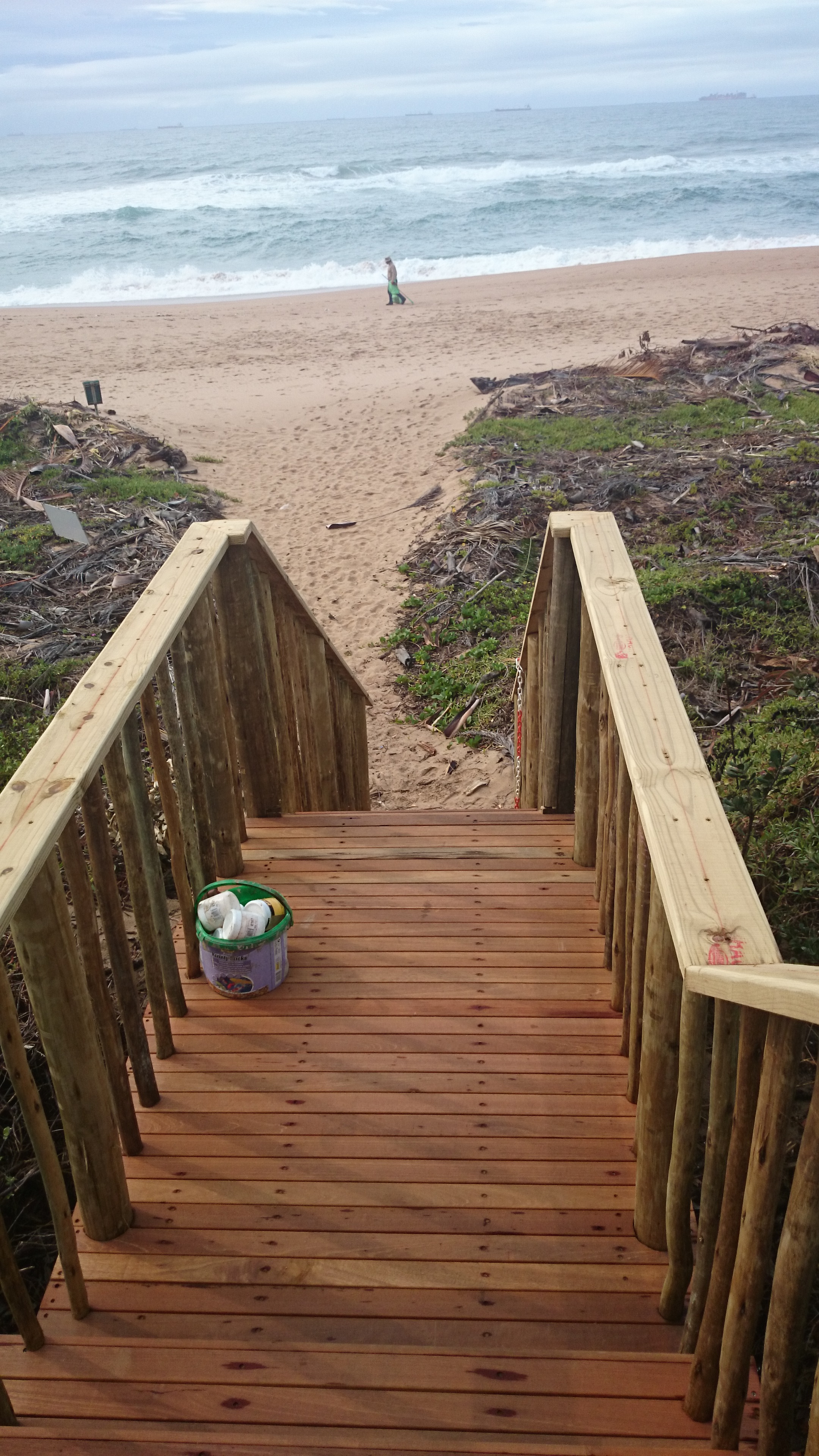
Our stairs leading from the last section of walkway to the beach were made using H3 CCA treated pine stringers and treads and we then clad the treads with balau to match the walkway surface.

For a free, no obligation quote, on your wooden decks, walkways, bridges, screens, pergolas and other outdoor timber construction, please call us on 082 496 5444 or use the contact us form below.

Go back

Your message has been sent

Warning
Warning
Warning
Warning
Warning

Warning.

Wooden Deck Built in Hillcrest, Durban

Here’s video of a wooden deck we built recently in Hillcrest, Durban showing the different stages of the build.

Give us a call for a quote on your wooden sun deck, wooden pergolas, walkways, bridges, floors or fences on 082 496 5444 or use the contact us form below.
 

Go back

Your message has been sent

Warning
Warning
Warning
Warning
Warning

Warning.

Balau Cladding or Screening

Balau cladding or screening

Click to enlarge

Balau cladding or screeningZ

Click to enlarge

Balau cladding or screening of brick walls is quite popular and attractive. It takes an otherwise boring brick, plaster or concrete look and transforms it into a beautiful wooden clad structure. It can of course be clad balau or any other timber, but balau being the most popular outdoor timber for cladding of brick walls. Pine is a lot cheaper buy nowhere near as durable and will warp, cup, twist and bow a lot quicker than balau. Balau is very stable and the deck boards will remain flat for a lot longer.
We use either the standard deck boards of 19 x 68mm or we can use a 19 x 90mm board. The 19 x 90mm board is however more expensive per square metre than the narrower boards.

What works quite well too when cladding brick walls with timber is to have differing widths of boards. So one might start with a 19 x 68 board, and then install a 19 x 90mm board and then a 19 x 30mm board.

When cladding brick walls with timber it is best to keep the gaps to about 5mm. Normally with screens we leave a 20mm gap, so that you can still see through the screen if you walk right up to it, but with cladding there is nothing really to see on the other side. So keep the gaps to 5mm to have a nice tight compact finish.

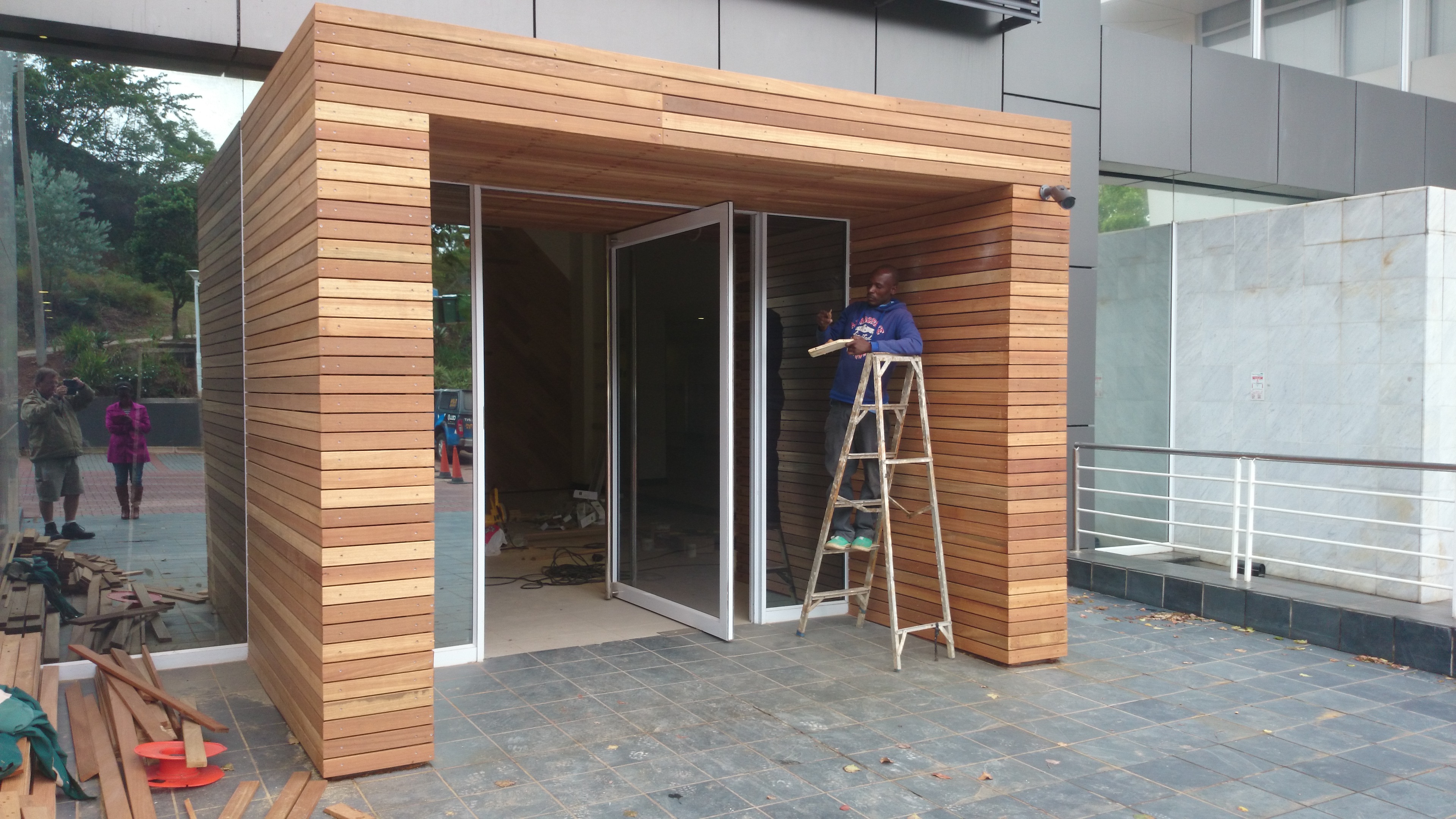
This was a job we did in Westville for a corporate client who was renovating their reception area. It was initially a brick portico sort of structure that had small blue mosaic tiles stuck to it. The blue mosaic tiles were painted black prior to us cladding so that they would not be visible between the gaps. We simply installed cleats of 19 x 68 deck boards in balau on to the tiles which had been painted black and then on top of that we installed the cladding. We had to be careful not to protrude the cladding more than about 45mm from the wall as it would have caused the main door to snag on the cladding.  On the corners we mitred the edges at 45° to give it a nice neat finish.

There was an access control system that we needed to work around. The company installing it came to site on the same day that we clad that area and we worked with them to cut out the necessary areas so that the various control panels could be installed neatly on our timber cladding.

The job was finished with closing the screw holes with epoxy, sanding smooth and sealing using Timberlife Satin Wood 28 Base, an oil based deep penetrating timber preservative that repels water. Because it is oil it can never peel or flake making future maintenance easy and inexpensive. You simply clean the timber and apply more oil.

For a free no obligation quote on your timber cladding requirements, wooden sun decks, pergolas and other outdoor wooden construction, please contact us on 082 496 5444 or use the contact us form below.
Go back

Your message has been sent

Warning
Warning
Warning
Warning
Warning

Warning.

Wooden Screens, Pergolas, Decks and Gates Durban

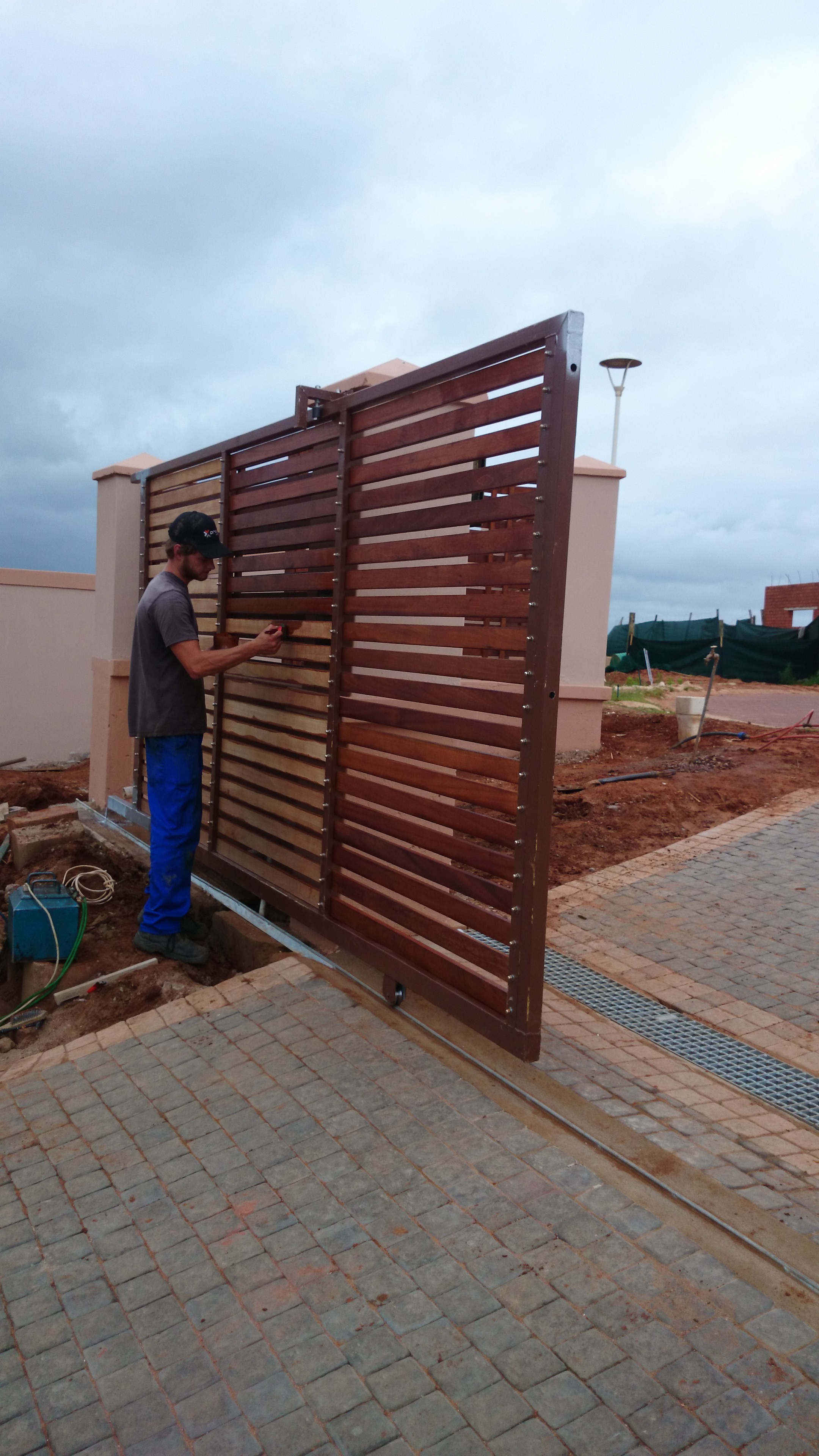
Driveway gate clad in balau

Click to enlarge

Wooden gates Durban

Click to enlarge

Wooden Screens Durban

Click to enlarge

Wooden balustrades and pergolas Durban

Click to enlarge

We were asked to quote on wooden screens, wooden pergolas, wooden decks and wooden gates on a new build in Prestondale, an area north of Umhlanga, at a development called Izinga Ridge. We originally quoted in about June 2013 and the work was awarded to us for s start date of about 1 November 2013. The job consisted of various screens between brick columns on the boundary wall, a pergola on an open balcony on the first floor, external and internal balustrades, garden gates, a driveway gate and a pool deck.

All the timber we used was balau hardwood with the exception of the substructure of the pool deck which was H3 and H4 CCA treated pine. In other articles you can read about how we have managed to keep our prices down by using this as a substructure whilst still being able to offer up to a 50 year guarantee on this treated timber.

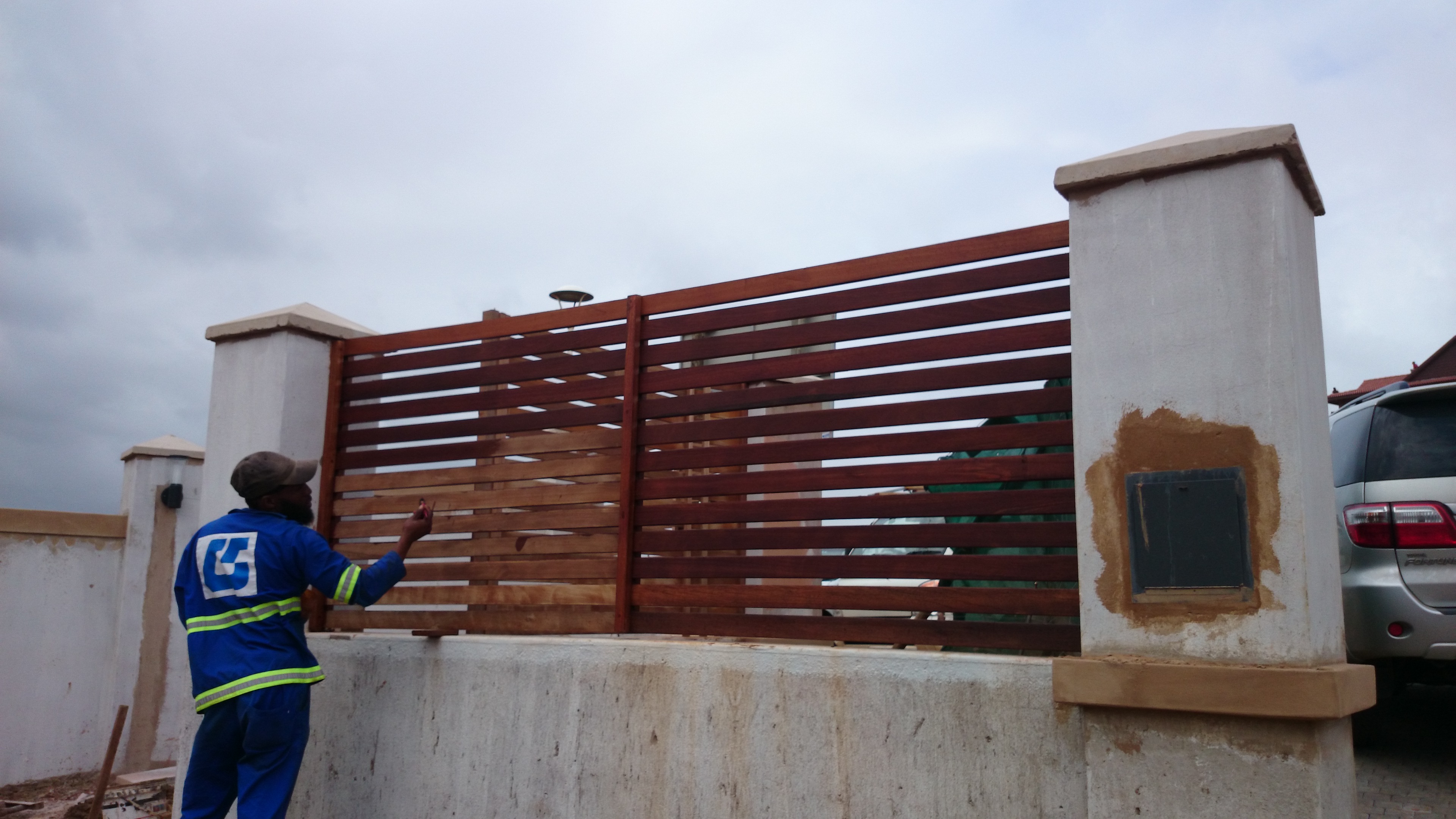
Most of the screens were pretty straight forward with balau cleats on the wall and then clad using a non reeded 19 x 68 deck board. We used non reeded so that both sides would look the same, but we did battle to find non reeded boards as most of the deck boards available are already reeded, or grooved on one side. There were two screens that proved a little more difficult as the wall we were attaching them to was angled. So the boards had to be cut at that angle and secured to each other whilst still remaining level and the join remaining plumb.

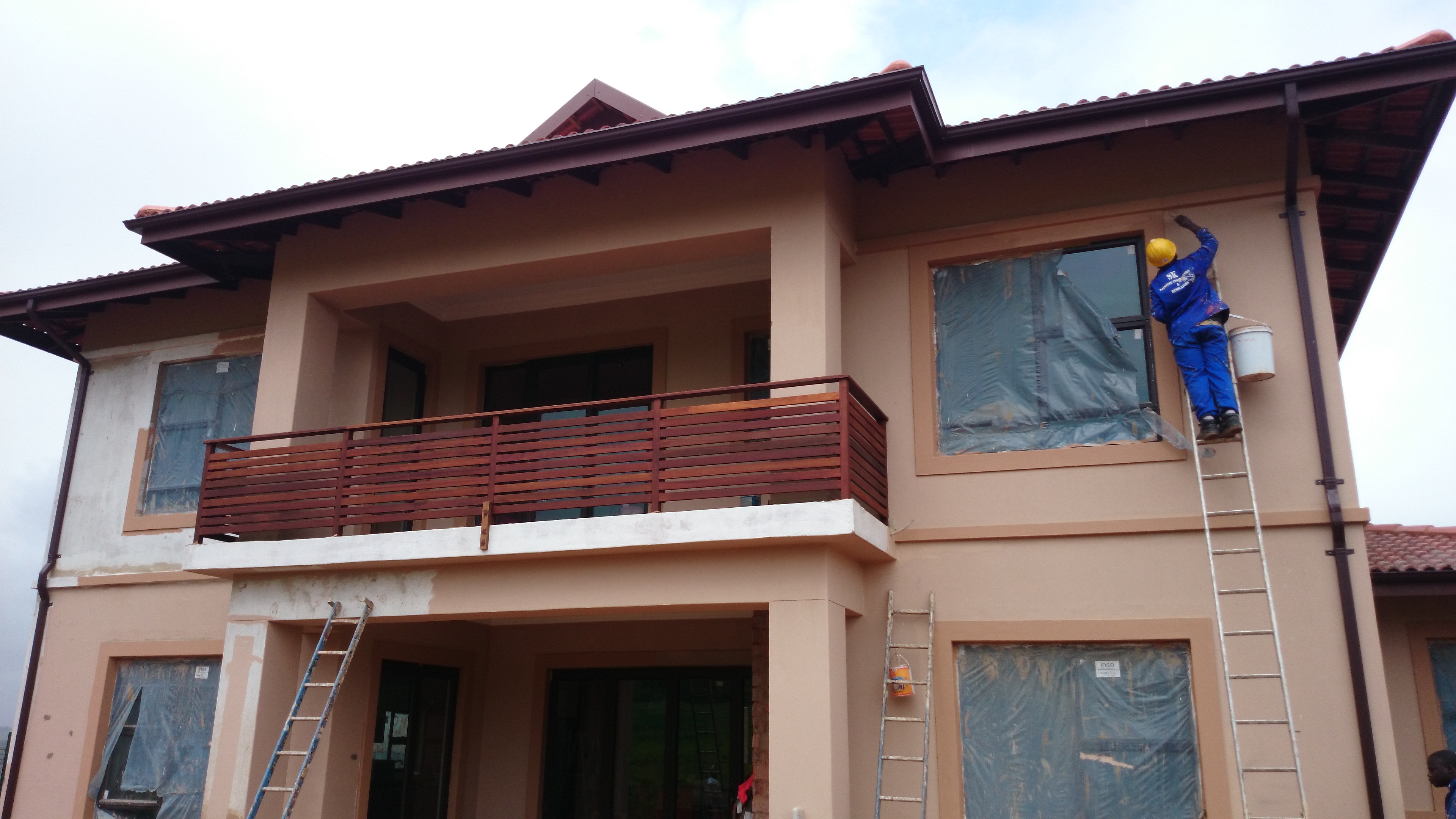
The external balustrades were different to our normal vertical picket style balustrades as the client requested horizontal slats instead. Again we used non reeded deck boards for this with a normal post system. On each post we attached vertical cleats to accept the horizontal deck boards or slats. They were installed in line, or on top of the concrete slab, rather than being attached to the front of the concrete slab. The tiles had already gone down so we had to drill through the tiles without cracking them. We installed an “ankle” on the middle post to provide support which is attached to the vertical post and is then shaped to fit around the slab to attach again to the vertical of the concrete slab. This, in effect, allows the post to be attached to the outside but still allows the balustrade to sit on top of the slab. It is much neater but does require a bit more thought and re-enforcing.

Wooden decks durban

Click to enlarge

The pool deck was relatively simple as it was a low-level deck around the pool with a simple frame system using 38 x 114 joists and beams. Extra posts had to be concreted in as it wasn’t high enough to slot an under beam, or main beam, of 50 x 228 in.

The driveway gate was fun. We had the steel made up in a design that would work well by cladding it with wood. We had to source long enough non reeded boards to run the full width of 4m. One cannot join boards in this type of gate unless there is a centre steel vertical support which would spoil the look of the gate a bit. We had run out of standard non reeded boards and so had all suppliers so we sourced a 20 x 140 board and ripped it in half, length ways, to arrive at two boards of 20 x 68.

Wooden balustrades Durban

Click to enlarge

The pictures alongside show some work in progress and some completed work. It was an interesting but challenging job as there were many contractors on site all trying to work, and finish, before the handover of the house. The worst part of the job was fighting traffic from north Umhlanga to the freeway in both the morning and afternoon.

For a free, no obligation, quote on wooden decks, pergolas, garden gates, balustrades and all other outdoor timber work, please call us on 082 496 5444 or complete the form below.

Go back

Your message has been sent

Warning
Warning
Warning
Warning
Warning

Warning.

Wooden Sundeck, Toti, Durban

Wooden Sundeck Installer Durban

Click to enlarge

We built this wooden sundeck in Toti using CCA Pine, for the first time, as our substructure and decked it using balau deckboards. For a long time I have been using only balau as a substructure. But after some careful investigation I have accepted that a CCA treated pine substructure is as good if not better than a balau one.

The manufacturers of the solution that is used to pressure treat the timber guarantee their product for between 30 to 50 years depending on which manufacturer you use. Provided the company doing the pressure treatment treats it correctly and provided the correct Hazard Level (H level) is used in the correct application, the timber will be guaranteed against rot and insect infestation by the manufacturer of the solution. I will write another more detailed article on CCA pressure treatments, but for the purpose of this article you will need to know what it broadly means.

Wooden Sundeck Installer Durban

Click to enlarge

H2 CCA Treated pine is good for roof trusses where it is not exposed to the elements such as rain. H3 treated is good for outdoors such as decks and H4 is good for in the ground or in contact with wet soil. H5 is good for in salty water and is normally a combination of CCA and creosote treatment. H2 is commonly sold off the shelf at most timber yards. H3 and H4 is more specialised so one needs to find a supplier who is regularly treating to H3 or H4. Under no circumstances should H2 be used as a substitute. It will rot within a few years. Simple. Do not use it in decks, keep it for the roof.

Wooden Sundeck Installer Durban

Click to enlarge

In order to activate a guarantee against the manufacturer one would need to take photos of the deck going up ensuring that the correct H level is used, an audit process would need to be completed on the company treating the timber and the build would probably need to be registered with the manufacturer and possibly inspections conducted during the build. So although it is possible to activate a guarantee, it is not really practical as the substructure will go up in 2 days and the deck will be done in 5 days. However, if the manufacturer is willing to offer this sort of guarantee, then we can safely assume that the timber we are using will hold up to its promise. In a nutshell, H3 or H4 treated CCA Pine is suitable for a substructure for a deck and may very well outlast a balau substructure. I would not be too keen to use it as deckboards for two reasons. Although it won’t rot or get eaten by ants, it will expand and contract a lot more than balau which will result in checking, cracking, warping, bowing etc. over time. The second reason is that because it is half as dense, one needs to use a 32mm thick deckboard as opposed to a 19mm deckboard in balau. So twice as much timber is used and the cost is actually slightly more in pine per square metre than balau. So why not use balau in the surface? It is much better looking and much more stable (i.e. it remains flat for many more years).

Wooden Sundeck Installer Durban

Click to enlarge

The cost saving in using CCA pine vs. balau in the substructure is great and this allows me to keep my prices low whilst still providing a quality product. The CCA Pine will last as long if not longer than the balau substructure if the correct H grade of CCA pine is used.

All areas that have pine exposed are clad with deckboards so that the pine is not visible. Balustrades remain full balau.

For a no obligation quote on wooden decks, balustrades, pergolas and any other outdoor timber construction, please complete the form below and I will get back to you.  Or you can call us on 082 496 5444.

Go back

Your message has been sent

Warning
Warning
Warning
Warning
Warning

Warning.

Sundeck Built at Pennington on the South Coast

Sundecks South Coast

Click to enlarge

This was my first deck I built. I had been toying with the idea of building sundecks for some time, rather than trying to sell furniture which I had been making for some years. There simply isn’t a viable market to make furniture in South Africa unless one has large regular orders and a production line can be set up for a specific product. Saying that I still make the odd Adirondack Chair and picnic table, but my focus changed at that point to decking. Something that could not be imported and sold as flat pack.

I secured this job at a very cheap rate. It was in Pennington which was too far to commute each day so we stayed down there. With a crew that had never built a deck and myself who had studied it in theory only we proceeded to build.

We had to first remove an old deck that had been built using non treated pine which had rotted beyond imagination. It still annoys me to see decks being built out of non-treated pine. Some are often built from H2 treated pine where as they should be at least H3 but preferably H4 treated pine. I will go into more detail on that subject in a later article. Perhaps it is ignorance, and not a specialised deck building company doing the job, but there is a vast difference between the different grades of CCA Treated Pine.

Sundecks South Coast

Click to enlarge

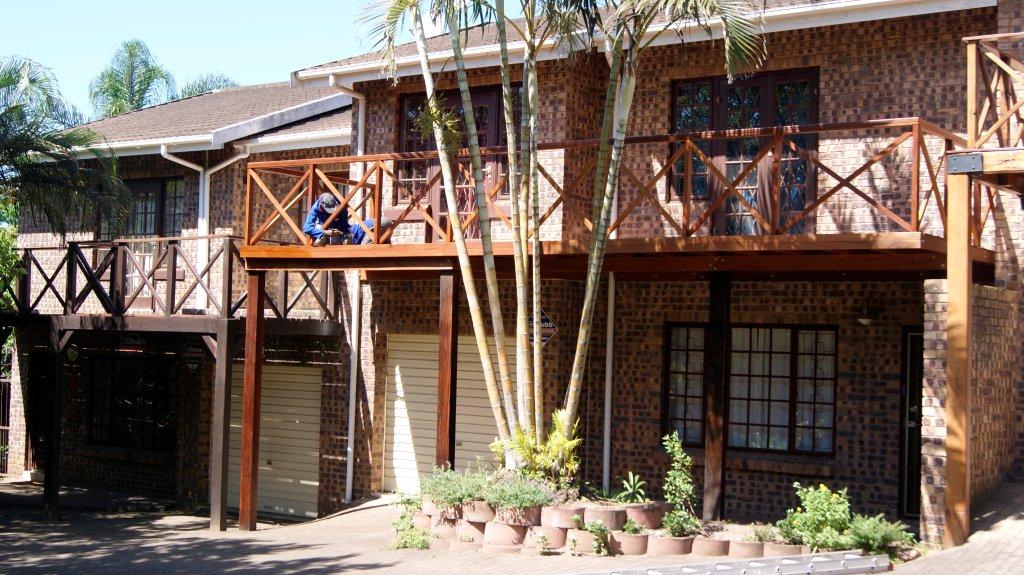
Nevertheless, we cut away at our rotten deck which was actually unsafe to walk on so it took some time to carefully remove all pieces and the joists. We left the post in tact as they were teak and were still very good. Once down we placed our cleat on the wall of the house, erected our main beam and set out our joists. There was a canter lever involved which worked well as we had increased the size of our joists to 40 x 140 so we could span them longer and canter lever longer than if we had used 30 x 102 joists.

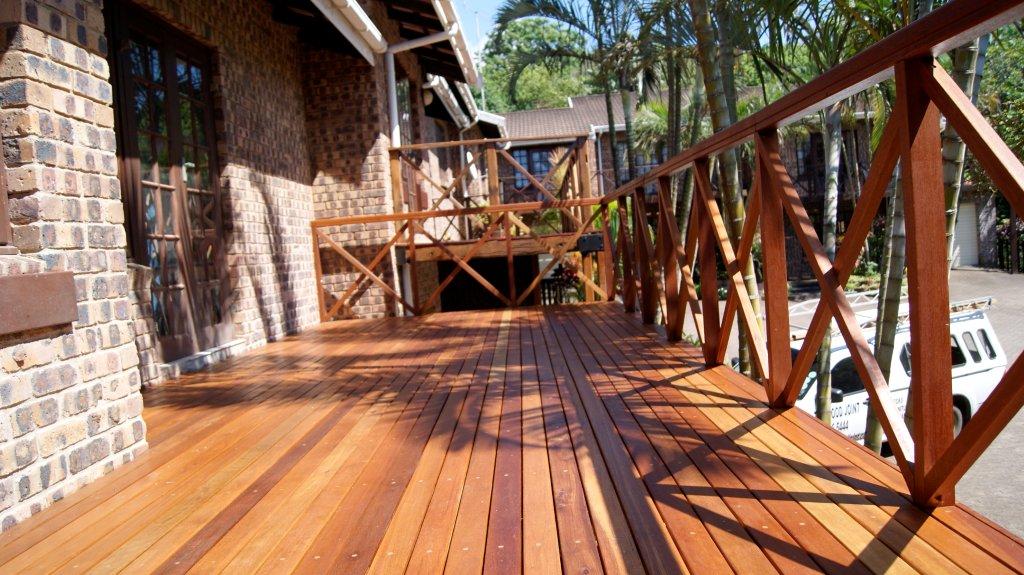
The deckboards went down without a problem. Our balustrade had to match the neighbour’s balustrades as it was situated in a complex with other decks. It was a simple criss cross style balustrade so went down without much hassle and relatively quickly.
The biggest challenge on this deck was removing the old one which took us just over a full day. Removing a deck can be very dangerous, as you can imagine, and needs to be thought out carefully and taken down with extreme care so as not to damage buildings around it or result in injury to crew.

Sundecks KZN

Click to enlarge

We made no money on this job because we had over sized most of our timber, the client had requested 21 x 72 deck boards which were a lot more expensive than the standard 19 x 68 boards and we had to factor in accommodation and food for a week while we built it. Nevertheless it was our first deck and we learnt a lot.