Outdoor Garden and Patio Furniture

Outdoor garden furniture - Lutyens Bench

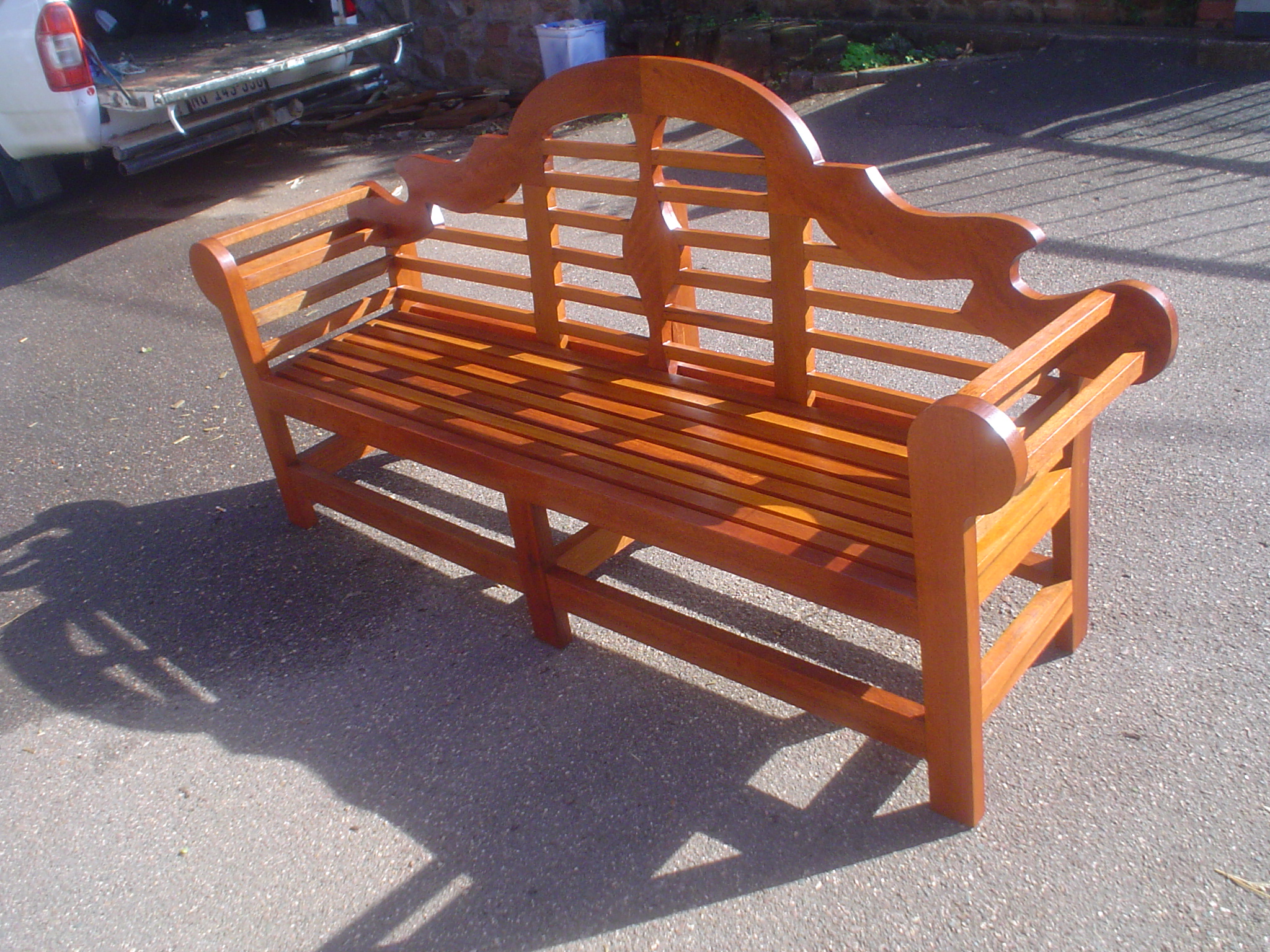
Pictured is a bench with a curved centre backrest. The benches we now make have a straight piece as the centre back rest. The curved top backrest remains as pictured.

Besides installing sundecks, wooden floors and wooden fencing we also produce a range of outdoor garden and patio furniture to compliment your outdoor wooden structures such as sun decks etc.

We’ve focused on top quality wooden outdoor and patio furniture. We don’t do flat pack. If you’re after that Makro or Game is your best bet. Our products are made to order, so taker a little longer, and are all manufactured with longevity in mind to give you many years of enjoyment.

Rain and sun always play a role in the decay of outdoor furniture and it is therefore very important to select the right timber for the product. The timber we use varies from H3 CCA Treated timber which is suitable, and guaranteed by the supplier, to last outdoors in the rain and sun for up to 50 years to balau in some of our pieces, although it is considerably more expensive than pine but it is a lot sturdier, stable and will also last many years in the sun and rain.

Depending on your budget and the product being manufactured we will advise the best timber and finish to use. We seal our products with an oil based sealer which penetrates the timber, leaving no waxy film or coating on the surface. Wax and coatings will always blotch, peel or flake and maintenance then becomes expensive due to the sanding or stripping that is required. With an oil based sealer it simply disappears as it degrades and cannot peel or flake because it is not a coating. Hence maintenance is inexpensive. You simply clean and re-apply.

From this page you can navigate on the menu bar to the left to view pics and details of our various outdoor furniture products. You can also search, using the search bar on the right, to search for specific items. You will find many articles on this blog of products we have made. From the info we provide you may even want to try it on your own, but if not you can contact us on 082 496 5444 or use the contact us form below.

Go back

Your message has been sent

Warning
Warning
Warning
Warning
Warning
Warning

Warning.

Dustless Floor Sanding Durban and Cape Town

Hardwood floor sanding in Durban and Cape Town is normally done by making use of a specialised company such as The Wood Joint. Some wooden floor sanding companies hire them in when needed but if you are sanding floors regularly then you may want to consider buying one. There are, broadly speaking, two different types of floor sanders or floor grinders. They are relatively expensive to buy and therefore expensive to hire.

Drum sander

The drum sander is an older technology machine that uses a drum with sand paper of varying grits attached to it. The drum spins in a horizontal direction and removes sealer or coating from the wooden floors. One would typically start with a rough grit like a 40 grit paper or rougher and then proceed through the grits to get a finer, smoother finish on the floors before sealing them. These machines come in different widths and different size motors. All of these machines do a similar job. The wider ones at 300mm wide obviously remove sealer a lot quicker as they are covering more surface area. There are two type of paper one can use. A paper-backed sandpaper which is cheaper but will tear or rip more easily if the drum catches a nail or rough edge on the floor. There is also a cloth backed paper which is about 3 times the price. Being cloth backed it is a lot more durable and won’t tear or rip as easily as paper-backed sand paper. Also because it doesn’t get as hot, it last a bit longer than paper-backed before it becomes dull. This is well worth the investment especially if you have a floor that has rough edges or nails protruding or if the drum sander is an older machine. Older machines tend to rip paper more easily because of worn parts. These machines, if calibrated properly work fairly well as they remove 300mm of sealer at a time. They can be difficult to “drive” as they are continually trying to run away from you in a forward direction and the machine needs to be pulled back against the direction of turn. They can also be very messy because the drum is rotating in a horizontal direction and throwing saw dust up into the air. A word of caution when using these machines. When they are switched on make sure the sand paper is not making contact with the floor as the machine will move on its own, probably slap bang into the wall if no-one is hanging on to it. Or worse still slap bang into the pool if you are sanding a deck. The machine can be tilted back so that the paper doesn’t engage the floor,or they are sometimes lever driven. Always work the floor sander in the direction of the boards to avoid scratching the boards against the grain.

Planetary System Floor Grinder

The other type of machine is essentially a floor grinder and is the same machine used to grind concrete floors to a smooth finish. It works with a motor in a vertical position and the shaft spins vertically as opposed to horizontally. Below the motor are three disks of 180mm diameter which can accept various tools, with varying grit, for different applications. Each disk spins in one direction while the whole set of three disks spins in the opposite direct. It is called a planetary system. They move a lot slower than the drum sander but because they are moving in the vertical direction they tend to keep the dust down rather than throwing it into the air. With the correct tool you can achieve the same result more quickly, with less effort and less mess. Even without dust extraction they are a lot less dusty and the dust can be controlled and extracted up as the machine works. Because they spin slower they are a lot easier to use and can be pushed along with one hand. Dust extraction can be fitted to the machine to result in a 99% dust free process. The idea is to start with a course grit tool, or paper, and move through the tools, or papers, until the desired level of smoothness is achieved. There are also other steel tools which act as rasps or files that can be used for stubborn sealer or to level a newly installed floor where small ridges have been left between boards after installation. These machines sand about 10mm to 20mm from the edge of the skirting so the edge sanding is minimised greatly. These machine can be used with or against the grain as they are spinning cross grain anyway.

At The Wood Joint we use both machines depending on what the application is.

A good finish to use is a water based polyurethane as you will be able to apply multiple coats in one day as it dries very quickly. Apply by roller and brush in the corners. Attach a broom stick to your roller so you can stand and do it rather than kneeling on the floor. A light sand with a very fine grit should be performed after the first coat as the first coat will raise the fibres in the wood. Once these have been sanded off very lightly the second and third coats can be applied. Make sure to vacuum properly to remove all dust before the second coat. Dust settles into the polyurethane and dries leaving it rough. Allow it to dry as per the manufacturer’s specification which should be dry enough to walk on after a short while but it will take several days to hard dry. It is best to take your shoes or boots off when sealing and walk in your socks.

This machine can also attend to concrete floor grinding. There is a separate article on this blog regarding concrete floor grinding.

For a free no obligation quote on dustless wooden floor sanding, please contact us on 082 496 5444 or use the contact us form below.

Go back

Your message has been sent

Warning
Warning
Warning
Warning
Warning
Warning

Warning.

Outdoor Garden and Patio Furniture – Lutyens Bench

Outdoor garden furniture

Pictured is a bench with a curved centre backrest. The benches we now make have a straight piece as the centre back rest. The curved top backrest remains as pictured.

The Lutyens Bench was designed by Sir Edwin Landseer Lutyens, referred to as “the greatest British architect” and is known best for having an instrumental role in designing and building a section of the metropolis of Delhi, known as New Delhi.

The Lutyens Bench contains a unique design on the back rest and the front posts which can be seen from the pictures alongside and elsewhere on this blog. There are various designs which have surfaced as carpenters adapt them and some include a curved centre back rest piece while others contain a straight piece. Fundamentally though the signature design remains much the same.

We construct these benches largely from balau timber as we obtain them from off cuts from our decking activities. Balau is a very hard, dense weather proof timber which contains many oils and resins which naturally repel water. Hence rot is reduced to a minimum. It also contains toxins which prevent insects from eating it, but are harmless to humans and animals.

If left unsealed balau will turn a grey colour which is often referred to as natural balau (unsealed). It won’t necessarily rot any quicker if left unsealed but it does tend to dry out more quickly resulting in fissures opening up on the surface of the wood allowing water to collect in them. If sealed, I recommend using oil based sealer which penetrates the timber and cannot peel or flake. It is then easy and inexpensive to maintain by simply cleaning it and applying more oil. The oil can be applied by brush, sponge, spray or cloth. No sanding is required. I have painted them white in the past but balau doesn’t take paint that well because of the oils and resins and may result in higher maintenance going forward.

There are more pictures available in the gallery and you can find articles on other benches we have made if you use the search bar on the top right.
The price varies from year to you. As of Feb 2014, at the time of writing, they are selling for R7, 850-00 each in balau. I wouldn’t recommend using pine as the pieces are thin in some areas and the pine contains knots which result in pieces breaking.

They are made to order and the lead time is up to 4 to 6 weeks. Courier services are available at about R1, 500-00 per bench to Gauteng. Courier rates should be obtained prior to ordering. We are based in Durban.

Please contact us on 082 496 5444, or use the contact us form below to get an updated price and lead time.

Go back

Your message has been sent

Warning
Warning
Warning
Warning
Warning
Warning

Warning.

Outdoor Garden Furniture – Picnic Tables

Outdoor furniture - picnic tables

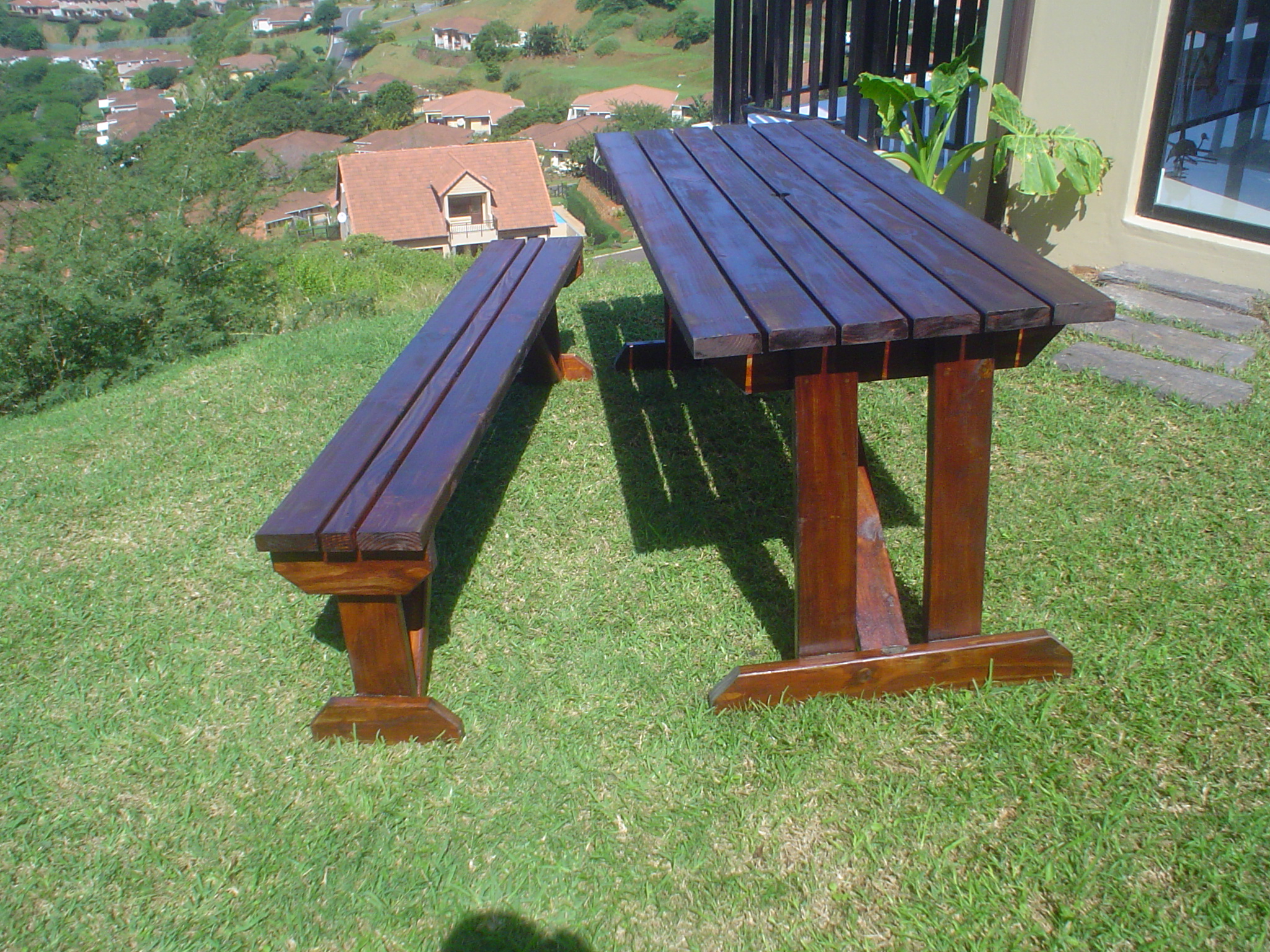
Click to enlarge – pictured is an example of a table in the 40 x 140 range

Outdoor Garden Furniture such as picnic tables comes in a variety of shapes and sizes. There is the climb in models or the walk in models. Some have backrests and some don’t. Some are 4 seaters, some are 10 seaters and some are round or octagonal. The choice of design is endless really and limited only by your imagination. A garden, in my opinion, is incomplete without one and many a day will be spent utilising this very cost-effective, yet versatile piece of Outdoor Garden Furniture called a picnic table.

They can be made from a variety of timber but we have found CCA treated Pine to be the most cost-effective. Provided the timber is treated to at least an H3 level, the picnic table will last many years in the rain and sun. H2 is what is normally available from your timber yard because they are supplying largely the roofing industry, but H2 is not treated enough and will rot. H3 is your normal decking material and is suitable to remain outdoors exposed to the elements. We can however make them out of whatever timber you require, but some timbers do become cost prohibitive, unless you are working to a uncapped budget.

Outdoor furniture - picnic tables

Click to enlarge

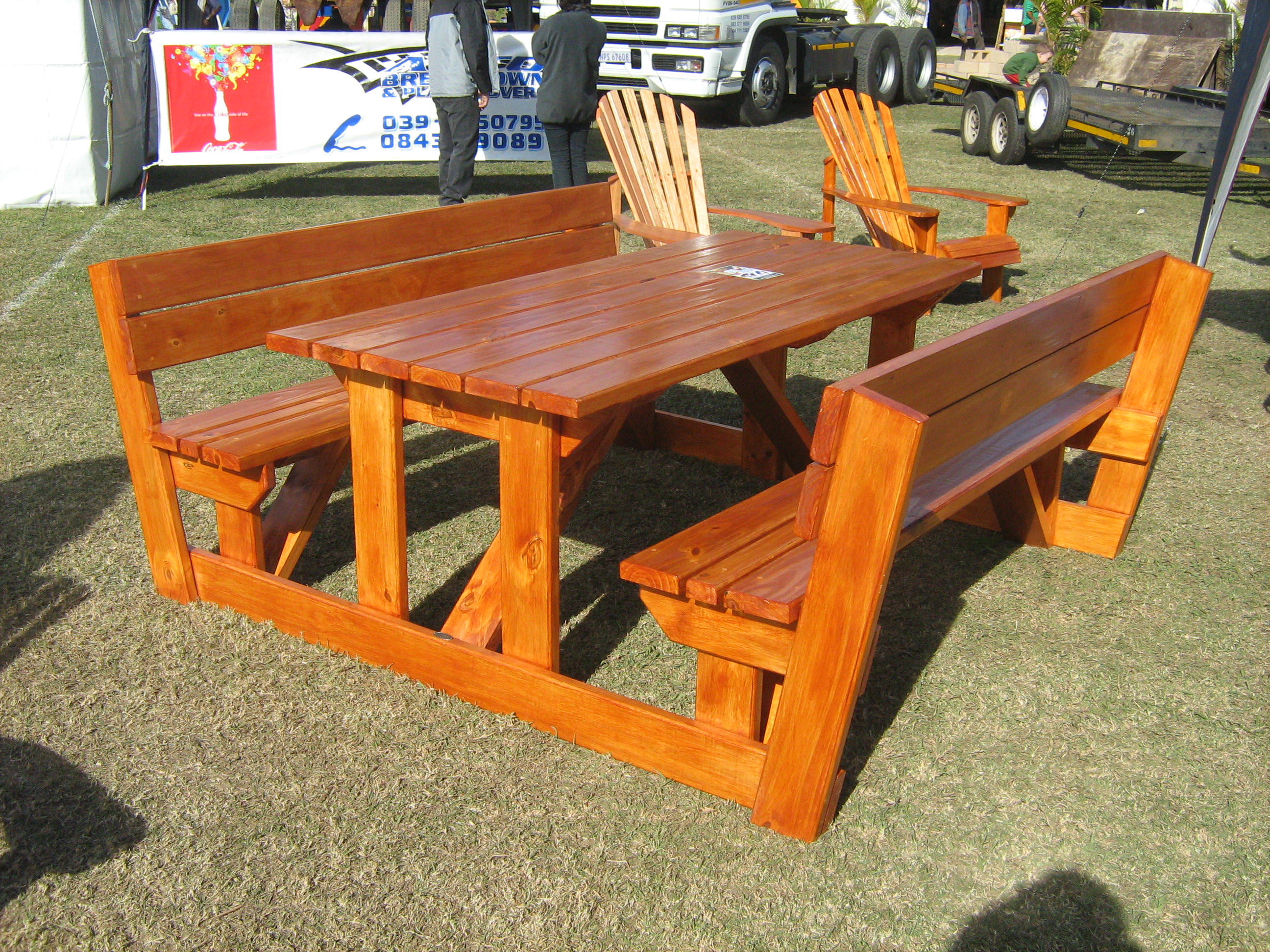
Our biggest sellers are the walk in design with or without backrest. The walk in allows you to slide along the chair without having to climb over the seat to get your feet in. The walk in does however take up a bit more space than the climb in but are, in my opinion, more comfortable and is what you normally find in most pubs around South Africa. The walk in with backrest takes up considerably more space than the ones without the backrest, but does allow you to lean back of course. They also need to be accessed from either side instead of climbing over the seat. They can be made with an attached bench, the most popular, or with a detached bench. The ones with detached benches are sometimes used indoors too as breakfast tables. In this instance one might want to consider using a timber other than pine to give it a cleaner and more appealing look than pine.

Our picnic tables are generally made from stock that is 30mm thick and 100mm wide although this can vary from 23mm thick to 110 wide depending on how much machining needs to be done to get the wood to planned on all four sides.

Screw holes are covered using clear epoxy mixed with saw dust to match the colour and they are then sealed in a choice of tint using a good quality timber preservative. Timber preservative keeps maintenance to a minimum as there is no sanding that is required. When it comes to time to re-seal simply clean and apply 2 or 3 more coats. Applying varnish type coatings will result in the coating peeling and flaking over time and all of it will need to be sanded off which is near impossible.

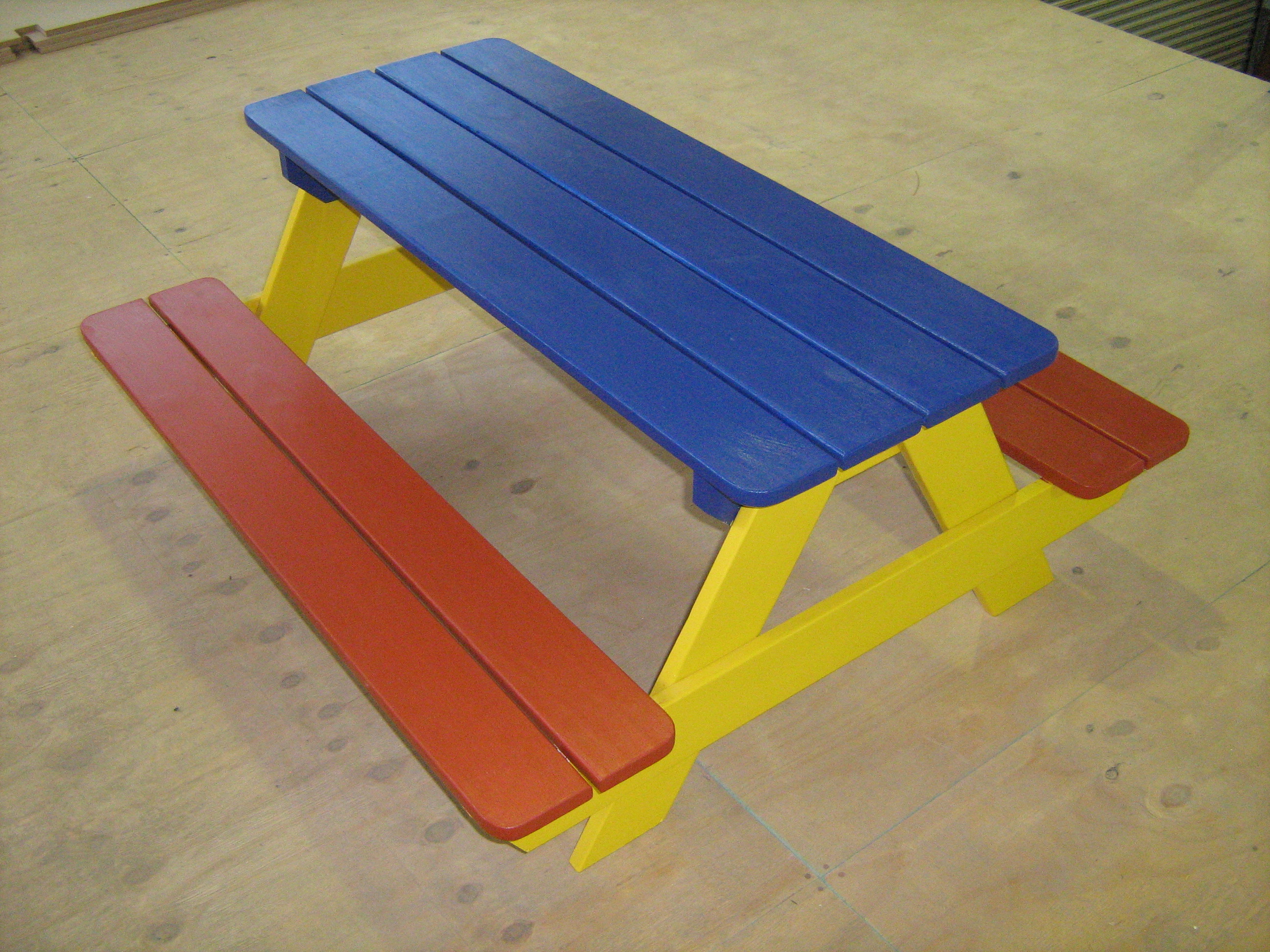
Kiddies picnic table

Click to enlarge

Again we do not produce these tables in flat pack as they simply won’t last. They are pre manufactured in our factory and then transported to site.

A similar design is also available in a kiddies size and can be painted in bright colours rather than a wood stain effect.

For a free no obligation quote, please complete the form below or call us on 082 496 5444.

Go back

Your message has been sent

Warning
Warning
Warning
Warning
Warning
Warning

Warning.

Outdoor Garden Patio Furniture – Adirondack Chairs

Outdoor Garden Patio Furniture just wouldn’t be complete without a set of Adirondack Chairs.

The Adirondack Chairs has been around for many years but today’s Adirondack chairs were designed by Thomas Lee is 1903. While on vacation in Westport, New York in the Adirondack Mountains, he needed outdoor chairs for his summer holiday home. He tested his design on his family first before arriving at a final design. He offered the final design to Harry Bunnell, a friend of his who was in need of winter income. Bunnell quickly realised the potential of the Adirondack Chair and quickly, without Lee’s knowledge or permission, registered a patent on the design and produced commercially them for the next 20 years.

Today’s Adirondack Chairs normally features a rounded back and seat with the backrest tilted backwards for comfort. There are numerous designs available today and they keep changing. We have kept ours as close as possible to the original design due to the appearance of them and the large armrests.

Outdoor Garden Patio Furniture Adirondack Chair

Click to enlarge

There is a range of timbers that can be used. Obviously the more durable and more expensive the timber the more the chairs will cost you. Saligna is widely used as an affordable fairly durable hardwood while top end users will request these in teak or balau. CCA Treated pine works well if treated to at least an H3 level which is suitable for outdoors and carries the manufacturers guarantee of up to 50 years. So they may even outlast the teak or balau.

The Adirondack Chair is slightly pricier than a normal outdoor garden patio chair because a lot of the pieces are curved and if one is not making use of a CNC router, then these invariably need to be cut by hand using either a band saw or jig saw and then shaped to their final shape. They are therefore quite labour intensive. A lot of companies have re-designed them slightly to avoid curved pieces and make use of straight cut pieces which speeds up cutting and assembly time. However we have stuck to the original curved pieces in order to keep our design as close as possible to the original. We also only produce them in timber obtained from sustainable forestry as we have found the plastic composites just don’t match up to a piece of solid wood.

Outdoor Garden Patio Furniture Adirondack Chair

Click to enlarge

The distinctive arm rests are larger enough to place a plate of food on with a drink on the other side. The backrest is tilted backwards and curved for comfort while the seat is contoured to fit around the legs.

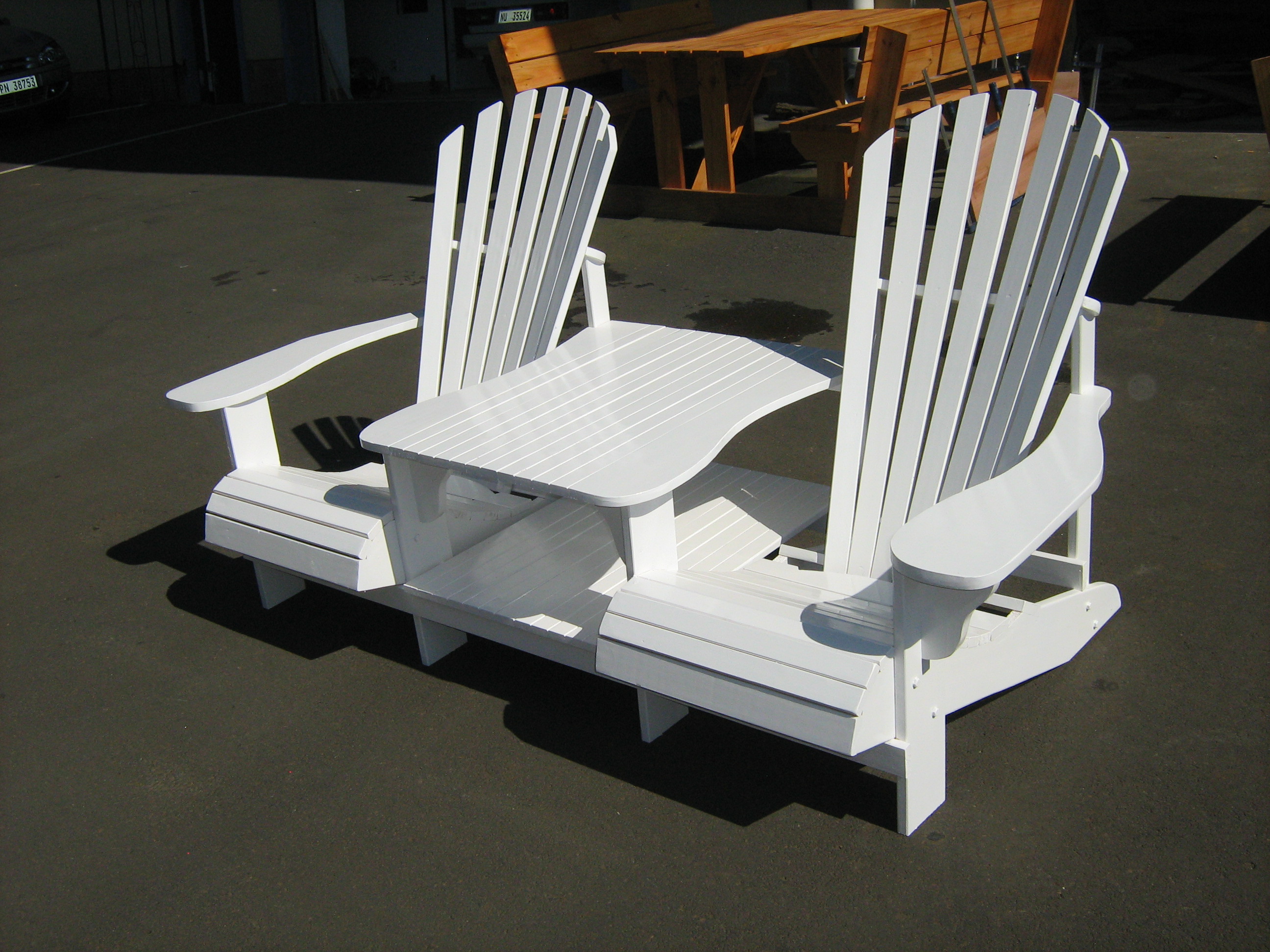
We seal our Adirondack Chairs using a good quality outdoor timber preservative so that maintenance of them will be kept to a minimum. This requires no sanding and a mere clean and re-coat is all that is necessary. The timber preservative also allows the natural beauty of the timber to come through as opposed to a coating that covers that. They are also available in white-painted or any other colour really.

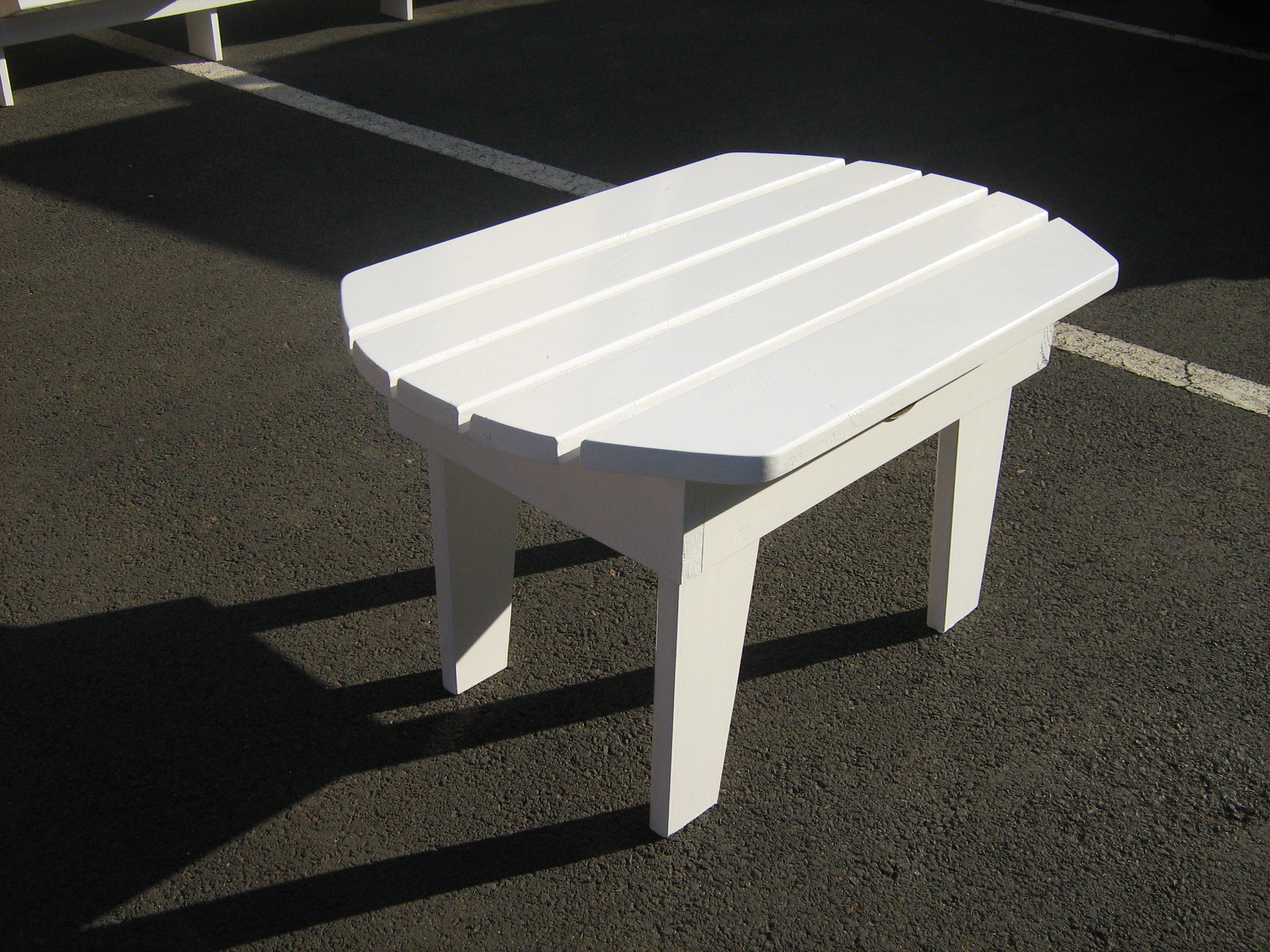
Other pieces are also available such as the double seater with table in the middle or without, a foot rest that is adjustable and a small side table all in the same style and design.

We don’t sell them as flat pack as we have found that flat pack will invariably break over time. Our chairs are made to last many years and I personally still have the first ones I made.

Outdoor Garden Patio Furniture Adirondack Chair

Click to enlarge

They are also available in children’s sizes as well as youth.

For a free no obligation quote on Adirondack Chairs and related outdoor garden patio furniture please complete the form below or contact us on 082 496 5444.

Go back

Your message has been sent

Warning
Warning
Warning
Warning
Warning
Warning

Warning.

Stairs and Steps

Wooden stairs are often built in conjunction with sun decks for access to the garden or another area of the house. We build our stairs primarily from balau but pine is a less expensive option.

There are two different types of stairs you can build. The standard stairway is about 900mm to 1m wide and has open risers (the vertical part) with treads of about 280mm wide. The open riser allows one’s foot to move slightly past the end of the riser. Closed risers are more common on wide steps which are normally built off the front of a deck. So for instance the full length of a 5m deck can have a closed riser step off of it using a substructure and deck boards. It then doubles up as a step and a seating area. They are quite common around pools or entertainment areas where a step is necessary but where the front of the deck needs to be kept open and a balustrade is not required or wanted.

For a free quote please contact us on 082 496 5444 or use the form to contact us below.

Go back

Your message has been sent

Warning
Warning
Warning
Warning
Warning
Warning

Warning.

Jacuzzi Cladding

Jacuzzi cladding that comes standard with most Jacuzzi is often made from meranti which is not that suitable for constant weathering and wet conditions.

Balau or Massaranduba cladding is a better alternative and will last many years in constant contact with water.

Cladding can take many forms from vertical cladding to cover pumps and filters to a small seating area around the Jacuzzi. They often contain hinged doors for access to pumps and filters.

Please contact us for a quote for your cladding requirements on 082 496 5444 or use the form below.

Go back

Your message has been sent

Warning
Warning
Warning
Warning
Warning
Warning

Warning.

Wooden Balau Deck, Plantations, Hillcrest Durban

We built this wooden balau deck in Plantations Estate in Hillcrest Durban recently for a client.

We needed to excavate a few hundred mm down in order to give us enough space in which to install our timber substructure. It is quite important to remove enough soil when building low-level wooden decks on top of soil. This is to give the deck enough space between the bottom of the timber substructure and the top of the soil so that the timber remains relatively dry. It is very important not to allow the timber to touch the wet soil unless it is H4 CCA Treated. CCA Treatment has various Hazard Classifications and each one is associated with specific applications. There are various articles on this site on the topic. You can find them by searching CCA in the search box at the top right of the screen. As a quick summary, H3 is good to go outdoors with periodic wetting and H4 is good to live in the ground in constant contact with wet soil. This is all according to www.sawpa.co.za. So if you are using H3 CCA Treated make sure there is sufficient space below to ensure the wood doesn’t touch the soil. If you are using H4 then it is ok to bury the timber in the ground.

Having said that the more space below the deck the better to allow air movement and keep as much moisture away from the balau deck boards which are not treated. Although balau is a very hardy wood and can withstand a certain amount of wetting, the more moisture around, the quicker the wood will deteriorate.

People often ask me about treating the pine before it goes in the ground or before we install deck boards above. There is no need. The pine is all pressure treated to the correct Hazard Classification and therefore no more treatment or sealing is necessary. In fact there is argument that coating it with, for instance bituseal, will in fact allow water in but won’t allow it out. Water will find a way in. A small stone scratching the bituseal off during installation, or a bump here and there, will allow water in and it won’t easily find its way out. Leaving it so the water can flow in and out quickly will result in a drier piece of timber for longer. There’s no need to do anything to your CCA treated timber.

Balau deck boards are then installed on the surface simply because balau is more stable and won’t crack, twist or warp as easily as pine. The cost difference between pine deck boards and balau deck boards is minimal, if anything. If you use pine deck boards you will use twice as much wood and although pine is relatively inexpensive, for deck boards you will need to use S7 (semi clears). The cost of semi clears negates any saving between pine and balau. Stick with balau as a deck board. It’s very stable. As a substructure, it is not cost-effective to use balau and S5 (industrial grade) pine can be used there at a much lower cost that both balau and semi clear pine.

This deck was left to grey naturally by leaving it as is. No oil, no sealer, nothing. Just leave it and periodically pressure wash it to remove any grime or dirt. If you choose to oil your deck then use an oil. Don’t use a product that will dry on the surface. If it dries it will peel and flake.

For a no obligation quote on building your wooden deck please use the contact us form below or you can contact us on 082 496 5444. We also offer a DIY service. We will supply you with all the correct materials you need to build your own deck and can advise on time-saving tips and tricks as well as recommended building practices.

Go back

Your message has been sent

Warning
Warning
Warning
Warning
Warning

Warning.

Stainless Steel Wire Rope Balustrades, Durban

This slideshow requires JavaScript.

Below is an article on wire rope balustrades to refresh the methods of installing them, display some pictures and highlight some pros and cons of this type of balustrade.

Wire rope balustrades are normally installed when one wants to avoid limiting the view as much as possible whilst still providing a barrier at the end of a deck. As opposed to solid timber balustrades which obstruct the view when in a seated position. A wire rope balustrade limits this as the cables are only 4mm thick.

On a standard 1m high compliant balustrade one would use 8 strands resulting in 9 gaps of 107mm each after taking into account that the capping is 30mm thick. Although the wire rope is tensioned on either end it is not tensioned to guitar string tension and can therefore be pulled open to create a bigger opening than 107mm. Care should therefore be taken when installing these wire rope balustrades if the property owner has small kids. They are not the safest and the height of the deck off the ground should be taken into account when choosing this style of balustrade.

As mentioned above the wire rope has a 4mm diameter. It consists of 19 smaller strands making up one larger strand (1 x19). The other type of wire rope is a 5mm wire rope. This is a 7 x 19. So it has 7 x 19 strands that make one 5mm strand. At The Wood Joint we use only the 4mm (1 x 19) wire rope as this is marine grade stainless steel and won’t tarnish as easily as the 5mm wire rope.

The 4mm rope doesn’t bend as easily as the 5mm rope so it cannot be used in conjunction with turn buckles where the rope needs to bend around the buckle 180º. Instead we make use of a swage and button head system where the wire rope is crimped into a swage on one end and a button head, which is sunk into the timber upright, on the other end. They are much neater than turn buckles but it does result in terminating the strands at a 90º corner and starting a new strand for the next run. As such, posts need to be doubled up so that a new button head can be installed where a swage terminates on the previous run. The end result is a slightly more expensive balustrade but one that won’t tarnish as easily and one that has a much neater appearance.

Care must be taken to cut the wire rope at the right length so as to have enough rope to insert it into the swage but not too much so that it can’t be tensioned properly. Once it is cut and crimped it can’t be re-cut or “uncrimped”.

The swage and button heads should be crimped towards the beginning and crimped twice to avoid failure later on. They can be finished off neatly with a stainless steel dome nut.

We are both suppliers and installers of wire rope balustrades. We own a crimping tool designed for 4mm wire rope which is also available for hire. Call us on 082 496 5444 or use the contact us form below for pricing and availability.

Go back

Your message has been sent

Warning
Warning
Warning
Warning
Warning

Warning.

Balau Duck Boards for Wooden Decks – Durban

Balau pot plant bases Durban

Balau pot plant bases for wooden decks

I have inspected many a wooden deck in Durban where the deck boards beneath a pot plant have started rotting. As can be imagined, rain water and water from watering the pot plant gets trapped below the pot plant and takes much longer to dissipate or evaporate than water collecting elsewhere on the surface of the wooden deck. This of course causes rot to accelerate below the pot plant resulting in premature and costly maintenance.

It can be easily prevented by placing something below the pot plant that is slightly raised off the deck surface and makes less contact with the deck itself. Water can then evaporate or run off more quickly which will slow the rotting process down. All wood will eventually rot and even though balau is more resistant to rot than other species of timber it is not immune to rot. The pot plant base can be moved periodically so that the water trapped between the pot plant base and the deck can also evaporate.

We manufacture pot plant bases in various sizes from balau deck boards that make as little contact with the deck surface as possible and are both pleasing to the eye and effective in resisting rot. They are inexpensive. At the time of writing this article (8 May 2016). they were retailing for approximately R150-00 each, depending on the size. They can be custom-made to fit the pot plant base and will save you a fair amount of money in future maintenance.

These pot plant bases are a joint venture between The Wood Joint and the staff. The builders make them in their spare time and the company recovers a bit for scrap off cuts. We split the proceeds equally.

You can contact us on 082 496 5444 or use the contact us form below. Please provide the size of pot plant base required or the size of the your pot plant so we can work out what will work best.

Go back

Your message has been sent

Warning
Warning
Warning
Warning
Warning

Warning.