Balustrades on Wooden Deck, Durban

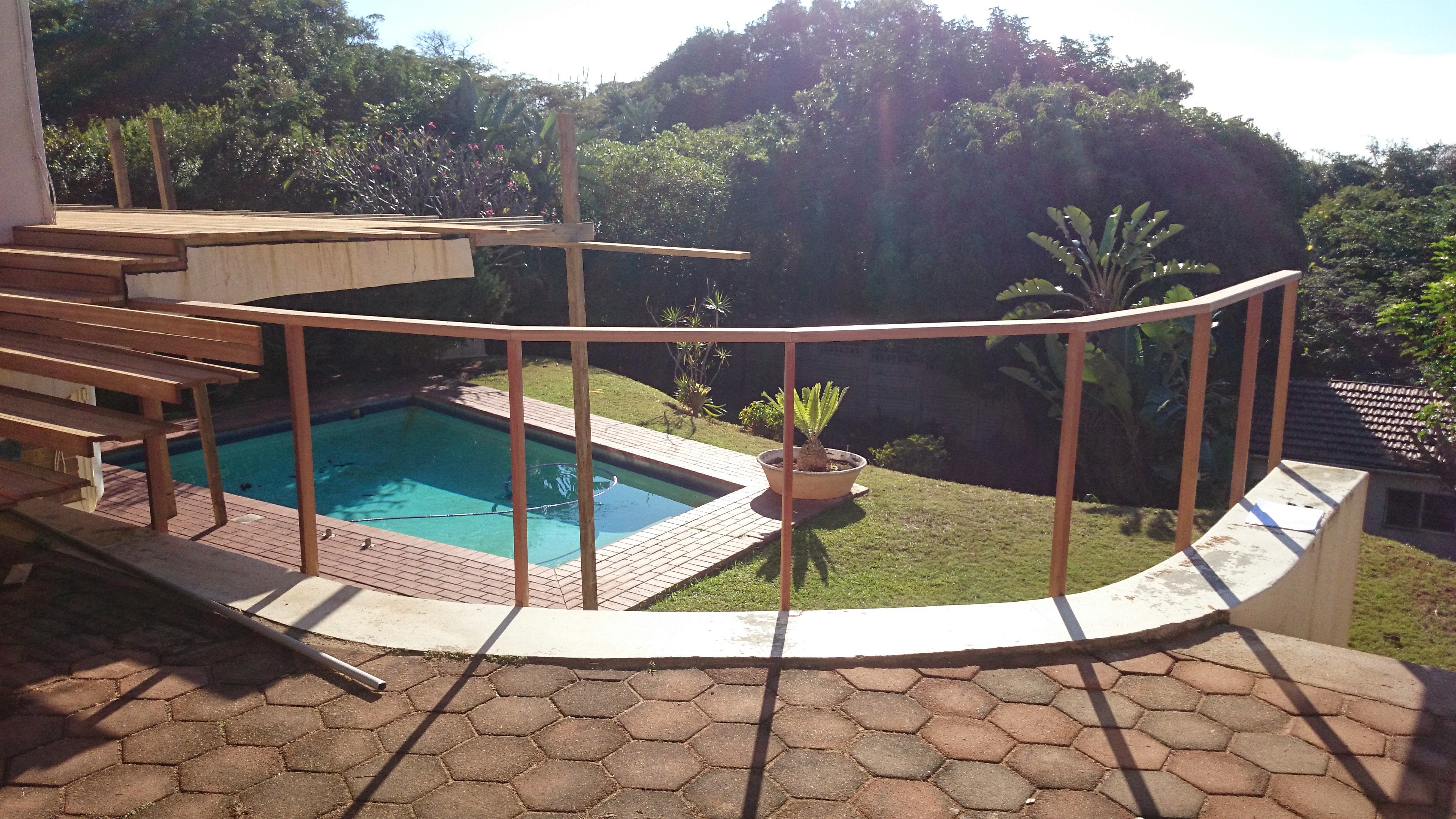
There are a number of different types of wooden balustrades one can have built for your wooden deck. We offer this product in both Durban and Cape Town. I will run through a few options in this article and will mention the pros and cons of each one.

There is a slide show above which shows the different options. I do not have fancy names for them such as Colonial, or Mediterranean. I call them simply what they are.

The vertical picket wooden balustrades are probably the only ones that are compliant in terms of building regulations as none of the gaps are larger than 100mm. They are generally made from 60 x 60 balau upright posts attached to the fascia beam or first or last joist in a wooden deck. We use the 60 x 60 upright post on the corners and in the middle of a long run. All other intermediary posts are 30 x 60 balau. There is a top rail and a bottom rail onto which the vertical pickets are attached. Rails are generally 30 x 40 and pickets are 20 x 30 balau. The bottom rail is set at 100mm off the deck surface and the top rail can be set either 100mm below the capping, or directly beneath the capping. The capping is generally made from a 30 x 102 balau giving it ample width to place a glass or lean comfortably on it. The capping is then routed to give the corners a rounded edge. The distance between upright posts is determined by the total length of the wooden balustrade resulting in equal spaces between uprights. Pickets too are set at equal spaces between uprights. This is the most affordable design of balustrade as it is fairly simple to construct.

The Criss Cross design can come in two main designs. A simple criss cross between uprights with a capping on top or a criss cross between uprights with a box in the middle of the criss cross. The two pieces of timber that are used for the criss cross are normally notched half way through each piece at an angle so that they fit snugly into each other instead of lapping over each other. The box is also set inside the two criss cross pieces so that the whole balustrade is in line rather than pieces over lapping each other. This design can be expensive as the method to construct is time-consuming and the pieces of timber are generally larger than the vertical picket design. It can also be changed to result in many different patterns.

The wire rope design is particularity useful when you don’t want to obscure the view when seated. A balustrade at 1m high will block the view in a seated position for most average height people. The wire rope is 4mm in diameter so it is less visible than say a 30mm piece of timber. The posts are generally also 60 x 60 and 30 x 60 uprights with a capping of 30 x 102 balau on top. The wire rope is set at 100mm intervals but can be opened wider as they are not tensioned to guitar string tension. As such they are not suitable if you have small kids and anything over 1m from the deck to ground level. The swages, turn buckles and wire rope are all marine grade stainless steel.

For a free no obligation quote on your timber balustrade requirements please call us on 082 496 5444 or use the contact us form below.

Go back

Your message has been sent

Warning
Warning
Warning
Warning
Warning

Warning.

Wooden deck in Massaranduba, Hillcrest, Durban

This deck was built with Massaranduba. Although Massaranduba is about 30% more per square metre than balau the client insisted on it as it is a much harder and denser wood than balau. As such it will last longer. It has a slight reddish tinge to it. This deck is to be left unsealed so will eventually turn grey / sliver. Therefore one will not notice that is massaranduba, but it will last longer. When choosing between balau or massaranduba one needs to weigh up the difference in cost vs. the longevity of both timbers. There is nothing wrong with balau, it will also give you a long life span. Massa is of a better quality and will therefore outlast balau.

We decked around the pool flush with the tiling on the patio which resulted in a single 90mm deck board being used as a fascia on the inside of the pool. Hence the difference in height between the water level and the deck is not that great. Often the deck can come up too high resulting in a big step up to the deck from water level. The pool therefore needs to be set at the correct height, in relation to the patio, to accommodate the deck at the correct height.

A quick note on new pool decks. The hardwood typically used in decking contains tannins which leach out when it rains. Storing them on a tiled surface almost always results in stains being left on the tiles after a downpour. Likewise one needs to be careful of installing the fascia on the inside of the pool, or deck boards that are installed on the pool’s edge, prior to filling the pool with water. If there is no water in the pool and it rains, these tannins will leach out and run down the new marbelite pool surface, staining it. The only way to get rid of the stains successfully is to sand it off. It is advisable therefore to get the pool done and filled before decking up to the sides of the pool and installing the fascia board. Alternatively, don’t marbelite until these tannins have completely leached out. It’s a tricky one because the pool contractor doesn’t want to marbelite until the lawn is done because of dust. The landscaper normally comes last, so it’s a bit of juggling that is required.

We decked around a circular concrete slab which is to be a fire pit and up to the edge of the brick and plaster bench around the fire pit.

We also installed a small pergola above the sliding door and included a small bar counter that can be accessed from both sides of the patio and deck. There was also a small decked area at the back of the house next to the fish pond and a screen on the front of the house.

For the screen we used a 20 x 30 slat instead of a normal 19 x 68 deck board. Although a 19 x 68 deck board works well as a screen, a narrower piece (30mm) with a smaller gap is a bit different and not the run of the mill timber screening. Although it is slightly more expensive than a normal 68mm wide deck board screen, it is very effective.

All in all a very nice job to work on and a pleasure to work with Massaranduba. It is lovely stuff. Hard as nails and long-lasting.

For a free no obligation quote on your wooden decking, pergola or screening needs in Durban or Cape Town, please call us on 082 496 5444 or use the contact us form below.

Go back

Your message has been sent

Warning
Warning
Warning
Warning
Warning

Warning.

Wooden Decking in Durban – What Timber to Use

Wooden decks Durban

A CCA treated pine substructure and balau deck boards

Wooden decking in Durban, or any other area in South Africa is a valuable, inexpensive way of creating extra outdoor space. The climate in South Africa lends itself to outdoor living and as such a wooden deck in Durban is almost essential. There are many articles on this blog on how to build a wooden deck, what methods we use in building etc. so please feel free to browse and find what you are looking for. In this article I will mention some of the types of wood we use in building our wooden decks and provide reasons why we choose those types of wood.

Our deck substructures are made from CCA treated pine. Pine is a locally grown timber, relatively fast growing and as such inexpensive. It is used widely in the building trade as structural timber. It does however need to be CCA treated in order to prevent rot and insect infestation. CCA treatment is available in various H levels or Hazard Classifications. H3 is what is typically used in wooden decking as it is suitable to live out doors with occasional wetting. H4 is what one uses for posts or beams that are in constant contact with wet soil. If you stick to these guidelines, as set out by The South African Wood Preservers Association, then you will get a minimum of 50 years life span from your H3 timber and 30 years from your H4 timber. Pine is also relatively cheaper than balau. Balau can be used as a substructure but it is about 4 to 5

Wooden decks Durban

A balau substructure

times the price of treated pine. Balau will rot quicker than correctly treated pine in a substructure, believe it or not.

The pine that needs to be used in the substructure needs to be at least S5 which is SABS structurally approved timber. What it means is that there is no more than a certain specified amount of knots per square metre of timber. Pine is very knotty and is split up into different S categories which all carry a different price tag.

Pine is however not my fist choice for deck boards. Firstly it costs pretty much the same as balau. The reason for this is that the grooves below are machined here in South Africa and it is S7 timber so virtually knot free and it therefore carries a higher price tag then S5 pine. Added to this is that you are using almost twice as much timber because it is less dense. Typically a pine deck board would be 32mm thick whereas a balau deck board would be 19mm thick. The cubic metre rate for balau deck boards is also about half the price of the structural balau. Pine also tends to, warp and crack more easily then balau when exposed to direct sunlight because it is less dense and expands and

Wooden decks Durban

Balau deck boards

contracts a lot more than balau. This is fine for a substructure which uses thicker pieces of wood and is protected from the sun, but doesn’t work well on deck boards.

Based on all the above, it makes financial sense, and structurally it is the best option, to use H3 and H4 CCA Treated pine as a substructure and balau deck boards.

There are other options for deck boards. Massaranduba and Garappa are both very good woods which will outlast balau, but cost about 20% more per square metre. They are mostly used in the Highveld and in areas of South Africa where they experience extreme temperatures between seasons. Because they are denser, more stable and less prone to cracking

Wooden decks Durban

Balau deck boards

and warping, they can withstand minus 10 in winter and plus 30 in summer. Durban however has a more stable climate with less extremes between seasons and as such balau is the most suitable choice for hardwood decks.

For a free no obligation quote on your wooden sun deck in Durban please call us on 082 496 5444 or use the contact us form below.

Name (required)
Email (required)
Tel / Cell (required)
Area
Comment (required)
Submit

DIY Timber Decking in Durban

Timber decking companies DurbanAlthough we are professional installers of timber decks in Durban, we also offer a DIY service whereby we will supply the materials required to build your own wooden deck. We will also provide a brief outline of what is required and how to go about installing it.

As an introduction to this service I will offer some basic guidelines of how to set about building a wooden deck.

The most cost-effective method is to use an H3 and H4 CCA Treated substructure and balau deck boards. H3 timber is guaranteed, by the supplier, for 50 years and H4 is guaranteed for 30 years. This is of course subject to certain conditions that need to be fulfilled such as sealing cut ends with an approved end sealer and using H3 and H4 where they should be used. You can see a list of H classifications on www.sawpa.co.za. Provided the correct H level of timber is used in the correct application your deck will probably out live you.

Wooden decking companies Durban

First few rows of balau deck boards down

Substructure construction will vary depending on the height of the deck and some other criteria, but basically you will be aiming to install joists at about 450mm to 500mm centres. This will vary depending on the total length you need to install joists over. The joists are generally built using 38 x 114 S5 H3 timber. S5 is minimum SABS structural grade timber and refers to the number of knots per square metre that are present in the wood. H3 is the level to which it is treated at the treatment plant. H3 is suitable for outdoors. If you are placing timber in the ground, or in constant contact with wet soil, it should be treated to a minimum of H4.

Should you require main beams to support your joist structure you will typically use a 50 x 228 H4 beam and you can use 76 x 76 H4 treated square posts to support these beams. Your beams will be installed at 3m centres. If the structure is higher than about 2m I would suggest using gum poles to support it as they are harder and stronger. Again use H4 CCA Treated as they will be placed in the ground.

Timber decking companies DurbanIt is best to use balau deck boards as they are a lot more stable than pine and will not bow and cup as easily as pine. I use the 19 x 68mm reeded deck board as they are relatively inexpensive in comparison to the 19 x 90 deck board. They need to be reeded and the grooved side must face down in order to allow water trapped between the bottom of the deck board and the joist to escape, thus preventing premature failure due to rot. One can also use other timbers such as Massaranduba and Garappa, but they are more expensive. Balau is fine for coastal regions. Garappa and Massaranduba work well in the Highveld where the temperatures range from very cold to very hot.

Deck boards should be spaced with a 5mm gap between them in order to allow water on the surface of the deck to drain away quickly.

For a free no obligation quote on timber supply or supply and install for your decking needs, please contact us on 082 496 5444, or use the contact us form below.

Go back

Your message has been sent

Warning
Warning
Warning
Warning
Warning

Warning.

Hardwood Flooring Companies in Durban

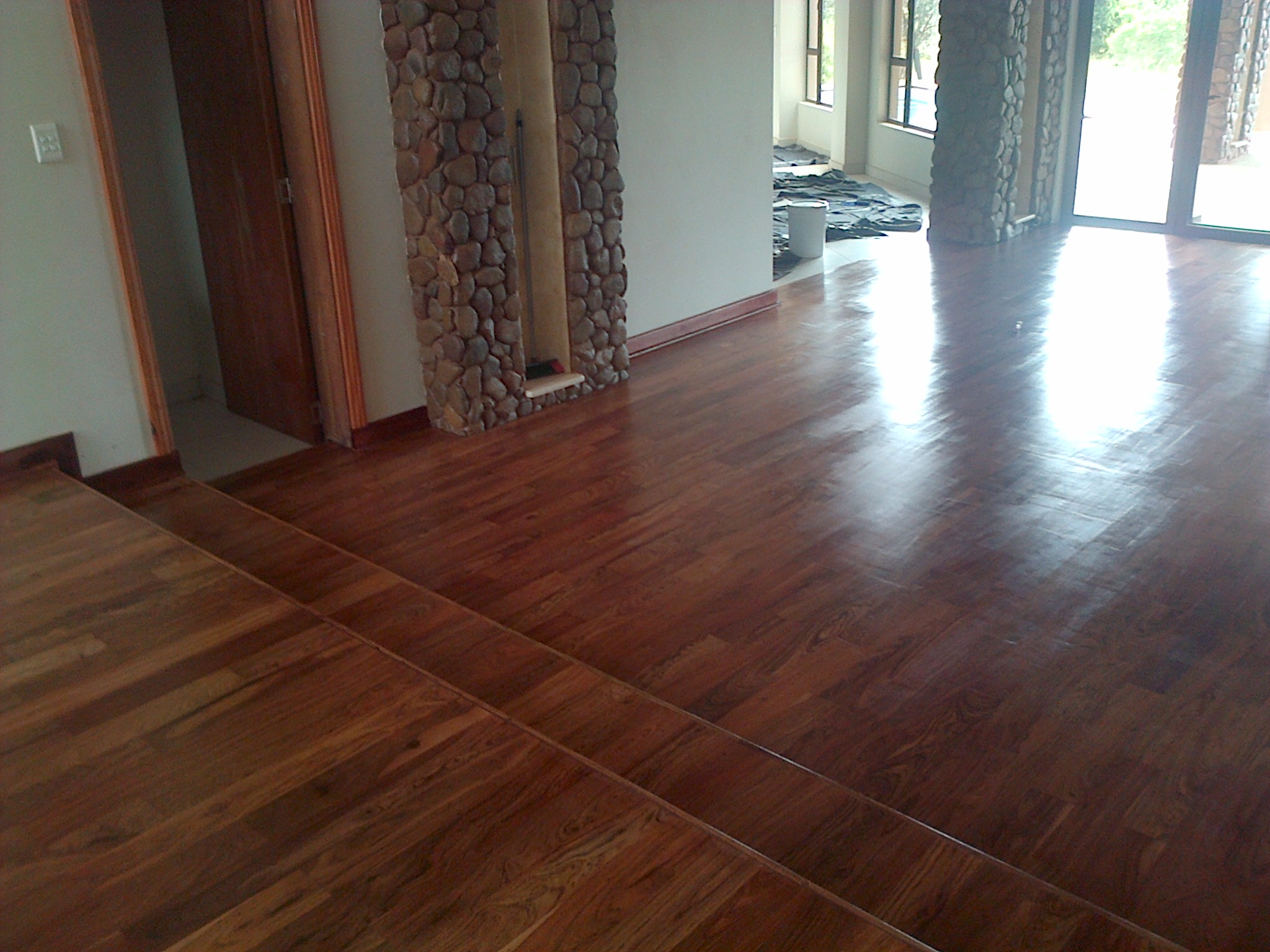
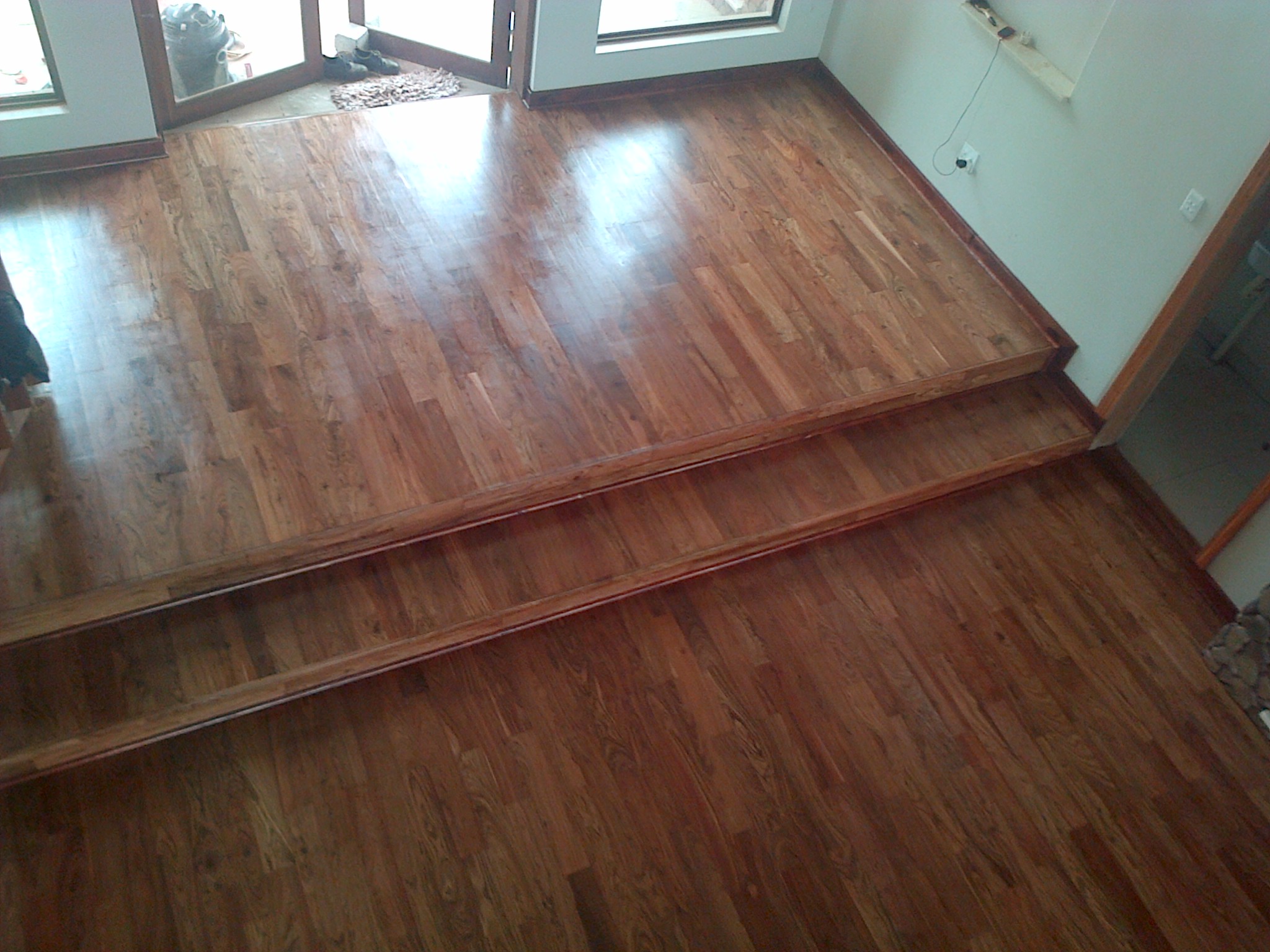
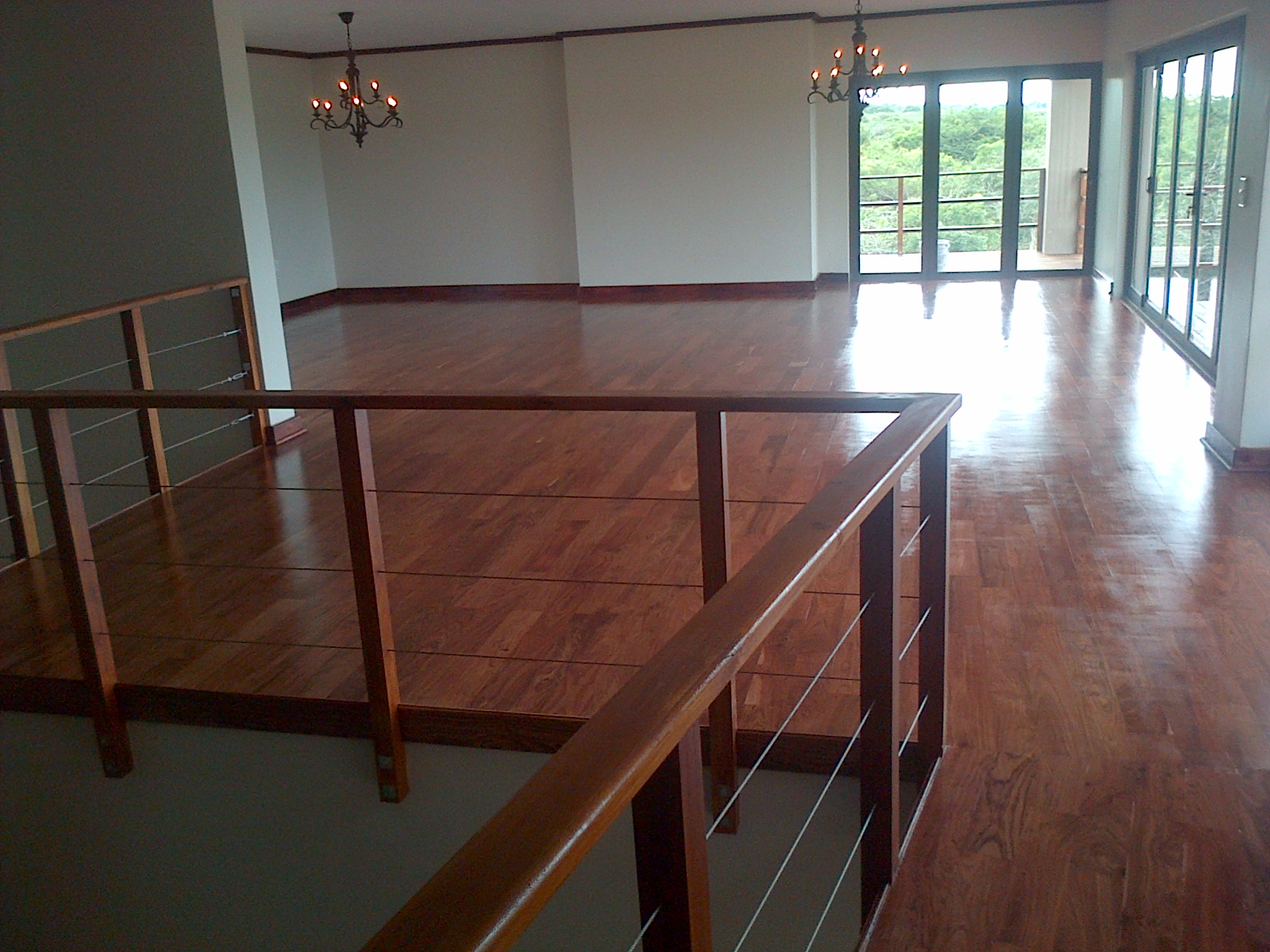
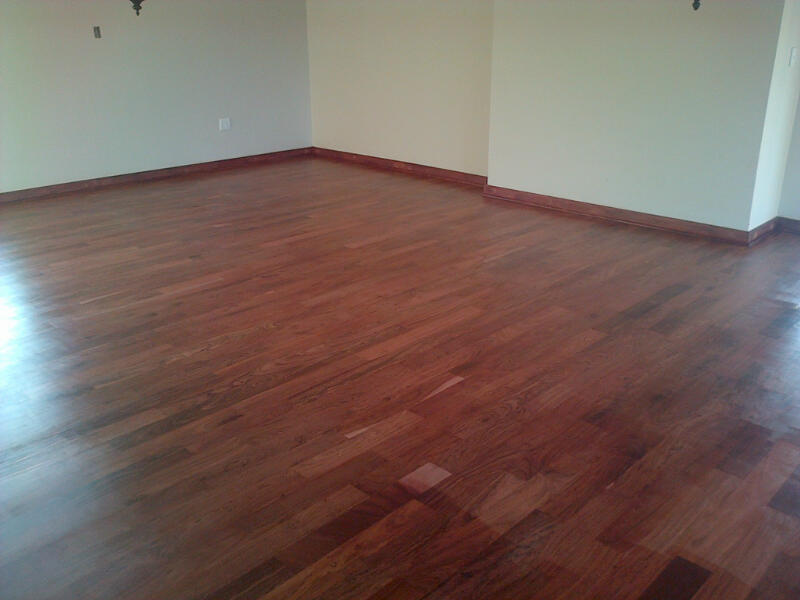
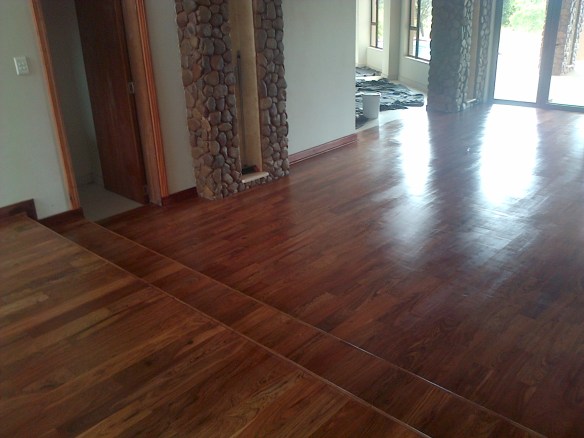
IMG-20140511-00288Hardwood flooring is becoming very popular again in modern-day home building. There is a separate article on this blog about the history of hardwood floors so I won’t write much about that here. This article is intended to share some info I have gained about hardwood floors and how to ensure that you make the right decisions when choosing your hardwood floor.

There are a number of hardwood flooring specialist companies in Durban to choose from when installing hardwood floors in your home. A few important points to consider when choosing a hardwood flooring company is their track record and their knowledge of wood, its characteristics and how it behaves.

There are broadly speaking two ways to install a hardwood floor. It will either be suspended on battens or joists, or be glued to the substrate which is normally concrete.

Suspended Floors vs. Glue Down Floor Boards
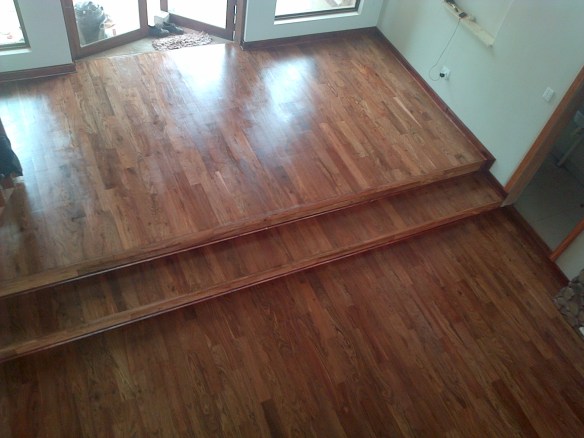
IMG-20140511-00284Suspended or sprung floors are exactly that. They are floor boards that are fixed to joists or battens with a cavity between the bottom of the floor board and the substrate. They are useful when there is no substrate or the substrate is below the desired height of the floor and filling with concrete is not an option due to cost. One can then simply run beams and joists, or battens if the height to be gained is not that great, at specified centres and then attach floor boards to the joists. The distance between joists will be determined by the type of wood being used as floor boards and its density and hardness. They will generally be between 400mm and 500mm. Anything less is a waste of wood and anything more may result in the floor boards being “spongy” and “bouncing” with slight movement up and down. Despite being annoying when walked on, this will also put strain on all joints and failure of the hardwood floor may be premature.

This substructure, or substrate, must be completely flat and level on the top in order to get a flat and level floor. Shimming and notching are practices used in suspended floors to achieve a flat and level substructure. Skimming or screeding may be necessary when making use of a glued down method. Either way that substrate or substructure MUST be completely flat and level otherwise you will have boards popping or unnecessary strain being placed on suspended boards resulting in nails pulling out or breaking. Once the substructure is completed and you are happy with it you can start installing floor boards.
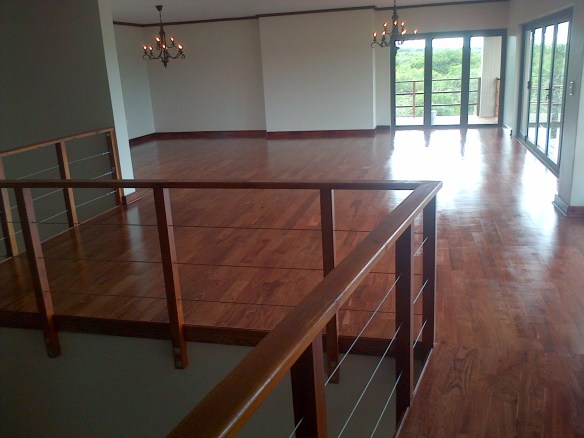
IMG-20140511-00281If the concrete substrate is 20mm or so below the desired height of the top of the floor, then one has no option but to glue the wood down to the substrate. A batten is typically 25mm to 35mm thick and a floor board is typically about 20mm. So one would need at least 45mm between the desired top of floor height and substrate in order to make use of this method. Most older houses made use of suspended floors and the ground was typically 500mm to a metre below the floor and was sand. Columns were built up to support the beams and joists. In these older houses a suspended floor is the only option. In most modern-day homes the concrete substrate is set at about 20mm to 25mm below the door frames so that any floor can be utilised (i.e. wood or carpets). In these homes a glued down floor is the only option as the height of the substrate won’t allow for battens and floor boards as it will result in the top of the floor being higher than the door frames. It’s not impossible but also not preferable to have your floor 20mm or 30mm higher than your door frame.

One should be careful of glueing floor boards to a substrate that moves itself. If for instance the substrate is ply wood, installed on top of joists, then a suspended floor should be the method as the substrate will also be moving, thereby creating problems with the floor boards.
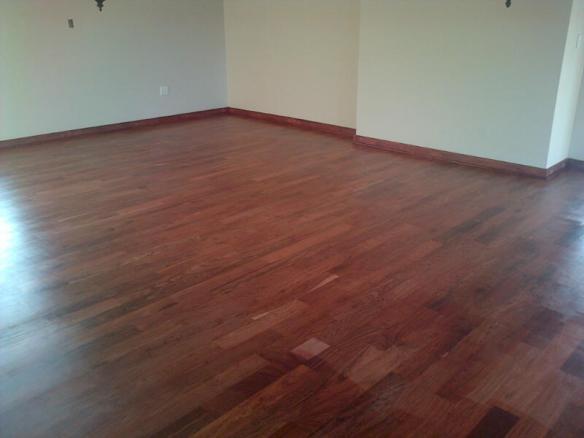
IMG-20140509-WA0001All wood “moves”, that is it expands and contracts with seasons and humidity. A suspended floor will allow the wood to move more freely as it is nailed down as opposed to being glued down. Being able to move a bit more freely will result in less boards splitting, popping or cracking over time. A suspended floor will have a hollow sound to it, which some people prefer while a glued down floor will have a more solid sound to it as it is glued directly to a concrete substrate.

Wood should always be allowed to acclimatise before being installed. This applies to both glued down and suspended methods. If we take teak for instance. It will originate probably in Zimbabwe, be machined there and exported to South Africa. It will arrive and will spend some time in Gauteng and then be shipped to Durban and then to its final destination. The changes in humidity and temperature between all these places affect the overall size of the wood. In more humid environments the wood will swell, expand slightly and in drier environments it will shrink, or contract slightly. It should be allowed to “rest” for at least two weeks, at its place of installation before being installed, to acclimatise to the local climatic conditions. Thin pieces of wood should also be placed between boards to allow for movement of air while it is acclimatizing.

The best time to install a floor is in the summer months. The wood would have (excuse the pun) swelled slightly due to heat and humidity (assuming of course the local conditions are more humid in summer than winter, such as Durban). The boards will be installed in this slightly swelled state and in winter they will contract slightly. If we do it the other way around, install in winter, then the wood will be contracted when being installed and will expand in summer and the boards will push up against each other, on the sides, and may pop. If winter is the only time one can install them, then allowance needs to be made for this and small gaps need to be left between boards to allow them to swell in summer. The size of the gap will depend on the type of timber being used. Harder woods will require less than softer woods as they will move less between seasons. When I say gaps I mean very slight gaps and I should rather refer to it as loosely laid as opposed to tightly laid.

Types of wood

There are various types of wood one can use for flooring. Some work better than others and the imported exotic hardwood such as Oak and Walnut are very expensive as opposed to locally grown timber such as pine or Saligna. Softer woods such as pine and Saligna (gum) can be used but will not be as durable as a hardwood such as teak or oak. They may split or crack sooner and will expand and contract more. Pine and Saligna work best being suspended rather than being glued down because they expand and contact more easily due to their lower density. Also the floors life span will be shorter because with every maintenance interval the soft wood will lose about 2mm from the surface when sanded. A hardwood such as teak will loose considerably less than that and as such its life span will be longer (i.e. it can be sanded many more times).

The different types of wood also vary in colour from dark to light and then some with varied colour like brown and white teak or Kiaat. Some of these variations in colour are due to heart wood and sap wood being present. Brown and white teak for instance is made up of heartwood and sap wood, heart wood being the timber close to the middle of the tree and sap wood being that close to the outside of the tree. Heart wood is by far the best as it is older and therefore harder and more resistant to attack by insects and rot. It is unavoidably more expensive.

Types of floor boards

There are various types of floor boards available on the market today. Most are tongue and grooved so that one side has a tongue and one side has a groove. When installing the tongue of one floor board is inserted into the groove of the board next to it to provide a tight fit and stop the boards from moving in a vertical direction against each other. The result being that your floor will remain flat for longer, if not forever. There are various different types of tongue and groove too which makes installation easier and results in less problems. Normally the tongue is slightly shorter than the groove to allow it to slide into the groove and not be prevented from being inserted all the way in so that the boards butt up flush with each other. Sometimes the tongue swells and the inside of the grooves swell, when moving into an area of more humidity, which makes it near impossible to get the tongue into the groove. A good floor board manufacturer will allow for this by making the tongue slightly thinner and shorter than the groove.

With locally grown timber such as pine or Saligna the boards come in longer lengths, typically 3m or so. With these longer boards they are normally only tongue and grooved on opposite sides along the length of the board. When installing, one will either cut the end of the board to reach a joist or batten, resulting in a small amount of waste or one will install an extra batten on that board only to support the end of the board. With imported timber such as teak, the boards will come in much shorter lengths as the longer stuff carries a premium price tag and is normally reserved for other uses. These are commonly known as maxi planks and vary in length from 450mm to 1m. If the same method as above was used one would be inserting extra battens all over the place which would not be feasible. So what the manufacturer does is to tongue and groove all four sides of the board. When the end of the board is reached there is no need to install an extra batten as the ends are tongue and grooved and fit snugly into each other without any vertical movement.

There are specialised tools for hardwood installation. We make use of an angled floor nailer. The nailer drives a nail at a 45° angle through the tongue and into the batten or joist. It also counter sinks it so that the nail does not impede the next board from butting up tight against the first one. The nail is now invisible and cannot be seen from the surface of the floor. The nail is also flat in that it is thinner than it is wide. This allows the nail to be driven through the timber between the grain on it’s thinner side so as not to split the tongue. It is hook shaped and ribbed so that it does not pull out over time.

I hope I have shed some light in the pros and cons of hardwood flooring and what to consider when installing hardwood floors and that you enjoy your hardwood floors for many years to come.

For a free no obligation quote on your solid hardwood floor, please call us on 082 496 5444 or use the contact us form below.

Go back

Your message has been sent

Warning
Warning
Warning
Warning
Warning

Warning.

Wooden Decking Companies in Durban

wooden decking companies durban

Click to enlarge

There are many wooden decking companies in Durban that one can choose from when planning to install a wooden deck. Some are reputable companies and some are not, as in any industry.

Besides comparing price one should always compare services to make sure you are comparing like quotes. Some wooden decking companies in Durban for instance will offer to build you wooden deck as well as seal it and other will only quote to build it. Some will offer to fill the screw holes with epoxy to stop water getting in them which will cause rot and others won’t. It is these small things that one needs to ask about and make sure that the service being received from one wooden decking company in Durban is the same as the other that you are comparing to.

Our service at The Wood Joint, includes the following: –

Building the deck with quality yellow balau. We generally build our substructure out of H3 and H4 CCA Treated pine. This is not only due to a cost factor but also because the pine is correctly treated to H3 CCA level which has a life span of at least 50 years exposed to the elements. You can expect to pay about 40% more if you chose a balau substructure. H3 CCA Treated pine is guaranteed for 50 years if used in the correct application and installed correctly.  It will therefore outlast balau as a substructure because the balau is not, and cannot be, pressure treated. I have often seen balau joists rotting from the top where the water gets trapped between the joist and the deck board. We always use balau deck boards as balau behaves better than pine on horizontal surfaces. Balau is a lot more stable and the pine tends to cup and warp over time with the constant hot and cold, expansion and contraction and occasional wetting.

wooden decking companies durban

Click to enlarge

Our balustrades and stairs are all made from balau, unless otherwise specified, because if one uses pine as a balustrade, the pickets and cross supports need to be almost twice as thick as balau so they tend to look a bit too chunky. Balustrades do not work well in pine because of the knots found in pine which weaken the timber.

We use a kalgard decking screw which is guaranteed for 25 years by the manufacturer against rust. The screws are counter sunk and the counter sunk hole is filled with epoxy and saw dust so as to match the colour as closely as possible. Filling the screw hole stops water sitting in that hole and travelling up the deck board along the grain. Exposure to water for too long will speed up the rot process. So we fill it, sand it flat, and seal the deck using an oil based sealer which contains no wax. This makes it easy and therefore inexpensive to maintain your deck going forward. I have done a few refurbishment jobs where the decking company has not filled these holes and on the older decks, the deck boards have started to rot there. These are all standard services we offer which are normally included in the price we quote. So when comparing our quotes to others, please check what value added services they are offering you.

For a free no obligation quote on your wooden deck, pergolas, screens, walkways, etc. please contact us on 082 496 5444 or use the contact us form below.

Go back

Your message has been sent

Warning
Warning
Warning
Warning
Warning

Warning.

Wooden Balau Walkway Umhlanga, Durban

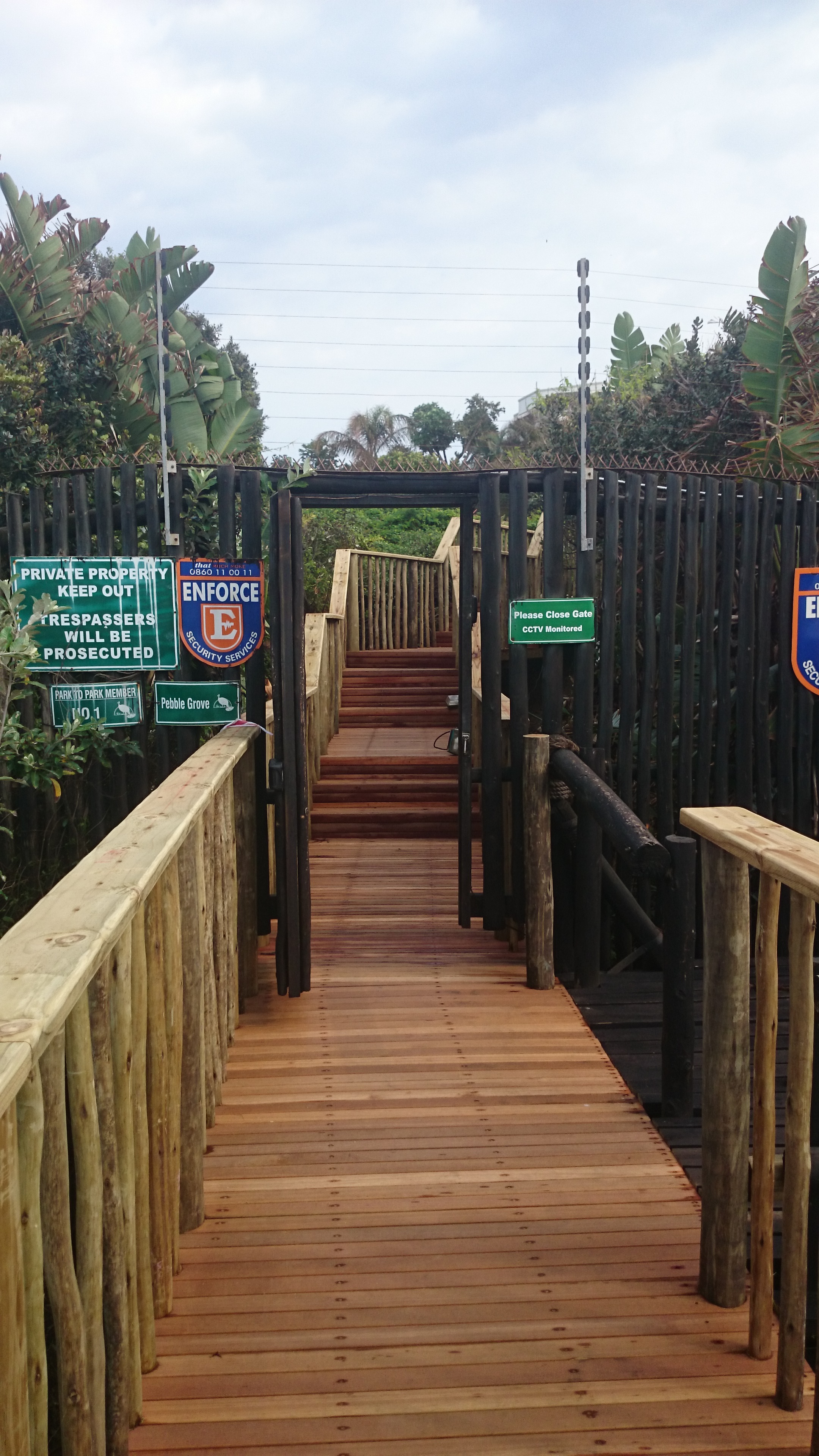
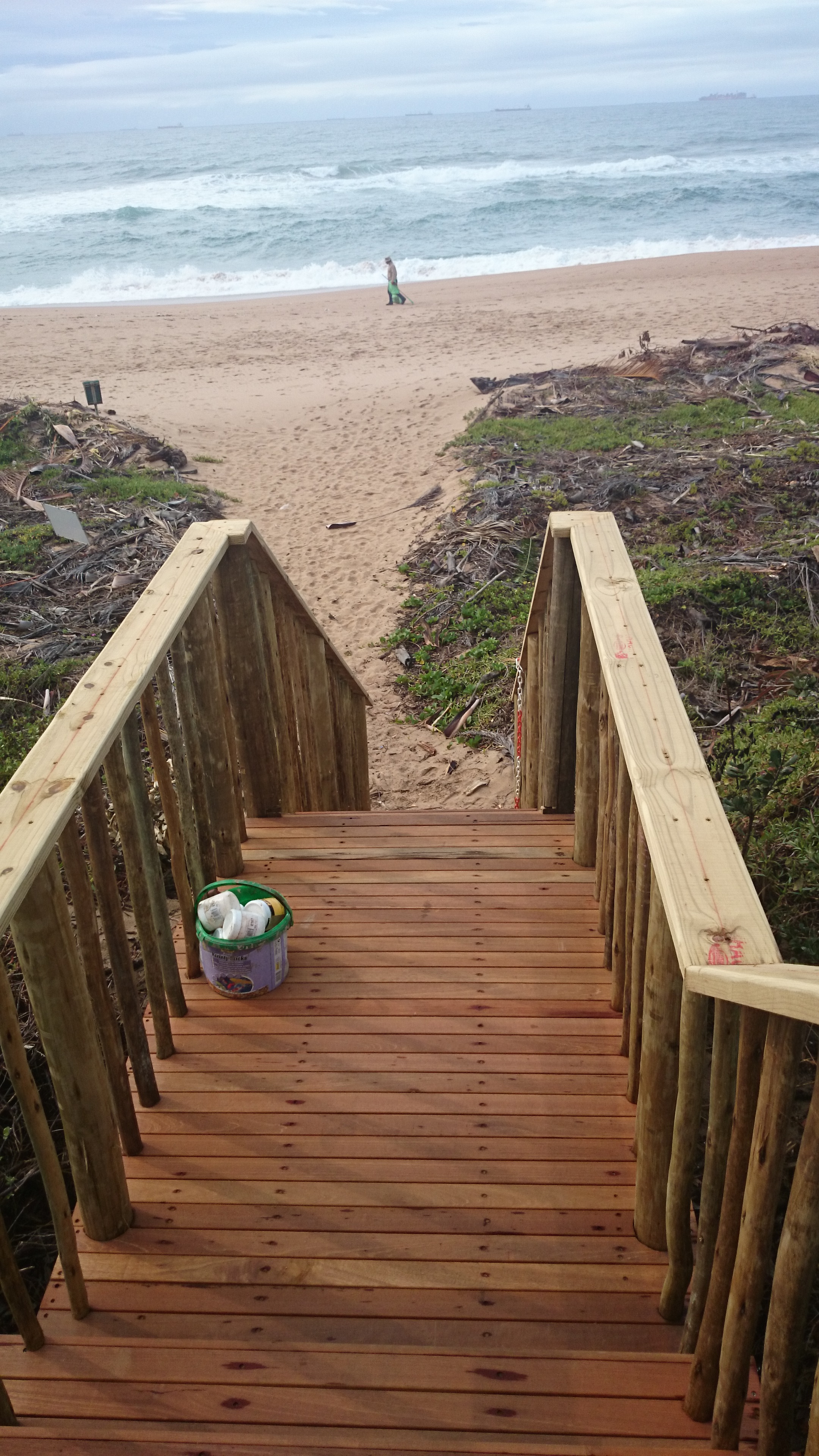
Wooden Balau WalkwayThis wooden balau walkway, or bridge, leading to the beach, needed to be replaced as the old one, although it was nearly 20 years old, had started sinking on one side. It had been built on beach sand so the concrete that had been used to set the upright posts had sunk over time into the soft sand. This problem also occurs on decks that are built on the bluff as the Bluff is essentially one big sand dune, so many parts of it are soft enough to allow a post to sink over time.Wooden Balau Walkway

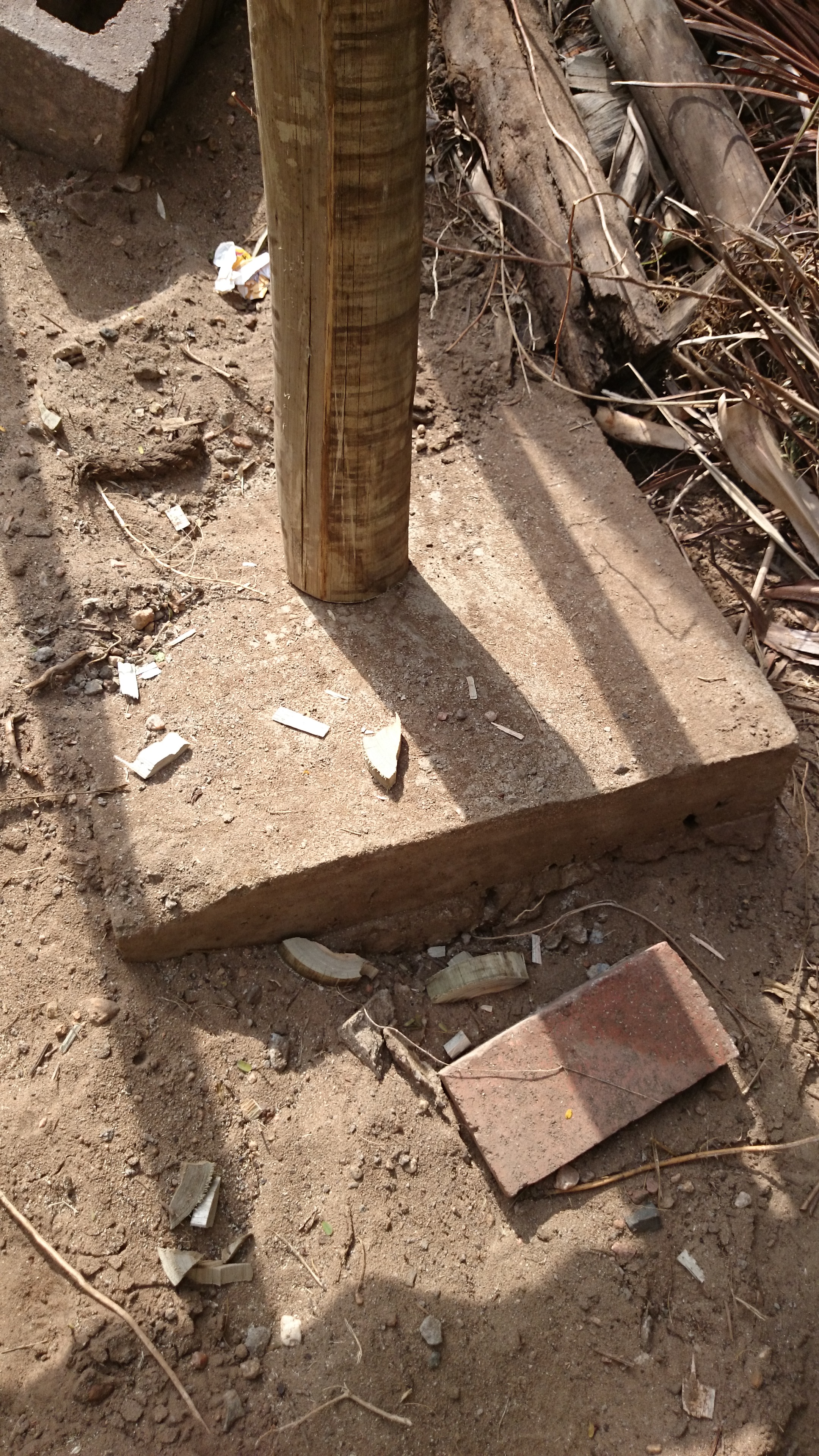
We overcame this problem by making use of a floating foundation. It is often used in building houses where the soil is very soft. Instead of throwing a concrete foundation beneath the walls and bringing the bricks up and then throwing a slab, the entire foundation is a concrete slab on top of which the bricks are laid. The result being that it creates a much larger foot print in the sand and is of course more difficult to sink than if it was a column of concrete.

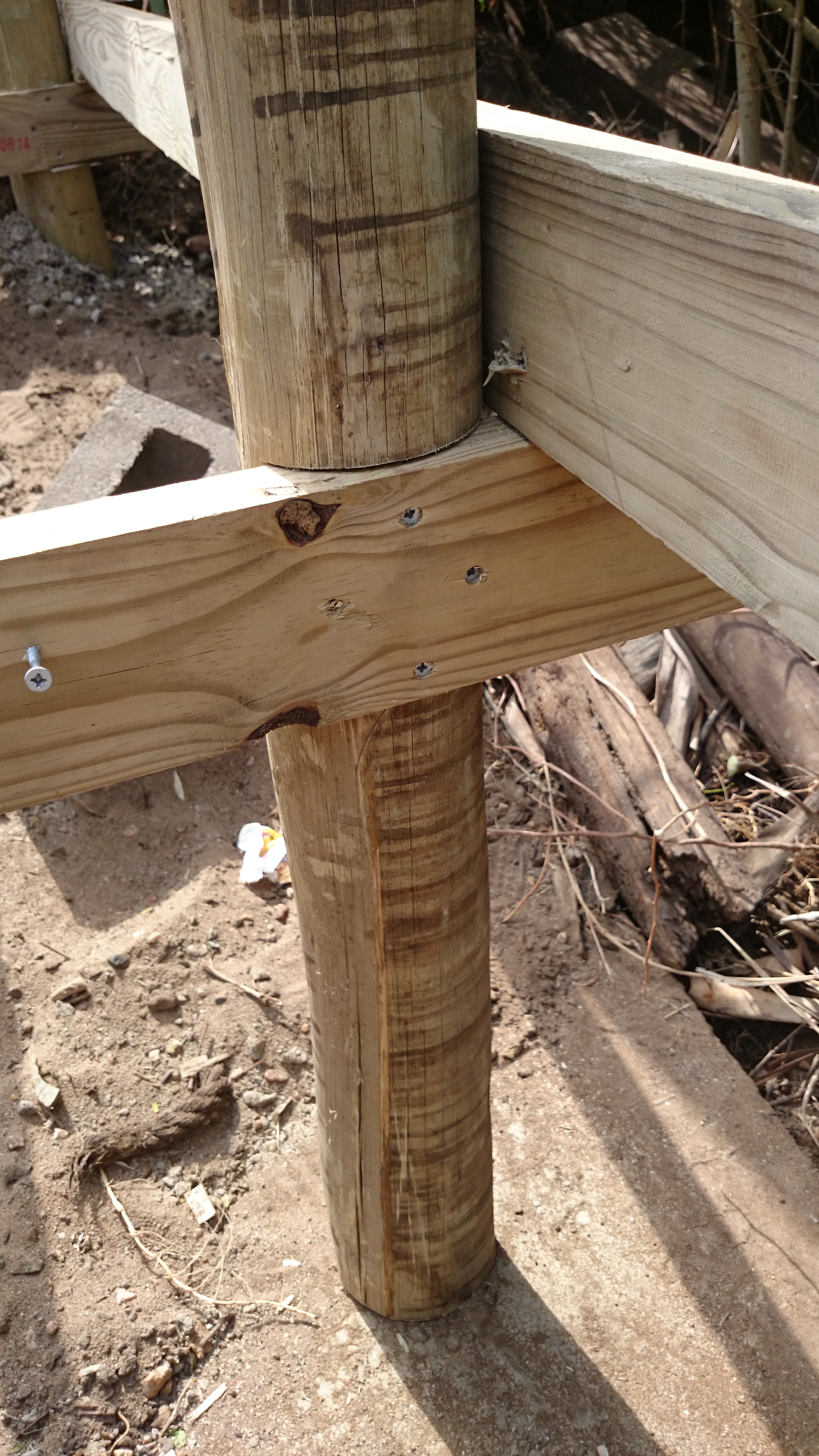
This method solved the problem of the posts sinking, but created another problem in that there was no lateral support for our posts which would have resulted in them falling over. This was overcome by throwing a “pad” on every second post and every other post was set 600mm in the ground in concrete. So one post stopped it from sinking and the other gave it lateral support and stopped it from falling over.

The floating “pads” were 600mm x 600mm and 150mm thick with mesh in between to stop the concrete from cracking with the weight of the deck.Wooden Balau Walkway

The pics alongside show the “pad” that the upright posts sits on top of and a post that has been buried in the ground 600mm.

Once our structure was up we installed our joists and decked it using balau deck boards. The width was 1.5m so we installed 4 joists to give us joist centres of 500mm. This is about the maximum one can span a 19mm deck board without it bowing from the weight of a person. Anything bigger than 500mm will result in the deck surface being springy. One should aim for between 450mm and 500mm. This of course applies to a 19mm balau deck board. If another timber is being used, or the board is anything but 19mm thick, then this will vary.Wooden Balau Walkway

We used the uprights, which were 100 / 125, H4 CCA treated gum poles, as our uprights for our balustrade too so as to ensure that they were sturdy. Because our gum poles were between 100mm and 125mm in diameter, we had to use a 38 x 152 H3 CCA Treated pine capping; otherwise the capping would have been narrower than the upright which would have looked odd. We then installed droppers as our pickets and secured these through the top of the capping and from underneath the deck boards.

Our stairs leading from the last section of walkway to the beach were made using H3 CCA treated pine stringers and treads and we then clad the treads with balau to match the walkway surface.

For a free, no obligation quote, on your wooden decks, walkways, bridges, screens, pergolas and other outdoor timber construction, please call us on 082 496 5444 or use the contact us form below.

Go back

Your message has been sent

Warning
Warning
Warning
Warning
Warning

Warning.

Wooden Deck Built in Hillcrest, Durban

Here’s video of a wooden deck we built recently in Hillcrest, Durban showing the different stages of the build.

Give us a call for a quote on your wooden sun deck, wooden pergolas, walkways, bridges, floors or fences on 082 496 5444 or use the contact us form below.


Go back

Your message has been sent

Warning
Warning
Warning
Warning
Warning

Warning.

Wooden Sun Decks and Wire Rope Balustrades

Wooden Balau Deck with Wire Rope BalustradeWooden deck with wire rope balustradeWooden deck with wire rope balustradeA wire rope balustrade on a wooden sun deck, as pictured in this article, has a few pros and cons to it which I will discuss below. I will also describe the method used to install wire rope balustrades and what to be careful of to ensure that the job runs smoothly. If you don’t feel like doing it yourself, or don’t have the right tools or time, then scroll to the bottom and complete the contact us form below. I will contact you and we can take the task off your hands. Alternatively call us on 082 496 5444. We are Durban based.

Firstly one should choose the correct wire rope to use. We use the 4mm marine grade stainless steel wire rope with button heads. One can also get the 5mm wire rope but I have found that that often contains one rogue strand which will tarnish over time and spoil the look of your balustrade. The 4mm wire rope does not bend as easily as the others so where you get to a 90° bend you will need to terminate your wire rope with a button head and start again on the next run. The 4mm wire rope can bend around gentler curves quite easily. It is just the 90° bends that require a new run.

We start by installing our wooden, normally balau, uprights and these can be anything from a 30 x 60, 40 x 60 or 60 x 60. Obviously the 60 x 60 is better as it is more solid and stable, but it unavoidably carries a higher price tag. A 40 x 60 works very well, but the 30 x 60 can do the job just as well if installed properly. Now install your capping on the top to hold the whole lot together while you install your wire rope.

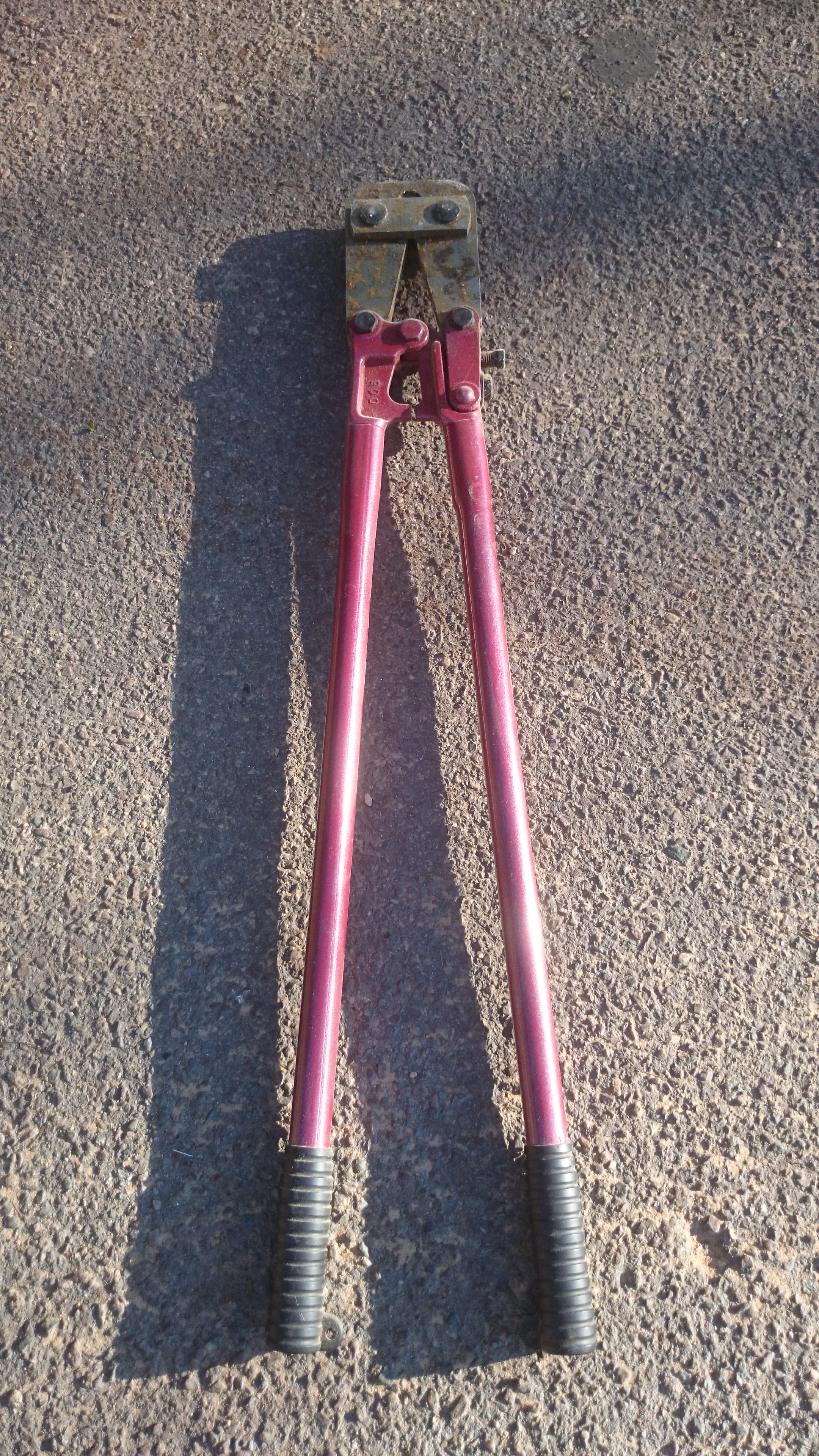
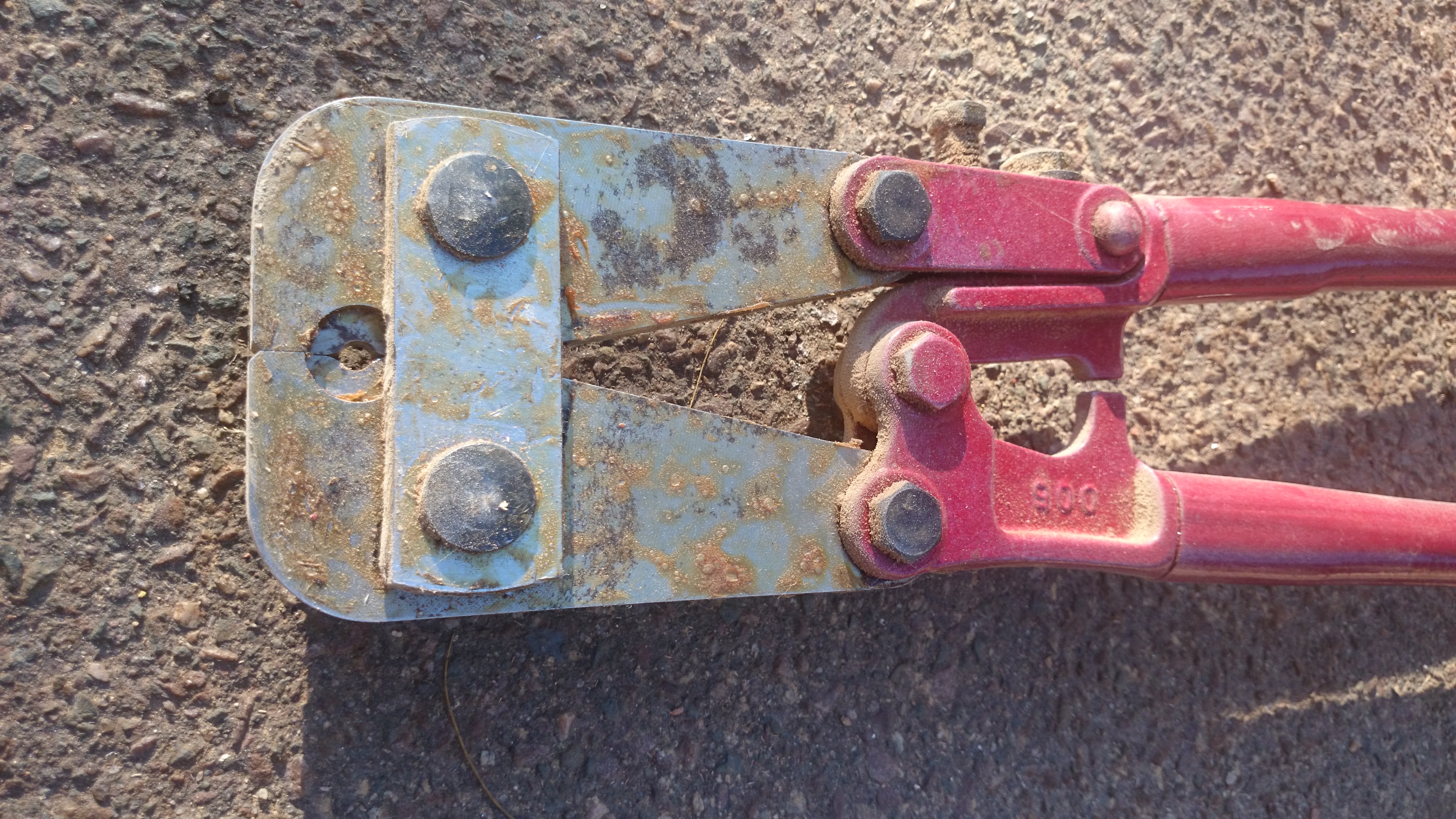
There are various methods of securing your wire rope. We use the button heads as opposed to turnbuckles. A hole is drilled, to a diameter slightly bigger than the button head, in the wooden upright and the wire rope is threaded through it so that the tag end is protruding to the outside of the balustrade. One side of the button head is then inserted over the wire rope and crimped using a special crimping tool. The crimping tool looks very similar to a large bolt cutter with a head that has been adapted to accept the button head and crimp it to the right size to hold the wire rope without damaging it.

Now cut a length of wire rope to slightly more than is required. Remember think twice, cut once as it is always easier to cut more off then to add more on once it has been cut too short. Now all your holes need to be drilled in all the other upright posts. Measure you spaces out accurately so that your wire rope will run parallel to the capping on the top and the wooden deck on the bottom. When drilling through a piece of wood it is easy to hold the drill slightly skew resulting in the drill bit exiting the wood at an angle which will result in the exit hole not being in the place it should be. So drill half way from one side and then drill from the other side to get your entry and exit holes perfectly lined up. It doesn’t matter if the middle of your hole is slightly skew because you can’t see it and it is not enough to impede the path of the wire rope. Thread the other un crimped end of the wire rope through all your holes in your uprights until you get to the end.

Wooden deck with wire rope balustradeNow take the other button head with the thread on it and measure, very carefully, where you need to cut your wire rope. You will need to cut it with a thin cutting disk on a baby grinder so as to get a nice clean-cut. If you cut it too long you won’t be able to tension it and too short, well start again from the beginning. So cut and check before crimping the other end. The second button head will be inserted through the hole from the back and the wire rope inserted into it from the front and crimped. Make sure you have your thread to its longest position so that you still have thread to use to tension it. Now tension it, but do not over tighten it. It is not a guitar string and only needs to be tight enough to be visibly straight. Over tightening it will result in the end wooden uprights bowing, or even failing.

Pros of Wire Rope Balustrades

• Does not interfere in your vision when seated and looking through the balustrade
• Adds a second material, other than timber, for a clean minimalist look and feel
• Marine grade stainless will last a life time

Cons of Wire Rope Balustrades

• Does not offer as much protection from objects or people falling through the strands as timber does
• If installed incorrectly can look terrible
• Can detract from the timber look and feel

Good luck in installing your wire rope balustrade. I hope this article has helped. If you’re not up to it, please complete the form below, or contact us on 082 496 5444 and we will gladly quote you to do the task for you. We are Durban based and work throughout KZN.

Go back

Your message has been sent

Warning
Warning
Warning
Warning
Warning

Warning.

Laying Balau Deck Boards Down

This video shows how we have laid these deck boards without ending on a half deck board or a wedge-shaped deck board.

Most often two opposite walls will not be exactly the same length and they certainly won’t be designed to accommodate an exact amount of deck boards with a uniform gap. What can happen is that you start on one end and end up with a half deck board that has to be ripped length ways on the other end. This is both unsightly and can result in premature failure because the deck board may become too narrow to be secured properly.

If the two opposite walls are not the same length then the problem is compounded because not only will you end up with half a deck board, but you will end up with half a wedge-shaped deck board.

So we need to try to mitigate this problem by adjusting our gaps between deck boards either up or down, very slightly so as to be unnoticeable.
Normally the gap between deck boards is 5mm and we commonly use a 6 inch nail as a spacer. By increasing one end of the line of deck boards to 4mm and the other end to 6mm you can effectively gain, or lose 2mm per line of deck boards. In this video these boards were 90mm wide, so if on every line we gain 2mm, we will gain about 20mm for every 1m of deck boards installed. So after 4.5m you can gain a full deck boards width. On most decks this is sufficient to allow you to finish on full deck boards and to avoid having to cut a wedge-shaped deck board.

Watch the video and you will see how I panned around the little alcove that we had to deck into. We employed both methods here to end on a full deck board and to avoid a wedge-shaped deck board.

It is far easier when decking to the end of the deck as here you can continue with full deck boards until you reach the end, and then cut your joists off at the right length.
It makes for a much neater deck and less chance of failure.
Other videos are also available on the Videos Tab on the menu bar on the left. These show other techniques we employ in building wooden decks which can make the job a lot easier.

For a free no obligation quote on your wooden deck, please contact us on 082 496 5444, or use the contact us form below.

Go back

Your message has been sent

Warning
Warning
Warning
Warning
Warning

Warning.